
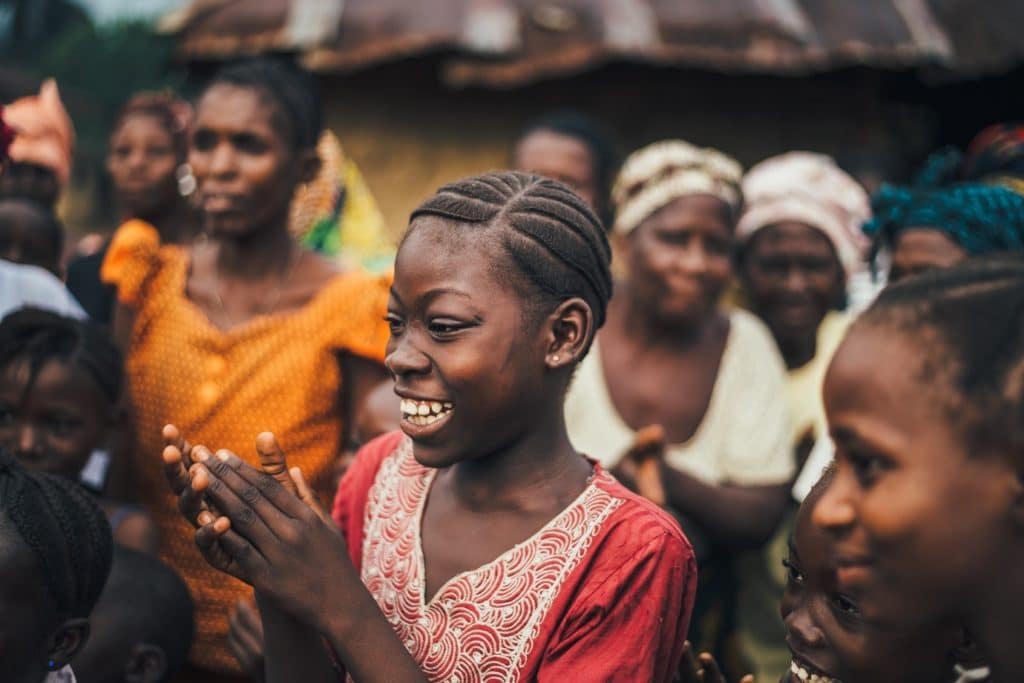
It’s easy and reassuring to think that progress just continues when it comes to gender equality, particularly on getting more girls educated globally.
But the past few years have taught us that this couldn’t be further from reality.
What we can take some comfort from is knowing that there is more attention placed on the needs of girls, than there was ten years ago. There are also more girls getting heard on the world stage. Governments, policymakers and the general public are increasingly paying attention and listening. But are they investing as they should be? Are they seeking to sustain the progress achieved, and use it to drive momentum? Are they examining the growing threats ahead? There is so much more work to do.
Today marks the tenth anniversary of the International Day of the Girl (IDG), a United Nations Day created to recognise the unique challenges facing girls around the world. It aims to promote girls’ rights, empowerment, safety, health and education.
The day also acknowledges that empowering girls today, will have significant run-on impacts for their families and communities later on.
Indeed, educating girls is seen as one of the most effective ways of fighting the climate emergency, with Project Drawdown listing “educating girls” at number six out of 100 of the top 100 activities that would halt rising emissions. Educating girls came in above rooftop solar panels and electric vehicles (number 10 and 26 respectively). Why? Because decades of research shows that good quality education sees girls marrying later, having fewer children and achieving greater economic prosperity for themselves and their families.
Further, education helps women and their families survive and respond to climate disasters (there are compelling examples of this in Bangladesh, where teaching girls to swim as part of school programs has already seen a significant reduction in the number of women drowning in floods). International charities like ActionAid and Plan International Australia also regularly present examples of where women have been able to step into leadership and support entire communities, after climate-related disasters.
And of course girls’ education is essential for ensuring we’re accessing the full potential of the world’s population, and the only way to ensure where getting anything close to the best innovation and leadership. The UN Environment Programme suggests that it could help in reducing 51.48 gigatons of greenhouse gas emissions by 2050 – to put that in perspective, total greenhouse gas emissions hit a high of 55.3 gigatons in 2018.
Sadly, the COVID-19 pandemic has set girls’ education rates back in many parts of the world – while natural disasters and conflict are also contributing to seeing girls being unable to attend school or forced to leave school early. UNICEF predicts that up to 10 million girls face the risk of child marriage over the next ten years.
While educating girls is key to fighting the climate crisis, the cruel twist is that the climate crisis is already and will continue to make achieving such education goals more and more difficult. Eighty per cent of people displaced by climate change globally are women, according to UN Environment, while numerous studies, including from the World Economic Forum, share how the climate crisis amplifies existing gender inequalities. Climate-related disasters and major shifts in land access and use also contribute to gender-based violence, while the risk of child marriage escalates dramatically during periods of drought.
This year’s Day of the Girl Child is a reminder to keep raising these issues, noting the potential of girls in addressing the critical decade ahead. It’s not just attention that’s needed, it’s also consistent and targeted investment in girls. Look to support organisations that include specific programs and initiatives for girls — aiming to prioritise their safety, education and wellbeing — and the pressure on policymakers to make such targeted investments.
The link between educating girls and addressing climate change is a compelling one. A strong reminder that we all win on pushing for such progress.