
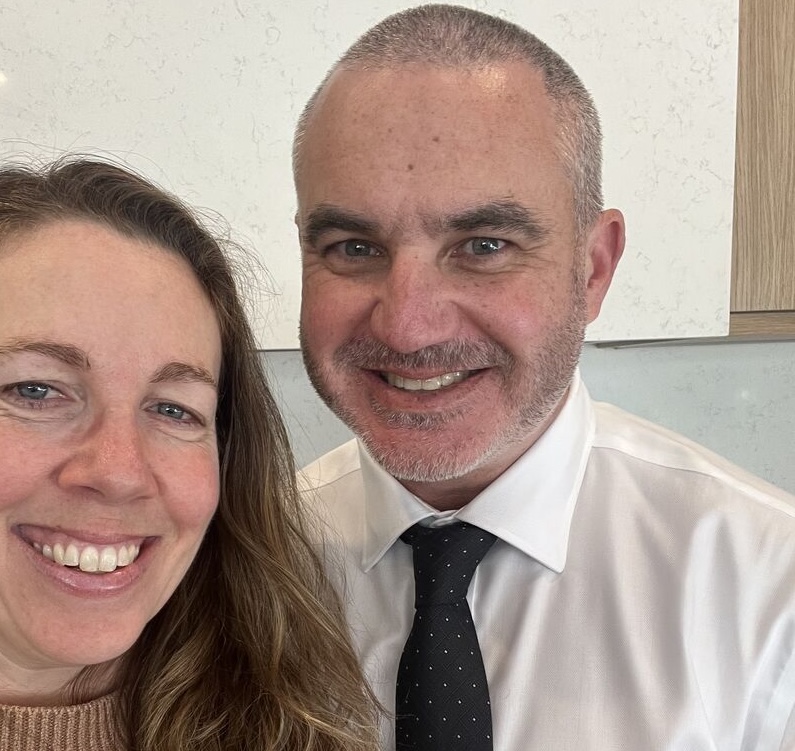
Jo Stone didn’t expect a story about her husband Michael Stone’s quest to find work after taking a break to care for kids to reach more than 1.3 million people on LinkedIn.
But with 2000 comments and 26,000 likes the post certainly struck a chord.
The reaction came after Jo shared how Michael (Mick) has been trying to reenter the workforce for the past 12 months.
Despite his pre-kids’ experience of managing large operation teams at blue-chip financial services, he’s receiving crickets or automated “you’re overqualified”.
Why? Jo believes part of the issue are preconceived ideas about his “patchy CV”, because Mick took a step back in his career to become the primary carer for their two kids, and took part time jobs along with non-linear career things – eg, started a personal training business.
The “patchy” CV is all too familiar for many of us who’ve taken on caring responsibilities, especially women.
But in Mick’s case, Jo notes that he’s hitting up against the additional bind of gendered norms that might have employers asking more questions about Dads, with research showing new fathers continue to feel stigma on taking lengthy stints of parental leave and flexible work.
Recent research from the University of South Australia finds that Dads still feel pressure to conform to stereotypical ideas of being the “breadwinner”. They’re celebrated for doing so, with their commitment to their careers questioned if they take a step back.
And their reluctance to take extended paid parental leave and periods of part time and flexible work is evident in the numbers.
Men take just 17 per cent of primary carer leave provided by employers in Australia, according to the Workplace Gender Equality Agency. While that’s an increase in recent years, the gap between men and women taking such leave is stubbornly set, and persistent gender norms remain.
WGEA also finds while there has been an increase in employers offering gender-neutral and label-free paid parental leave, male dominated industries are still far less likely to offer universal leave than female-dominated industries.
Meanwhile, just seven per cent of managers are working part time across employers with 100 or more team members, with the majority of the part-time work force being female.

Jo Stone said in her post about Michael that some of the challenges he’s coming up against are all too familiar for many mothers – especially how the skills he’s recently gained are overlooked.
She says that the choices he made around his career in recent years have all contributed to deepening his skills around things like time management, adaptability, entrepreneurship and emotional intelligence.
“Yet they also left him with what too many people label a “patchy CV,” she says.
“And here’s the kicker: a LinkedIn profile like Mick’s, marked by career gaps and pivots, looks eerily similar to that of many women who step back to balance family and work,” Stone wrote in her post.
“The difference?
“A patchy male CV seems even harder for employers to accept,” said Stone.
“Compounding that, a patchy male CV where the person is looking to pivot.”
Jo believes that to support more women in risking into leadership, we must normalise that non-linear career paths are acceptable – and in many cases beneficial – for everyone, men and women included.
In 2025, it’s hard to believe we’re still having these conversations. But persistent stereotypes remain regarding who does the caring, and who does the earning, and these stereotypes are limiting the choices and opportunities of everyone.