
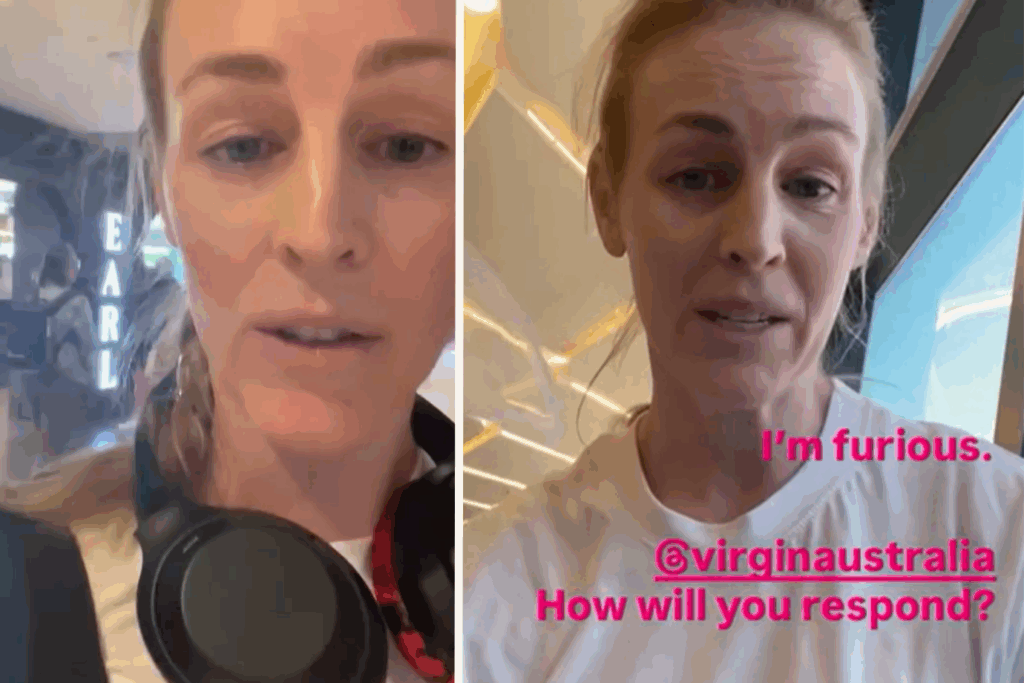
Dr Elise Turner, a Gold Coast-based GP and mother of twins, was recently asked to leave the Virgin Australia business lounge at Melbourne Airport for discreetly pumping breast milk beneath her shirt.
Let that sink in. A women’s health specialist, traveling as a paying business-class passenger, was told to either pump in a public toilet or pay $100 to use a private meeting room because her act of nourishing her children made others “uncomfortable.”
This wasn’t a public spectacle. There was no exposed skin, no disruption. Just a mother quietly doing what mothers do—feeding her babies. Yet a staff member placed a hand on her arm and asked her to leave, citing discomfort from other guests.
Virgin Australia has since apologised, admitting the situation “fell short” of their standards. But apologies don’t erase the humiliation or the message this sends to breastfeeding mothers: that our bodies, our babies, and our needs are still seen as inconvenient, even offensive.
Let’s be clear breastfeeding and expressing milk are protected under Australia’s Sex Discrimination Act of 1984. It is unlawful to discriminate against a woman for breastfeeding in public. Yet here we are, in 2025, still having to defend our right to feed our children in spaces we’ve paid to access.
What’s truly maddening is the double standard. I’ve watched men devour burgers in public lounges, juices dripping down their hands, licking their fingers with abandon. No one bats an eye. But a woman quietly pumping milk under her shirt? That’s “uncomfortable”. I’ve often wished I could ask those men to stop feeding themselves because it puts me off my food. But of course, that would be absurd. So why is it acceptable to police how women feed their babies?
Breasts are not inherently sexual. They are functional, biological tools designed to nourish life. The discomfort lies not in the act of breastfeeding, but in the gaze of those who sexualise it. It’s not women who make breastfeeding uncomfortable it’s the people who refuse to see it as normal.
Dr Turner’s experience is not an isolated incident. It’s part of a broader cultural problem where women are expected to hide their motherhood, their bodies, and their needs to make others feel at ease. We’re told to be empowered, to work, to contribute, and yet when we do so while caring for our children, we’re shamed, excluded, and silenced.
The Virgin lounge incident is especially galling because it happened to a doctor. Someone who understands the importance of maternal health, lactation, and infant nutrition. She tried to educate the staff, citing the law, and was still dismissed. What hope do other mothers have?
This is not just about one airline or one lounge. It’s about the persistent societal discomfort with women’s bodies doing what they are biologically designed to do. It’s about the lack of adequate facilities, the absence of empathy, and the refusal to evolve.
We need to stop treating breastfeeding as a private act that must be hidden away. It is not shameful. It is not disruptive. It is not sexual. It is survival. And it is sacred.
To Virgin Australia: your apology is a start, but it’s not enough. Train your staff. Create inclusive spaces. Make it clear that breastfeeding mothers are welcome, not tolerated, but embraced.
To society: grow up. It’s 2025. If you’re still uncomfortable with a woman feeding her child, the problem is not her—it’s you.
To breastfeeding mothers: keep feeding your babies wherever you need to. You are not the problem. You are powerful, nurturing, and essential. Don’t let anyone make you feel otherwise.