
We live in times where public trust in politicians feels almost irretrievably eroded, a decline accelerated in the years since COVID. Many people believe our leaders don’t work hard enough, that they don’t earn their salaries, and they fail to make a meaningful difference in the lives of the people they represent. Sometimes that cynicism is justified. But every so often, someone comes along who quietly and consistently proves that politics can still be a vehicle for profound, lasting change.
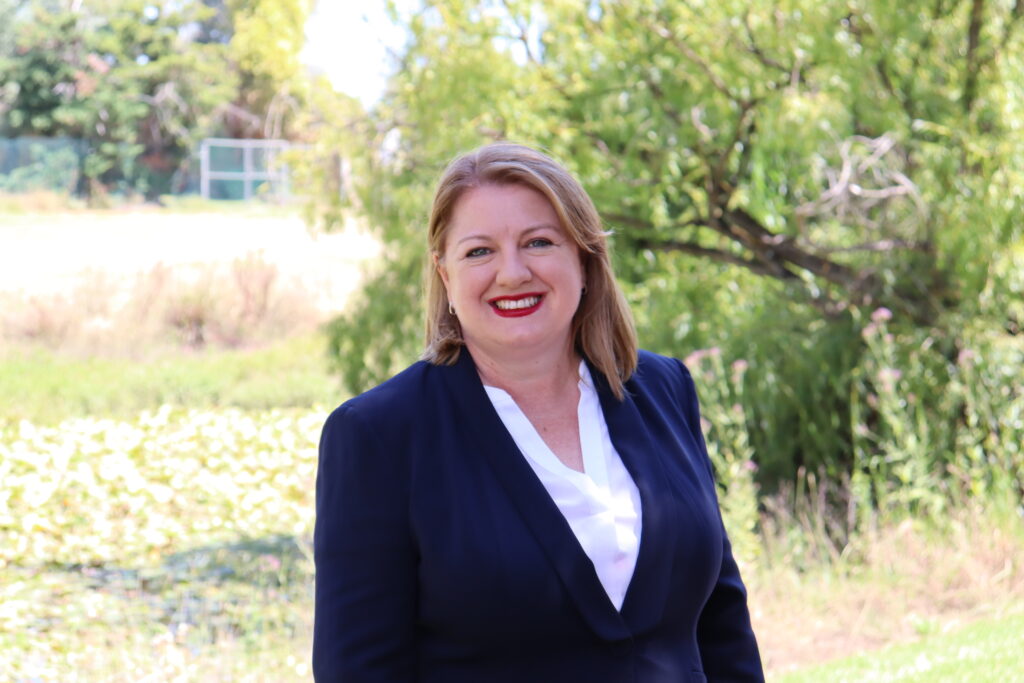
A contributor on many occasions to Women’s Agenda, Minister for Women, Treaty, Family Violence and Government Services Natalie Hutchins will leave the Allan Government frontbench and will not contest the next state election.
Her departure marks the end of an era. One which has been defined by hard-won policy reform, relentless advocacy and a deep commitment to gender equality. It also marks the exit of a Minister whose legacy has materially shifted the lives of women and girls in Victoria.
Minister Hutchins’ work has touched almost every corner of gender and social policy in the state of Victoria. But it is impossible to start anywhere other than with her role in delivering Victoria’s historic Treaty legislation which is a national first, and an achievement she has described as both one of her proudest moments and one of the most emotionally demanding of her career. Few politicians get to say they helped rewrite the relationship between First Nations peoples and the state. Fewer still do it with such determination, care and humility.
Yet, perhaps surprisingly, Natalie has said her second-hardest battle wasn’t passing Treaty at all but it was persuading the Right faction of the ALP to support a 50 per cent affirmative action target. As Minister for Women the first time around, she campaigned relentlessly for gender quotas to be embedded at every level of the party, ultimately securing national endorsement at the 2015 ALP National Conference. And she didn’t stop there: she fought to ensure those quotas were enforced in every state and federal preselection.
Quotas work. And without Natalie’s persistence, it is difficult to imagine the political landscape Victoria enjoys today. Women make up 56 per cent of Victorian Labor MPs and 64 per cent of ministers — a reality that has transformed the culture of government. After the 2025 federal election, women now comprise 56 per cent of Labor caucus and 55 per cent of Cabinet nationally. That shift traces directly back to Minister Hutchins’ fight for representation.
Because when you change who sits at the decision-making table, you change what gets talked about, funded and delivered. In Victoria, that has meant policies that reflect lived experience. This includes the rollout of free pads and tampons in public places, only the second place in the world after Scotland to do so, because period products are a necessity, not a luxury. The banning of non-disclosure agreements in workplace sexual harassment cases, ending the practice of silencing victims to protect employers and a record 53 per cent of women on Victorian government boards, transforming what public leadership looks like because representation matters – you can’t be what you can’t see.
More women in political spaces and at leadership tables has also fed ambition. This year, Victorian activists launched the push for 1,000 women to stand in council elections, an effort made possible because Minister Hutchins re-engineered the political pipeline itself. More women entering parliament wasn’t the end goal it was merely the beginning.
Her influence didn’t stop at gender representation. As Industrial Relations Minister, Hutchins delivered reforms that changed the economic lives of women. She ensured long service leave in the public sector could be paid during maternity leave, recognising that motherhood should not disrupt the entitlements women earn. She introduced family violence leave across the public service; a policy grounded in the reality that women facing violence often face profound economic insecurity.
Minister Hutchins also drove the transition of insecure, casualised female-dominated workforces into stability. In the public education enterprise agreement, she ensured 5,000 school administration roles, a workforce that is 90 per cent women, were converted from casual to part- or full-time positions. For thousands of Victorian women, that meant the difference between chronic job insecurity and finally being able to apply for a loan, plan for a future and stand on firmer economic ground.
In 2024, Hutchins launched Our Equal State, Victoria’s second gender equality strategy and the most ambitious in the nation. Groundbreaking for its life-stage approach, it recognises that women and girls experience inequality differently across childhood, adolescence, adulthood and ageing. It is also the first statewide strategy to embed an intersectional lens across 101 government actions spanning every portfolio, because gender equality cannot sit on the shoulders of a single Minister. It must be owned by the whole of government. That is how systems change happens.
And finally, Hutchins was instrumental in winning Women Deliver 2026 for Melbourne — the largest gender equality conference in the world. It will showcase Victoria’s leadership on the global stage, a fitting legacy for a minister who spent her career pushing this state forward.

Natalie Hutchins often said, “We’ve done so much, but there is so much more to do.” And she’s right. But what she leaves behind is more than a legacy it is a foundation. One built from grit, from courage, from relentless belief in what equality can look like when government refuses to accept “almost enough” as adequate.
In a time when faith in politics is fragile, Minister Hutchins offers a reminder that public office when held with purpose, can still change lives. Thanks, Nat.