
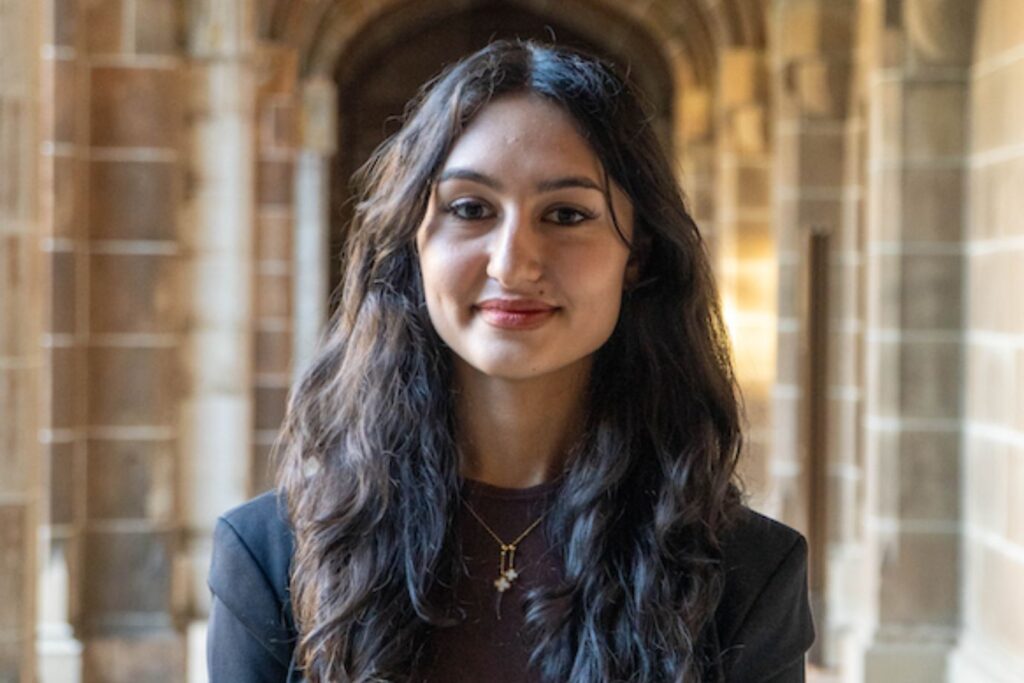
I recently completed my first year at university, something that should be ordinary. Yet for an Afghan woman, it carries extraordinary significance.
Studying at a top Australian institution, advocating on national and international platforms, and using my voice in spaces where young Afghan women have never been invited is a privilege that girls like me in Afghanistan can only dream of. Their absence is felt in every room I enter. Their invisibility enforced through bans, restrictions, and silencing, is what pushes me to speak louder. I am not just pursuing my education for myself; I am carrying the hopes of the girls who are denied the right to even step inside a classroom.
Afghanistan remains the only country in the world where girls and women are banned from secondary and tertiary education. A blanket prohibition. A generation locked out of its future.
And while the ban makes headlines every so often, the world has grown disturbingly comfortable with it. The international community expresses disappointment, issues statements, and then moves on. But Afghan girls cannot “move on”. Their lives are on pause. Their dreams are being erased in real time.
As someone who grew up in Afghanistan and later rebuilt a new life in Australia with my family, I cannot separate my education from the voices of the girls who don’t have one. Every milestone I achieve is a reminder of those who can’t. Their absence shapes everything I do.
This reality pushes me deeper into advocacy. It drives me to sit at every table I can, every room I can, because the decisions shaping Afghan women’s lives are still being made without Afghan women present. And when you are not at the table, you are not part of the solution, you are part of the silence.
‘Nothing about us, without us’
This is more than a slogan. It is a demand.
Right now, nothing is changing for Afghan women because the world is still speaking about us rather than with us. The policies, negotiations, and humanitarian strategies meant to “save” Afghan women are happening in rooms where Afghan women are not invited, not consulted, not prioritised.
And it’s not only Afghanistan. Across the world, women and girls in conflict zones are disproportionately affected, facing heightened risks of violence, poverty, displacement, and long-term trauma. They lose access to healthcare, education, and livelihoods first and regain them last. Yet they are the ones who carry families, rebuild communities, and hold societies together in the aftermath.
In Afghanistan, resilience isn’t something we learn later in life. It is taught to us from birth. My mother, like so many Afghan women, raised her children through conflict, displacement, and instability all with the determination to make sure her daughters grow up with a future filled with possibility because she didn’t. Afghan women have rebuilt Afghanistan more times than the world acknowledges. We have never lacked strength. We have only lacked the world’s consistent support.
When people describe Afghan women, they often use words like “oppressed,” “voiceless,” or “victims.” But that is not who we are. Afghan women are leaders, innovators, mothers, students, and community builders. We do not need saviours; we need platforms. We need access. We need to be heard.

And we need the world to remember that the education ban is not just a “women’s issue.” It is a humanitarian crisis, an economic crisis, a security crisis, and a generational crisis. A country cannot rebuild when half its population is locked inside their homes.
As I continue my education here in Australia, I carry those girls with me in every step. My degree is not only mine, it is a promise. A promise to continue pushing, advocating, speaking, and demanding space. A promise to use every opportunity I receive to open doors for those who cannot knock.
The world must stop treating the situation in Afghanistan as a tragic inevitability and start treating it as an urgent solvable injustice. Because Afghan women are not waiting to be rescued. We are waiting to be included.
Nothing about us, without us.
And until that becomes reality, none of us, not policymakers, not international leaders, not women’s rights organisations can claim progress.
Feature image: Lena Nabizada.