
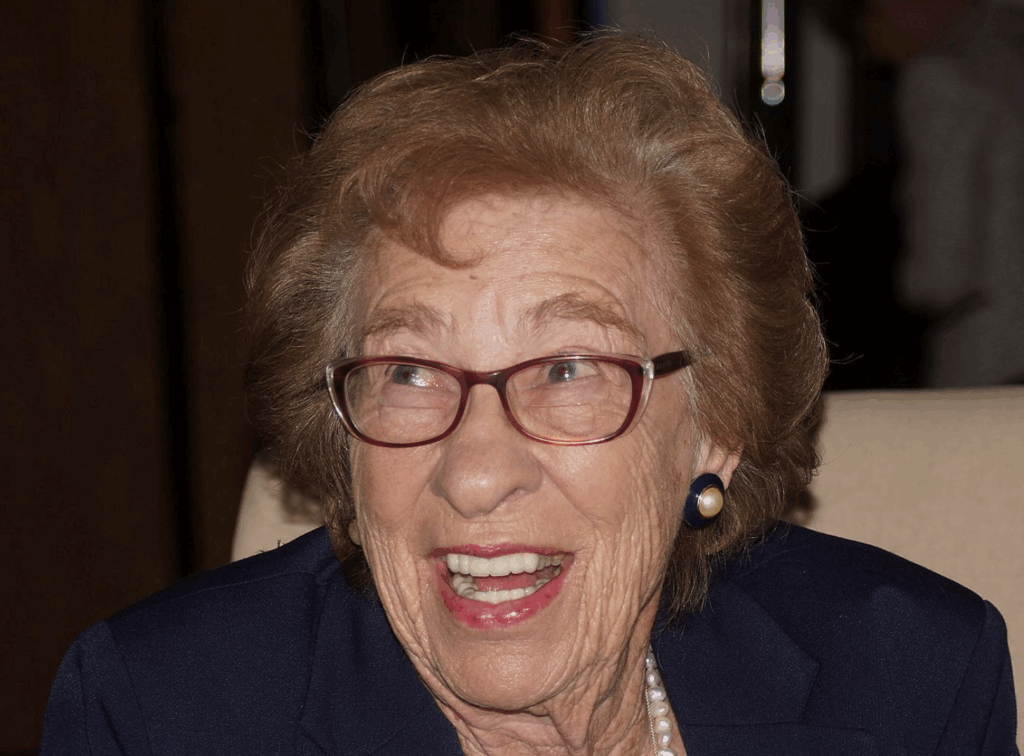
Eva Schloss, Holocaust survivor, author and lifelong educator who dedicated her later years to confronting antisemitism and hate, has died aged 96.
Schloss died in London on 3 January, her family confirmed, prompting tributes from leaders, educators and Holocaust remembrance organisations around the world.
Born Eva Geiringer in Vienna in 1929, Schloss was forced to flee Austria with her Jewish family following the Nazi annexation. They settled in Amsterdam, where as a teenager she became friends with Anne Frank. In 1942, both families went into hiding, but were later betrayed. On her 15th birthday in May 1944, Schloss, her mother and brother were deported to Auschwitz.
While Eva and her mother survived the camp, her father and brother did not. After the war, Otto Frank, Anne Frank’s father and the sole survivor of his immediate family, became close to Eva’s family and later married her mother, making Schloss Anne Frank’s posthumous stepsister.
Later Schloss settled in the UK and built a family life in London with her husband, fellow survivor Zvi Schloss, and raised three daughters. For decades, she rarely spoke publicly about her experiences, later saying the trauma was too painful to articulate. It was only in the late 1980s that she began sharing her story, motivated by a growing concern that the lessons of the Holocaust were being forgotten.
From that point on, Schloss became one of the most prominent voices in Holocaust education. She co-founded the Anne Frank Trust UK in 1990 and spoke to thousands of young people around the world, urging them to challenge antisemitism, racism and discrimination. She authored several books, including Eva’s Story and After Auschwitz, and contributed to international survivor testimony archives.
In recent years, Schloss continued to speak out about rising antisemitism globally, warning that prejudice flourishes when history is ignored. She was appointed a Member of the Order of the British Empire (MBE) for her services to Holocaust education and, in 2021, reclaimed Austrian citizenship as an act of reconciliation.
In a statement, the Anne Frank House described Schloss as “a tireless advocate for remembrance and understanding” whose work would continue to inspire future generations.
.