
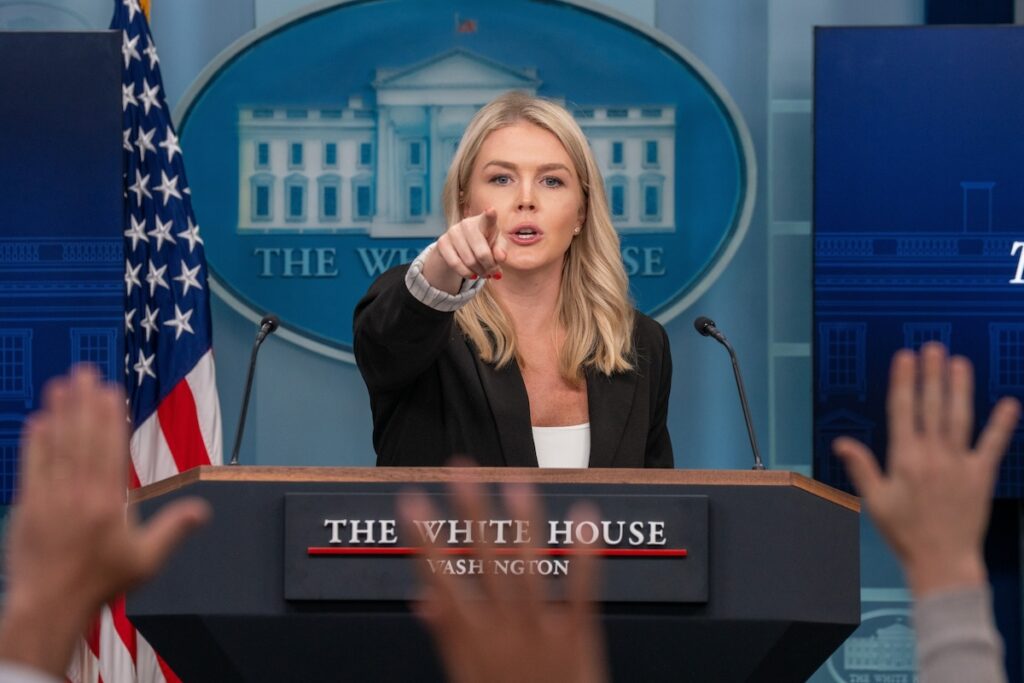
When White House press secretary Karoline Leavitt indignantly dismissed criticism over a racist video depicting Barack and Michelle Obama as gorillas as “fake outrage,” what we witnessed was unmistakable racial gaslighting.
One of the world’s most powerful institutions showed, in real time, what so many people of colour are forced to navigate constantly: the denial, distortion and dismissal of racism when they dare to name it.
Robin DiAngelo defines racial gaslighting as when people of colour have their experience of racism questioned to the point where they begin to question themselves. It casts doubt on perception. It forces self-censorship. And it protects the racial status quo.
The video was grotesque and swiftly condemned across the political spectrum. Tim Scott, the sole Black Republican in the Senate, called for the President to remove the post, describing it as “the most racist thing I’ve seen out of this White House”.
The post was deleted over the weekend. But the White House’s initial response seemed strategic.
Leavitt didn’t try to justify it. She reframed the outrage as the problem. She suggested that it was not the racism that required accountability, but the reaction to it. That is gaslighting in action. It pushes the harm out of view and puts those harmed on trial.
In my role as a human rights lawyer and founder of a tech platform for reporting harmful behaviour, I’m confronted with people’s experiences of racial gaslighting daily.
I’ve seen my First Nations friend repeatedly followed in stores by security, only to be laughed at or dismissed when asked why.
A Samoan employee who challenges a racist joke and is accused of being aggressive.
A Muslim woman describes harassment on the way to work and is told it will be easier not to play the race card.
These responses are not accidental. They are deliberate efforts to shut down uncomfortable truths about the racism that lives within the fabric of our society.
We saw this again during the recent incident at Boorloo, where a homemade explosive device was allegedly thrown into a crowd during an Invasion Day rally. That crowd included Elders, families, and children. If the target had been a synagogue or church, the word terrorism would have appeared in the first paragraph of every article. Simultaneously, government lawyers would be instructed to draft new legislation. Instead, the coverage was minimal an officials delayed naming it for what it was.

This silence was not neutral; it never is. It was a message. It told First Nations people that even when they are targeted in public, the event will not be treated as a matter of national urgency. It will not be framed as ideological violence. It will be treated as a regrettable incident, not a threat to public safety. This, too, is racial gaslighting. The danger is real. The framing insists otherwise.
Pat Anderson AO described the Boorloo response silence as “overwhelming” and the most hurtful aspect. She is right. But what we are seeing is not just a failure to name it, but people in power actively denying racism.
The press secretary here chose mockery. She did not engage with the harm. She implied there was no harm to begin with.
That is the function of gaslighting. It tells people of colour that what they feel is not real. It forces them to second-guess what they saw and heard, and whether it is even worth speaking up.
And it works.
I see this daily. People don’t report racism in the workplace. They stay quiet in meetings. They hesitate before posting. They prepare themselves to be told they are imagining things, or worse, making them up. I’ve personally been told ‘not to make this something that it’s not’. The effect is cumulative. It doesn’t just damage individuals. It reinforces structures that rely on the silence of those they harm.
There is nothing irrational about being furious when a president shares a video comparing Black people to apes. There is nothing exaggerated about calling a bomb thrown at an Indigenous protest an act of terror. The distortion lies in the response. In the effort to turn rightful anger into evidence of instability. What unsettles them is not the act of racial violence or degradation, but the insistence on calling it what it is. The real offence, in their eyes, is not the racism – it is the refusal to tolerate it quietly.