
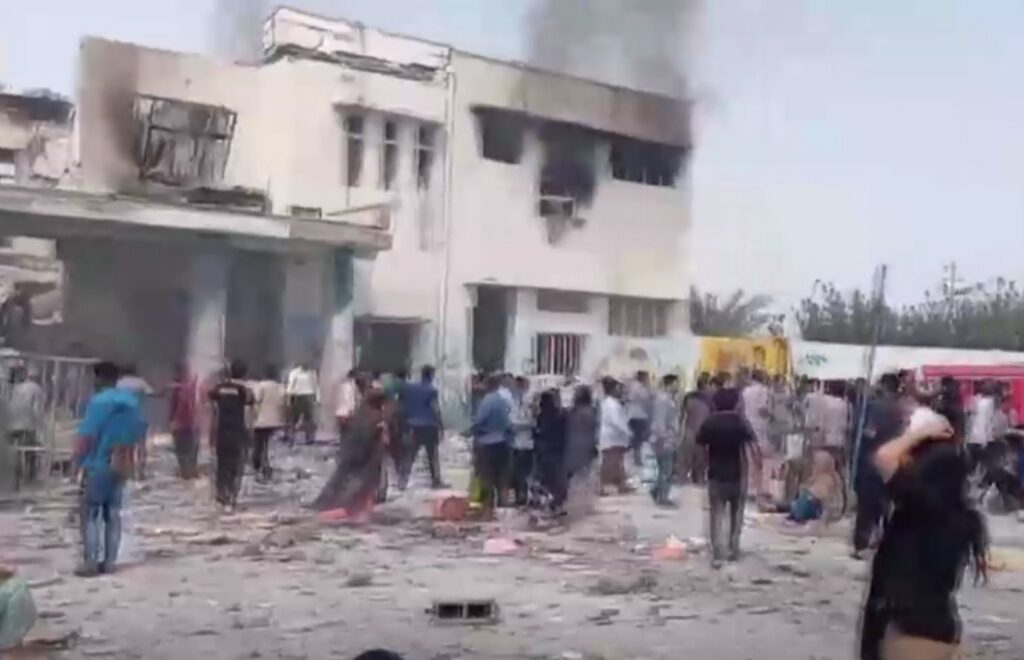
The civilian death toll is rising by the day since the US and Israel launched strikes on Iran on February 28, as Tehran responds by launching missiles and drones at Israel and towards several US military bases and other targets in countries across the region.
While it’s difficult to report exact figures, the latest death toll figures across the region are based on numbers released by governments, militaries, health authorities and human rights organisations.
There is no official gender lens on the figures, but one is needed.
According to Al Jazeera, more than 1,348 people have been killed in Iran by US and Israeli attacks, while more than 17,000 have been wounded. This death toll includes the 175 people, mostly young girls, who were killed by a US strike on a girls’ elementary school.
A preliminary US military investigation, released on Thursday, has determined that Washington was responsible for the strike on the school.
Meanwhile, civilian casualties are mounting in Lebanon amid ongoing Israeli strikes, including in the suburbs of southern Beirut. Just hours ago, Israel also announced it has launched an “extensive wave” of strikes across Tehran.
In Lebanon, the death toll has risen to 687, including 91 children and 47 women, according to Lebanese Health Minister Rakan Nasreddine.
Meanwhile, 1,586 have been wounded, and the number of people displaced by the fighting has reached 816,000.
At least 15 Israelis have been killed in Iranian attacks on Israel since last week, while 2,000 have been wounded.
Amid attacks from Iran, there have also been some casualties reported across the Gulf nations, including six people in the United Arab Emirates, two people in Saudi Arabia, one person in Oman, six people in Kuwait and two people in Bahrain. Tehran says it is targeting US military assets but the strikes have also hit civilian infrastructure.
While some countries have reported separate figures on the number of women and children killed, an overall picture of how this war is affecting women and children is yet to be seen.
But we do know that schools, homes and healthcare sites, places where women and children are disproportionately present, have been hit amid the attacks.

According to a new statement from UNICEF, more than 1,100 children have been reported injured or killed in the violence across the region. This includes 200 children reportedly killed in Iran, 91 in Lebanon, four in Israel and one in Kuwait.
“Nothing justifies the killing and maiming of children, or the destruction and disruption of essential services that children depend on,” UNICEF said.
“Grave violations against children in armed conflict can constitute violations of international law, including international humanitarian law and international human rights law.”
It comes as US President Donald Trump said the US is“not finished yet” with Iran.
Addressing an event at the White House to mark Women’s History Month, Trump briefly said: “The war in Iran — that’s coming along very well.”
Despite overwhelming evidence that women’s participation in decision-making makes peace more likely and durable, it’s men who hold all the decision-making power in this war. Women have largely been shut out.
A 2025 UN report highlighted the issue, noting that while global military spending surpassed USD 2.7 trillion in 2024, women’s organisations in conflict zones received only 0.4 per cent of aid. In 2024, nine out of 10 peace processes had no women negotiators.