
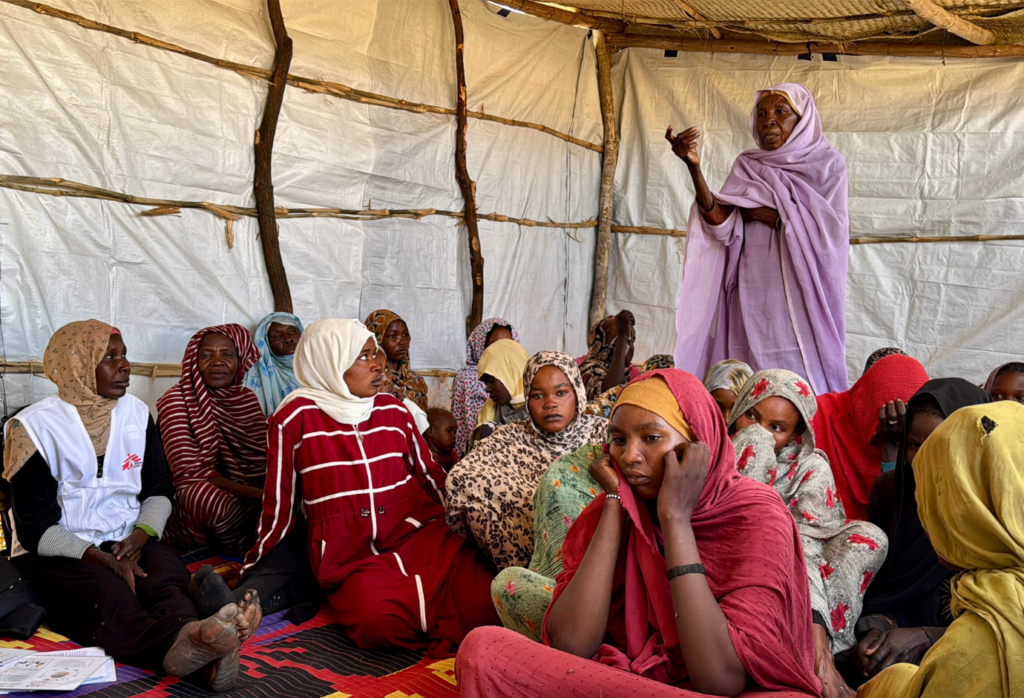
Harrowing accounts of sexual violence in the Sudan conflict have revealed widespread and systematic abuse against women and girls, leading international humanitarian agencies to call on the United Nations and donors to increase health and protection services across Darfur and the rest of the nation.
A new report released Tuesday by Médecins Sans Frontières (MSF) featured disturbing testimonies from survivors of sexual violence, who described the vicious crimes they have endured from RSF soldiers and allied militias.
Since April 2023, tens of thousands of civilians have been killed after fighting erupted between the Sudanese Armed Forces (SAF) and their former allies – the paramilitary RSF. The spreading conflict has led to systematic sexual violence against women, displaced communities and overcrowded shelters. A lack of basic security and safe utilities, such as accessible clean water and bathing areas, means women and girls are often exposed to dangers both within and beyond the frontlines of the conflict.
Sexual violence is being used as a weapon of war and a systematic way of controlling civilians, in violation of international humanitarian law, MSF said.
According to the report, more than 3,396 survivors of sexual violence were recorded as seeking treatment in MSF-supported facilities across North and South Darfur, between January 2024 and November 2025 — with women and girls accounting for 97 per cent of survivors, and men responsible for most of the assaults. The organisation predicts the rate of violence is underreported as many survivors cannot safely reach care.
Ruth Kauffman, the Emergency Health Manager at MSF, said the war is being fought on the backs and bodies of women and girls.
“Sexual violence is a defining feature of this conflict — not confined to frontlines, but pervasive across communities,” Kauffman said in a statement.
“Displacement, collapsing community support systems, lack of access to healthcare and deep-rooted gender inequalities are allowing these abuses to continue across Sudan.”
In a 24-hour period last October, MSF treated over 140 survivors who were escaping their homes in the capital of North Darfur. In the month between December 2025 and January 2026, another 732 survivors sought assistance and treatment from MSF while travelling to displacement camps outside the city. Victims reported being attacked on roads, in fields, at markets and while they collected food, water and firewood.
In South Darfur, one in five survivors was under 18, including dozens of children under five. One survivor explained the extent of the violence: “Every day when people go to the market, there are cases of rape. When we go to the farm, this happens.”
The report by MSF accused international leadership as having failed to muster the political will to end the war in Sudan and ensure the protection of civilians.
“UN agencies, international donors and international NGOs have not delivered a response commensurate with the scale and severity of the sexual violence in Darfur,” the report stated. “The cost of this failure is not abstract; it is found in the untreated trauma, preventable suffering and the enduring silence in which the majority of survivors are forced to live.”
MSF has urged all parties to the conflict to cease and prevent sexual violence and hold perpetrators accountable. Affiliated groups involved in MSF programs have called for an immediate end to sexual violence across Sudan, demanding protection and access to care.
Image Credit: Cindy Gonzalez/MSF