

When Brigadier Gavan Reynolds AM joined the Australian Defence Force in the particularly ‘Orwellian’ time of 1984, he felt very comfortable.
Everybody, he said, looked like him. They were male, and they were white. Most had also come from a private school and played rugby.
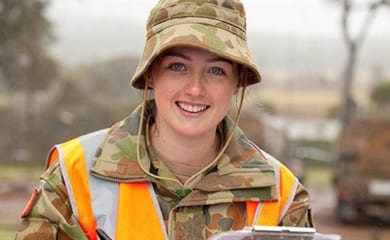
A couple of decades later and the Army realised it had a serious recruitment problem, with just a tiny proportion of its workforce female. Australian business and society had evolved, the Army was still stuck in the Cold War past.
Speaking at the Macquarie University Women Management Work conference this morning, Brigadier Reynolds shared what’s working for creating a more inclusive culture in the Army, and how he worked with former LT David Morrison to recruit an extra 600 women, upping the female workforce by 12%.
Most of us know some of ADF’s recent initiatives well. Former LT Morrison became an extremely vocal advocate for diversity and inclusion across the army, and put his face to the now famous YouTube speech in which he told members that the, “standard you walk past is the standard you accept”. Every ADF member was required to watch the video.
Making diversity and inclusion a priority at the highest level, as Morrison did, was one of three key points Brigadier Reynolds believes is necessary for creating cultural and structural change across the ADF and within any major organisation.
His second point is that the issue that’s holding an organisation back on diversity needs to be framed and understood. In the Army, the catalyst for realising there was a major issue was two-fold. Recruitment had dropped, and a number of scandals had broken publicly. “We had a good hard look at ourselves and realised we needed to change,” he said. “Something was horrifically wrong with our culture that allowed those incidents to take place. We needed a framework that fitted the new century.”
His final point was to design collaborative initiatives with a practical outcome. “It isn’t useful to tell people to be inclusive, unless you create the structures, the policies and the means for them to be inclusive.”
In the Army, including the word ‘respect’ as one of its four core values, has been essential to changing the culture, he said. Meanwhile, the first criteria on annual performance reports now covers inclusive and collaborative values. “This has been the most powerful tool,” he said. “What it has done is articulate to the workforce that we believe in a culture that’s collaborative and inclusive.”
The Army is now putting an emphasis on increasing the number of Indigenous recruits, before going on to expand its ethnic base.