
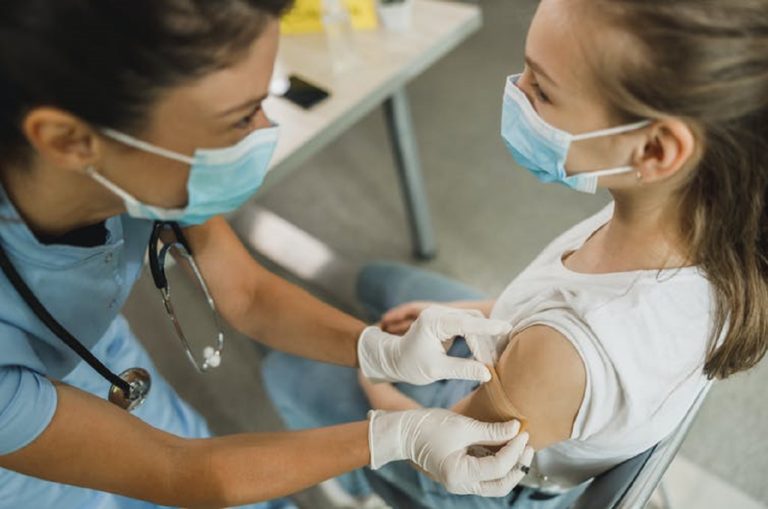
Somewhere right now, a new mother is awake at 3 a.m., scrolling through contradictory online rabbit holes, trying to determine whether the vitamin K injection her midwife recommended is safe.
She is exhausted, hormonally flooded, and being asked to do something no previous generation of mothers was asked to do, and that is to become an amateur immunologist.
This is the world Robert F. Kennedy Jr., a man with no medical qualifications, has decided is appropriate. In a podcast interview, the United States Secretary of Health and Human Services advised new mothers to “do their own research,” then added: “This idea that you should trust the experts — a good mother doesn’t do that.”
RFJ says ‘a good mother’ shouldn’t trust experts and do their own research instead
A good mother.
The consequences of this ideology are measurable in the bodies of babies.
A national study of more than five million births found that the rate of American newborns not receiving a vitamin K injection has risen 77 per cent since 2017, now exceeding five per cent of all births. Babies who miss this single shot are 81 times more likely to develop vitamin K deficiency bleeding, a condition that causes brain haemorrhage, permanent neurological disability, and death. In 2024, more than 700 newborns in America, died from spontaneous brain bleeds, with six medical specialists and a CDC official stating a meaningful portion were likely caused by vitamin K deficiency. Those are babies who didn’t have to die.
Vitamin K is not even a vaccine, it is a supplement. The science has been settled for decades. But the anti-vax movement does not distinguish between vaccines and other medical interventions. It is a posture of generalised distrust in medicine, manufactured and monetised, and now installed at the highest levels of American public health.
Kennedy’s tenure as HHS Secretary has been a systematic dismantling of the evidence-based protecting children. He directed the CDC to reduce the childhood vaccine schedule from 17 to 11, demoting vaccines for meningococcal disease, hepatitis B, influenza and others to “shared clinical decision-making”. The language that sounds empowering but is, in practice, a transfer of liability onto individual families. This was not based on new safety data. The American Medical Association described the process as lacking robust, evidence-based review. Meningococcal disease kills 10 to 15 of every 100 people infected. Its low incidence exists precisely because we vaccinate.
Kennedy also promoted vitamin A and cod liver oil as treatments for measles. During a Texas outbreak that killed children, unvaccinated patients began showing signs of vitamin A toxicity and abnormal liver function because parents followed his advice. He has told pregnant women that paracetamol causes autism, a claim with no credible evidential basis, consuming clinical hours as doctors worldwide work to correct it.
Women already perform the vast majority of unpaid care work globally. We manage children’s health, ageing parents, and households. We carry the cognitive and emotional load of keeping families functioning. We do paid work on top of it. And now, according to Kennedy, we must also acquire an informal medical degree conducted at 3am between feeds, on the same internet that diagnoses a headache as a brain tumour.
The “good mother” framing is particularly insidious because it exploits the guilt new mothers are already drowning in. The suggestion that a good mother questions experts, while a bad mother trusts her doctor, doesn’t liberate women from paternalism. It replaces one authority with another: the wellness influencer, the podcast host, the HHS Secretary with a law degree and a history of vaccine misinformation.

And what about fathers?
Notably absent from Kennedy’s framework is any equivalent expectation placed on fathers. “Do your own research” is addressed to mothers. Why doesn’t a ‘good father’ have to do his own research? The health burden, the guilt, the cognitive labour of navigating a deliberately muddied information landscape these fall, as they always have, on women.
I trust my GP. When something feels wrong, I get a second opinion from another qualified clinician. That is how medicine is supposed to work. The answer to legitimate concerns about public health transparency is not to abandon expertise and google your way through immunology. It is to demand better communication and accountability from institutions, while keeping babies alive in the meantime.
A good mother is not defined by her willingness to distrust doctors. She is defined by her love, her exhaustion, her impossible juggle. The least we can ask is that the information we are given not be actively poisoned by the very people whose job is to protect us. We have enough to do.