
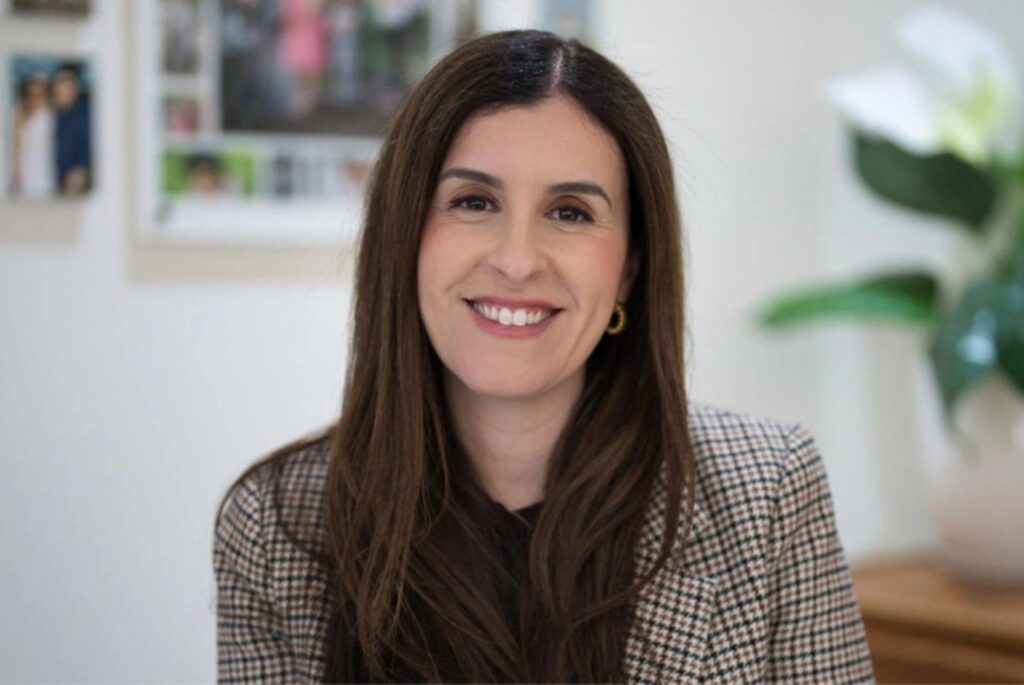
On Thursday, as Prime Minister Anthony Albanese announced a royal commission into the Bondi Beach massacre and antisemitism, the Adelaide Festival Board chose the same day to cancel the only Palestinian writer from its Writers’ Week lineup.
Dr Randa Abdel-Fattah, whose 2025 book Discipline earned her a spot on the program, was informed that the board had decided not to proceed with her scheduled appearance.
In their statement, the Adelaide Festival Board wrote “whilst we do not suggest in any way that Dr Randa Abdel-Fattah’s or her writings have any connection with the tragedy at Bondi, given her past statements we have formed the view that it would not be culturally sensitive to continue to program her at this unprecedented time so soon after Bondi”.
Let us be clear about what happened here: A Palestinian-Australian academic and author was removed from a literary festival because of her ethnicity and political views. Views that were on public record, including in Senate transcripts, well before she was booked. The board knew exactly who they were programming. If her views were problematic, why invite her in the first place?
Dr Abdel-Fattah’s response cuts to the heart of the matter: “This is a blatant and shameless act of anti-Palestinian racism and censorship and a despicable attempt to associate me with the Bondi massacre”. She’s right. The board’s statement explicitly says they are not linking her to Bondi, yet by cancelling her because of Bondi, they have done exactly that. As she noted, the board has “stripped me of my humanity and agency, reducing me to an object onto which others can project their racist fears and smears”.
This reveals the insidious logic underpinning the decision that a Palestinian woman with no connection whatsoever to a terrorist attack is treated as ‘culturally insensitive’ simply for being Palestinian and speaking publicly. Her mere presence is framed as a trigger, as threatening, as unsafe. This is racial profiling dressed up in the language of sensitivity.
The literary community’s response has been swift. The Australia Institute immediately withdrew its support and sponsored events, stating that “censoring or cancelling authors is not in the spirit of an open and free exchange of ideas”. High-profile writers including former Greek finance minister Yanis Varoufakis, Stella Prize winner Evelyn Araluen, former political prisoner and foreign correspondent Peter Greste, and two-time Miles Franklin winner Michelle de Kretser have all withdrawn in solidarity.
If we cannot have free thought and exchange of ideas at a writers’ festival, where exactly can we have them? Arts and literature are the very mediums through which we highlight, discuss, and challenge diversity of opinions, ideas, social norms, and cultural complexities. They are how we open dialogue rather than stifle discussions.
The royal commission announced by the Prime Minister will investigate antisemitism and make recommendations for “strengthening social cohesion”. But social cohesion requires clear definition. We cannot pursue it by making one group feel safer while demonising another. That is not removing the hazard and minimising the risk, it is simply shifting it, creating further hazards and risks in the process.
True social cohesion means confronting uncomfortable truths and difficult conversations, not silencing voices we find challenging. It means recognising that the only people responsible for the Bondi massacre are the two men who committed those atrocities, not every Palestinian-Australian who dares to speak publicly.
As a woman of Middle Eastern descent, this decision is incredibly disappointing but, and this is worse, not unsurprising. It reflects a disturbing pattern where voices are systematically excluded from public discourse under the guise of sensitivity or safety. This isn’t the first time the Adelaide Writers’ Week has faced controversy over Palestinian writers. In 2023, the inclusion of Palestinian-American writer Susan Abulhawa and Palestinian poet Mohammed El-Kur led to sponsorship withdrawals, though both ultimately appeared.
This time, the board caved. And in doing so, they have revealed that their commitment to free expression is conditional, that some voices matter more than others, and that diversity is only celebrated when it doesn’t challenge us.

The Adelaide Festival Board has made a choice that fundamentally undermines the purpose of a writers’ festival. They’ve chosen censorship over courage and racial profiling over principle. They have demonstrated that “cultural sensitivity” can be wielded as a weapon to silence dissent and exclude those whose perspectives make us uncomfortable.
If literature festivals, the very spaces specifically designed for the exchange of diverse ideas can’t withstand difficult conversations, then we’ve already surrendered the very ground on which pluralism stands. The board didn’t protect social cohesion. They fractured it with blatant racism.