
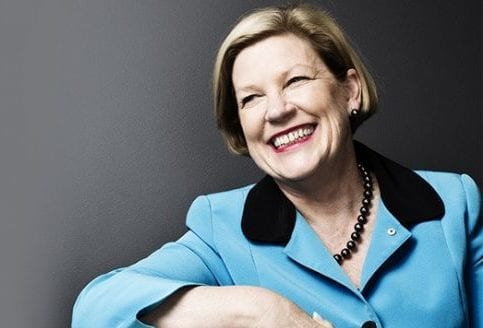
Ann Sherry has had her moments of frustration and anger and even those “cry in the toilet” moments when a meeting didn’t go as planned.
But through it all, she’s moved things. She’s had impact that goes beyond simple achieving the titles we know her for: such as being the former CEO of Carnival, former CEO of Westpac New Zealand and her diverse board and leadership career.
Sherry shared what she’s learnt on delivering impact at the Women Unlimited conference this morning, sharing the “collective opportunity” ahead for the women in the room for achieving change across organisations, industry and more widely to better support others.
Through her experience through numerous industries, including introducing maternity leave at Westpac in 1990s, Sherry outlined the familiar traits she’s seen in those who make impact with their work.
“The leaders who create lasting impact were rarely the loudest voices in the room. They weren’t reckless and definitely not defended status quo,” she said.
“They were disciplined, serious, institutionally literate, but unwilling to accept that the way things were was the way they had to remain.
“They were dissatisfied with the status quo, and so am I, and I always have been.”
Watching good leaders through difficult decisions across all area, she identified how they achieved cut through.
“I learned that impact does not come from occupying a role, It comes from how you use it. It Doesn’t come from having power, but rather how and whether you use it and use it well,” Sherry said.
“I watch people with a lot with power, and I watch them not use it … and just be satisfied that they got there, or not use it well.
“The measure of success should not be achieving the position, but how you use it once you’re there.”
She shared lessons learnt working in male dominated environments — sometimes when she was the only person in the room. She reflects on being “too polite” and following the wrong rules. She said she confused preparation with participation at times and that “influence is not automatically granted, it has to be exercised.”

And lessons learned from working with Indigenous communities where you can’t just show up with a solution and expect it to land, you need to take the time to listen, learn and understand.
“Across sectors, I came to believe that effective leadership requires a particular mindset,” she said.
“You don’t need to be extremely effective, but you must be dissatisfied enough to improve what exists and, you need commercial discipline and social awareness, governance, literacy and human judgment, the courage to protect what works and the courage to change what doesn’t, and the tenacity to follow through when the going gets tough.
“Constructive dissatisfaction is not negativity. It’s a refusal to accept mediocrity, and we are surrounded by mediocrity.”
And she shared three key disciplines for the women (and handful of men) in the room.
- Broaden your range. Understand how policy shapes markets. How markets shape policy. Leaders who create impact are translators between and across systems. Build coalitions before minimum reform. Rarely do reforms fail because they’re wrong. It fails because it’s isolated.
- Relationships are not soft assets. They are strategic capital.
- Choose substance over theater. You need competence to really be effective. You’ve got to do the work, make the call, own the outcome, and have the courage to get it through.
We should be commercially rigorous. We should be socially interested, politically aware that economically grounded care about people and refuse mediocrity.
Finally, she called on people to consider what they can move.
A career of impact is not about where you sit, which organization you run, which sector you work in. It’s about what you move. What do you do to move the dial in your role in your organization, at your level of the organization, you don’t have to run an organization to move the dial.
“What systems are you strengthening? What standards are you lifting? What trust are you building? What networks are you nurturing?
“And who are the people who become braver before you?”
And on that “cry in the toilet moment”? It came when her first push for maternity leave at Westpac failed as she was presenting it to the leadership team. She returned a few weeks later with what she described as a “cold, business plan”. She regrouped, further considered the audience, and returned with a new presentation and plan that was ultimately successful in securing a groundbreaking polity at one of the country’s biggest employers through.