
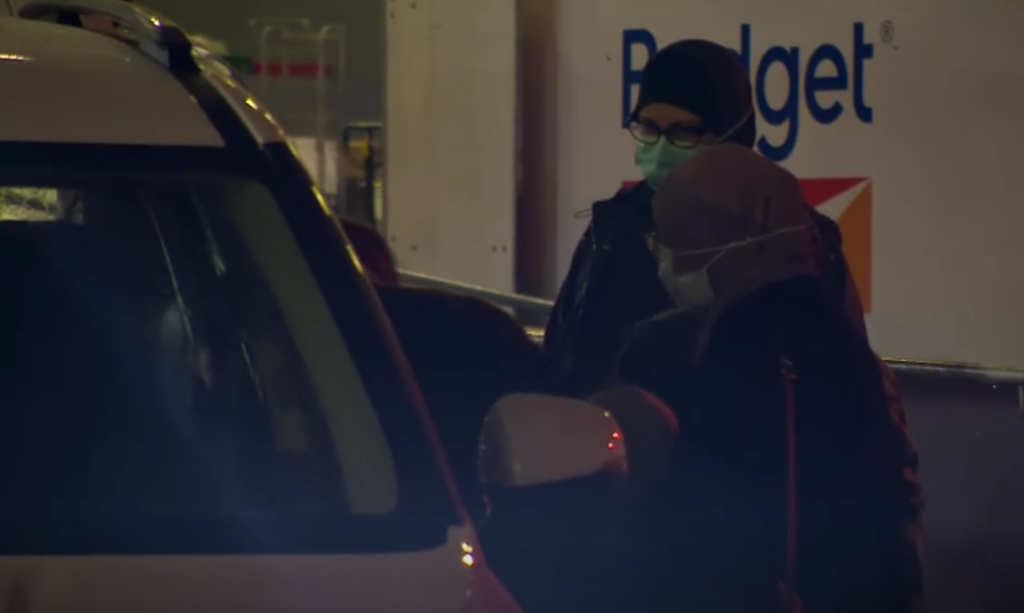
Another group of so-called ‘ISIS brides’ and their children have arrived in Australia after leaving the al-Roj camp in Syria last week.
Two flights carrying the cohort of women and children landed in Sydney and Melbourne on Tuesday afternoon.
Two women and seven children arrived at Melbourne airport just after 4.30pm, while four women and six children landed in Sydney shortly after.
No one arriving within this cohort has been charged with any criminal offences, a statement from the NSW and Victoria Joint Counter Terrorism Teams confirmed on Tuesday. However investigations into the activities of the women who travelled to Syria are ongoing.
The women and children were subject to a range of checks, including the searching of belongings and the downloading of their devices for investigative purposes.
“Police and the JCTTs will continue to engage with relevant stakeholders to ensure community safety is upheld,” the Australian Federal Police said.
“The safety of our communities remains a priority for all agencies.”
Minister for Home Affairs Tony Burke said the federal government has not and will not provide any assistance to the group.
“These are people who have made the horrific choice to join a dangerous terrorist organisation and to place their children in an unspeakable situation,” Burke said in a statement.
“As we have said many times – any members of this cohort who have committed crimes can expect to face the full force of the law. Our world-class law enforcement and intelligence agencies have been preparing for their return since 2014 and have long-standing plans in place to manage and monitor them.”
Another woman, identified as Hodan Abby has been barred from returning to Australia after being given a temporary exclusion order, according to the ABC. Her child has elected to stay with her.
The arrival of this cohort of women and children on Tuesday afternoon comes just weeks after another group of ‘ISIS brides’ and children arrived in Australia. Three of these women were arrested by police and charged with offences, including travelling to a declared terrorist area and slavery offences, on their arrival.
Australian organisations such as Save the Children have advocated for their humanitarian needs, saying two thirds of the returning group are children.
“These innocent children have endured years in dangerous and unstable conditions, and we have held serious concerns for their safety and wellbeing,” Save the Children Australia CEO Mat Tinkler said.
“The political debate surrounding their future in Australia has been deeply disappointing. As Australian citizens, it was always a matter of ‘when’ these women and children came home, not ‘if’.
“If any of the women have been exposed to radicalisation, or if there is any evidence that crimes may have been committed, Australia’s judicial and national security system is best placed to assess and manage any risks.”