
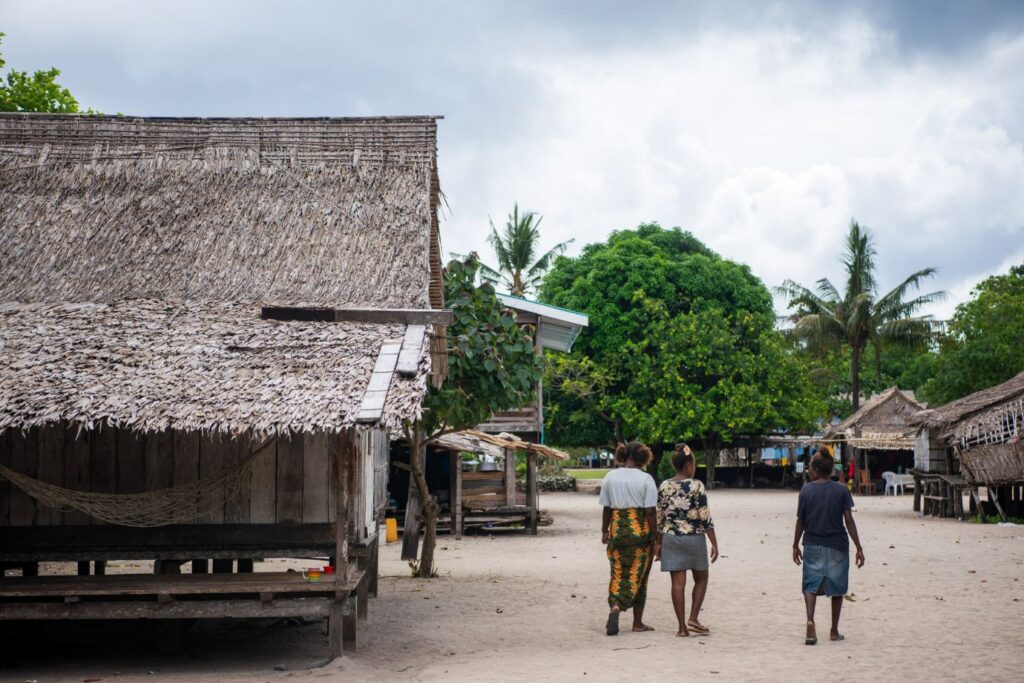
Australia must take the opportunity to put girls at the centre of solutions, especially as the climate crisis is deepening inequality across the Pacific, write Tegan Clark and Si Qi Wen, representing Plan International Australia.
2026 has raised numerous challenges for girls globally. From the war in the Middle East to the fuel crisis that is seeing schools close from Sri Lanka to Peru, to warnings that 45 million more people could face acute hunger and the looming super El Niño, things are feeling bleak.
As the Pacific Islands Forum Women Leaders Meeting highlighted recently, the burden of these overlapping crises falls hardest on women, girls and children. It always does.
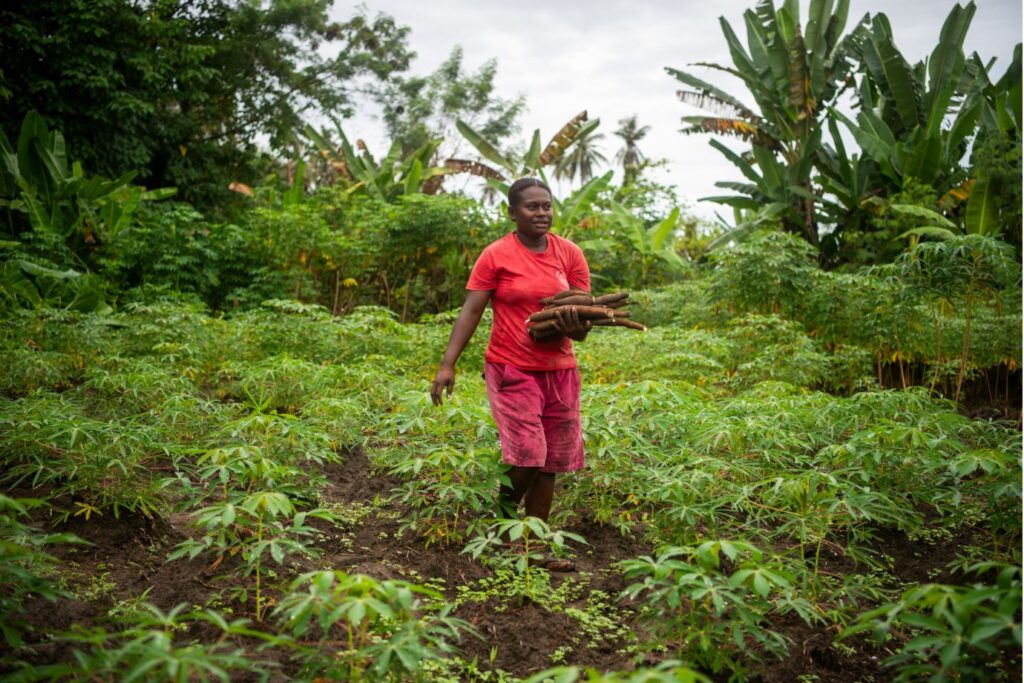
For girls across the Pacific, the global fuel crisis shows up in the price of cassava, the cost of her journey to school, and whether the lights stay on at their local clinic.
The Marshall Islands has declared a 90-day state of economic emergency. Tuvalu declared a state of emergency as fuel shortages led to power cuts across the country.
Climate disasters increase the risk of girls leaving school, taking on unpaid care work, and experiencing violence and early marriage. And the timing could not be worse: communities across the region are still recovering from Cyclones Maila, Sinlaku, and Vaianu.
As Duta Bero, Country Director of Plan International Solomon Islands said: “In our consultations with communities affected by these recent cyclones, we heard that many girls are still not attending school because of damaged infrastructure, blocked roads and the trauma left behind by the disaster. The longer communities wait for schools, roads and other critical infrastructure to be restored, the greater the risk that girls will miss out on education, take on additional caring responsibilities and, in some cases, face violence and early marriage.”
The Bonn negotiations
Last week’s UN climate negotiations in Bonn, which have just concluded, feel a world away from the realities facing girls in the Pacific. Yet they are deeply connected.
Bonn exposed a structural mismatch at the heart of the climate system: a process built to negotiate text is struggling to deliver the action communities need.
Bonn ended with the wrong signal at the worst possible time: division, delay and weakened ambition, just as climate impacts are accelerating across the Pacific. Countries failed to reach a meaningful agreement across major negotiating tracks, pushing critical decisions on mitigation, adaptation and finance to COP31 in Türkiye. Girls remained largely invisible across many negotiation tracks.
Negotiators can bracket paragraphs. They cannot bracket rising seas, failed crops or closed schools. The climate crisis is not waiting for this process to catch up.
As the incoming President of Negotiations for COP31, Australia will spend the next year helping steer some of the toughest climate negotiations on the planet — a task now made even harder by the divisions exposed in Bonn. The question is what it will do with that opportunity.
Climate change is already reshaping girls’ lives, yet the world’s 652 million adolescent girls remain largely invisible in these spaces. They make up half a generation, yet no COP has ever meaningfully prioritised them.
Australia still has a chance to change that.
Earlier this year, the Oceania Youth Climate Negotiation Network, Australian Youth for International Climate Engagement and Plan International Australia consulted with young people and experts on priorities for COP31. What came back was clear: climate action doesn’t work if it doesn’t work for girls.
Of course, none of this is happening in an easy political environment. Around the world, economic insecurity, rising costs and declining trust in institutions are fuelling more inward-looking politics. Australia is not immune. Yet if recent years have taught us anything, from COVID-19 and Ebola to the current fuel crisis, it is that crises do not stop at borders. Disease does not. Hunger does not. Climate impacts do not. None of us are safe until all of us are safe.
Leadership has to start at home. Yet Australia’s recent Federal budget offered little sign that girls are being treated as a climate priority.
A gender analysis of climate-related budget measures conducted by researchers at the ANU Global Institute for Women’s Leadership found no measures directly addressing the gender-climate nexus. At a time when Australia is preparing to lead COP31, that gap can no longer be ignored.
Internationally, that means announcing a new climate finance target, one that triples Australia’s contribution to AUD 11 billion by 2030 and using COP31 as a pledging moment for developing countries, as well as the Pacific Resilience Facility. Climate finance is how the Paris Agreement is supposed to be implemented.
Right now, climate finance is failing girls. From 2006 to 2023, just 2.4 per cent of finance from multilateral climate funds was child-responsive. Less than 4 per cent of projects explicitly considered girls. In Asia and the Pacific, most gender-focused climate finance goes to adult women. A good place to start would be a $300 million investment over four years in a gender-responsive climate adaptation and resilience fund that includes dedicated support for girls across the region.
It’s been 31 years since the first COP. That’s over three decades of climate negotiations, and not one of which has seriously recognised or taken action on the unique risks that girls face when it comes to the climate crisis.
As Australia prepares to lead negotiations for COP31, the question is not whether girls will be affected by the decisions made. They already are. The question is whether Australia will use this moment to ensure they are finally visible in them. That would be a legacy worth leaving.