
A few months ago, I sat across from my oncologist and did the thing I do at most appointments. I asked for her reassurance that she’s doing everything she can to keep my breast cancer away.
I don’t doubt she is. I struck gold with my clinicians, but with a Stage 3 diagnosis and ‘high risk’ of recurrence marked next to my name, sometimes the anxiety gets the better of me and I need an extra reminder.
“You’re on the ‘comprehensive car insurance’ of treatment,” she told me.
“We’re throwing everything we can at it.”
I walked away feeling better, the same way I always do after a check-up.
But a few weeks later, as I was looking through posts in an online breast cancer forum, I saw a post that undid that feeling.
It read: “Cancellation notice for Zoladex Goserelin 3.6mg Implant Syringe, as of November 1, 2026”
Gulp.
I’m 39, was diagnosed with breast cancer two years ago, and I’m currently cancer-free – but I rely on drugs, including Zoladex, to keep me there.
There are two drugs that make up the ‘comprehensive’ insurance my oncologist speaks of. One is a drug called Letrozole – a daily pill that suppresses oestrogen production in my body.
The other is the aforementioned Zoladex, a 3.6 mg monthly injection that suppresses ovarian function. Because my breast cancer was hormone-fuelled (around 70% of breast cancers are), both of these drugs work together to cut off the cancer’s oestrogen supply and, theoretically, stop the cancer from coming back.
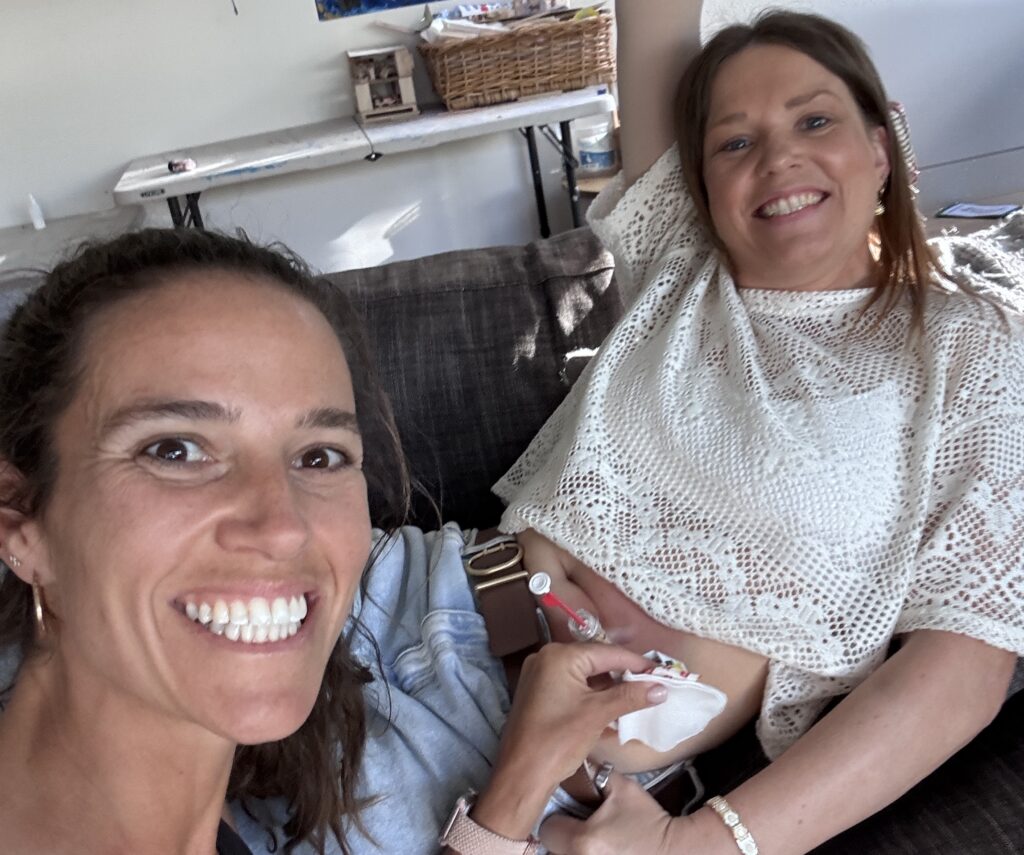
The Zoladex needle is too big for me to inject myself. So every 28 days I visit my friend Freya (Freya is a nurse) and she administers it. Or I go to the hospital, where the nurses hand me a bag of ice to put on my belly and then jab me once the area is sufficiently numb.
I call it ‘my time of the month’ because it helps to laugh. But in reality, none of this is fun. The needle hurts, it takes time out of my day, it costs money I don’t want to spend, and the side effects are unpleasant.
Zolodex puts me into chemical menopause and that comes with all the traditional menopause side effects – brain fog, joint pain, insomnia and hot flushes. But unlike a typical menopause, doctors can’t prescribe Hormone Replacement Therapy (HRT) as a relief to people like me, because hormones are the exact thing that we’re trying to suppress. (I like to think we are raw-dogging menopause.)
But still, I am grateful. I’m grateful for anything that keeps me well. And I’m grateful to a medical system that makes these drugs available.
Or at least, I was grateful. But now I’m just scared.
In May, AstraZeneca – the pharmaceutical company that makes Zoladex – announced it would discontinue the production of the 3.6mg Zoladex injection from November. After that time, the drug won’t be available on the PBS or the private market.
Apparently, it’s a ‘commercial decision’, but weirdly, that commercial decision applies only to the 3.6mg dose – it doesn’t affect the production of the larger 10.8 mg dose that helps prostate cancer patients. Go figure.
The announcement came as a surprise to clinicians, to advocacy groups and, most alarmingly, to patients. And that’s not just breast cancer patients. It’s women with endometriosis, and any pre-menopausal woman who is going through chemotherapy, regardless of her type of cancer.
It’s taken a month for Zoladex news to hit the mainstream media, and in the meantime, thousands of my fellow breast cancer patients have been in a quiet panic.
Day after day, I’ve seen stories of women having to go to multiple pharmacies to source their drugs because other patients are panic buying. I’ve seen women talking about having their ovaries surgically removed if they can’t get their Zoladex.
And mostly what I have seen is a huge group of women placed in a state of uncertainty, which, given everything they have already been through, feels unnecessarily cruel.
When you’re a cancer patient, and the future is uncertain, you cling to whatever control you can get.
Breast cancer advocacy groups like Breast Cancer Network Australia (BCNA) have been working tirelessly to find a solution. At present, there is talk of the 10.8mg dose of Zoladex being added to PBS, but there are questions over its level of efficiency for breast cancer. AstraZeneca has said it will provide access for an initial six months for women without an alternative solution, but I’m yet to understand who qualifies for that option, and then what happens when the six months are up.
I’m supposed to be on this drug for 10 years.
All I know right now is there are no concrete answers, the clock is ticking … and I feel like AstraZeneca is holding us all hostage.
We’ve been reassured by our oncologists and the breast cancer advocacy groups that there will be a solution by November.
But I can’t help but think, will my oncologist still classify the solution they land on as comprehensive insurance? Or will we have to make a compromise so the big pharmas can make a bit more cash?