
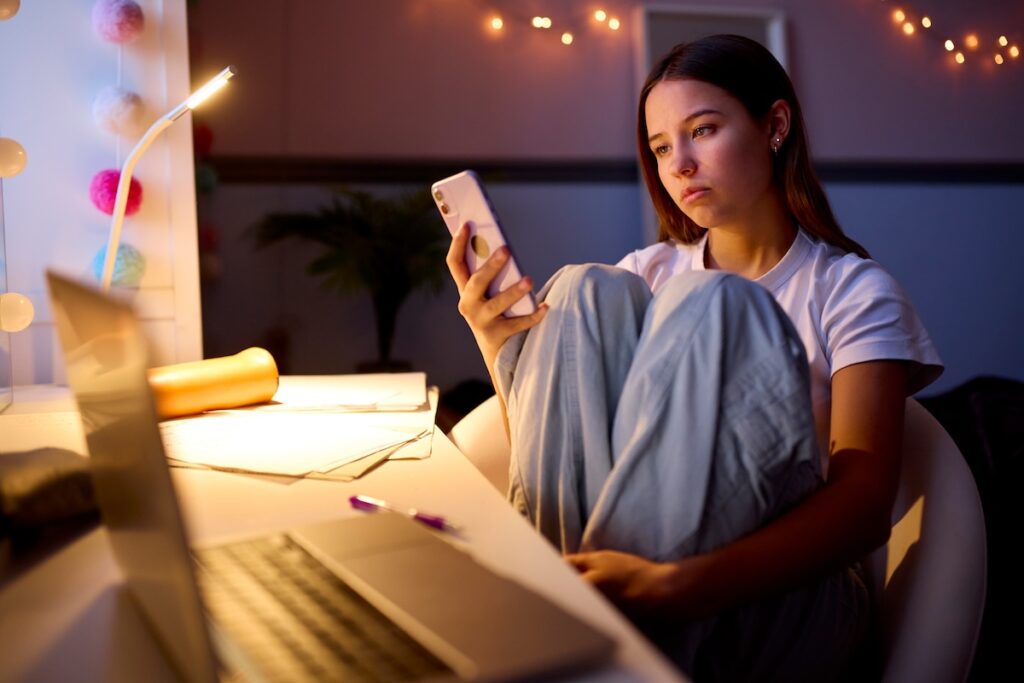
Kids as young as ten could soon be brought before a court, sentenced and locked up in the Northern Territory and from 12 in other parts of the country. But Australia’s proposed social media ban would restrict kids from accessing social media before the age of 16.
The age limits above are in sharp contrast with each other regarding what kids can and can’t take responsibility for, but are being highlighted across #RaiseTheAge campaigns on social media today, after Prime Minister Anthony Albanese announced on Thursday the age limit for his proposed social media ban would be 16.
The proposal, shared before a meeting of the National Cabinet today, will provide no exemptions for those under 16 already on social media, nor will they be allowed to access it with parental consent.
Albanese says the proposal comes because social media is “doing harm to our kids and I’m calling time on it.” He wants to introduce parliament by the end of 2024 with the ban to take effect one year after the law passes and tech companies responsible for enforcing it.
Social media seemingly does harm kids (just as it’s harming adults). Evidence shows a rise in mental health disorders, including eating disorders, in young people since the widespread adoption of social media 12 years ago.
But many mental health advocates and services supporting children are raising serious concerns about a social media ban and advocating for something else instead: education and social media literacy.
Last month, a group of more than 100 experts in the space warned the Federal government that such an idea for children would be “too blunt” and would fail to address some key risks facing kids. The open letter called for any restrictions on the digital world — where children and young people access information and build their social and technical skills while connecting with others, learning, relaxing and playing — to be designed with care. It was signed by organisations including Project Rockit, Save the Children, the Human Rights Law Centre and the Alannah and Madeline Foundation.
Zoe Bradbury from the Butterfly Foundation, who has lived experience of Anorexia Nervosa, has previously shared on Women’s Agenda the need for a whole of system approach around eating disorders, as well as empowering you people to “be safe online and place the onus on where it belongs — social media companies.”
“Toxic pro-eating disorder and diet culture content does not disappear when you turn 16, and knowing myself at that age and other young people, they will always find ways around a ban,” she shared in July. “This content also doesn’t just negatively impact young people. Anyone, of any age, can be influenced.”
After months of talk and speculation, the social media ban proposal now has a suggested age. But from there, the plan is still vague regarding what it will cover, including which social media platforms are covered and how it will deal with new platforms that come along as tech inevitably evolves.
The plan is also vague in terms of how, once kids turn 16, they’re suddenly capable of dealing with social media, given we know that adults still struggle with regulating their use and its impact on their overall health.
These are just some of the many questions to consider in the coming months as more talk about this plan ramps up.
Another question would be whether traditional media platforms – that have run a hard campaign in pushing for this ban – will improve their own standards of content. Will traditional media consider limiting and even eliminating gambling ads? Will they reconsider problematic hosts and commentators, like Kyle Sandilands, who regularly starts his morning drive-time radio show with misogynistic jokes about women?
Also, what parameters will be in place for “platforms” that come up that don’t fall with the definition of “social media”, which the Albanese Government has suggested includes Facebook, YouTube, Instagram, X and TikTok – with the definition that’s in Australia’s Social Media Services Online Safety Code being slated (which currently means LinkedIn would be included).
For all their issues, the above-mentioned platforms (excluding X, formerly Twitter) have at least attempted to put safety parameters in place to protect kids and commit to improving what they offer and do.
What would be the limits on YouTube, a platform commonly used by education providers for sharing resources, and one that does have a good range of educational content enabling kids to access content aligning with their interests (like cooking, astronomy, learning to play an instrument)?
What type of education programs will be provided within schools to ensure that when kids inevitably start accessing social media, legally, from the age of 16, they’re able to understand how the platforms prioritise content, aim to steal their attention, and how to switch off from what they see?
What kind of support is intended for marginalised kids, like trans kids, who depend on social media for access to like-minded individuals and groups?
Unless we ban devices altogether, kids will find access to content and entertainment and ways to connect with each other. The worst type of platform they access is the one we don’t know much or even know anything about.
A social media ban misses an opportunity to centre social media literacy and education at the heart of the conversation and will merely give parents the naive belief their kids are safe online, and social media platforms have less responsibility to work harder to ensure their platforms are ultimately safe for everyone.
Social media is not going away. Not when you turn 16 or 96. We need to learn to live with it safely, and hold tech companies to account for how it impacts users of all ages.
For support with eating disorders or body image concerns, call 1800 ED HOPE (1800 33 4673), chat online or email [email protected]. Free support is available 7 days a week, 8am-midnight, Australian Eastern Standard time.