
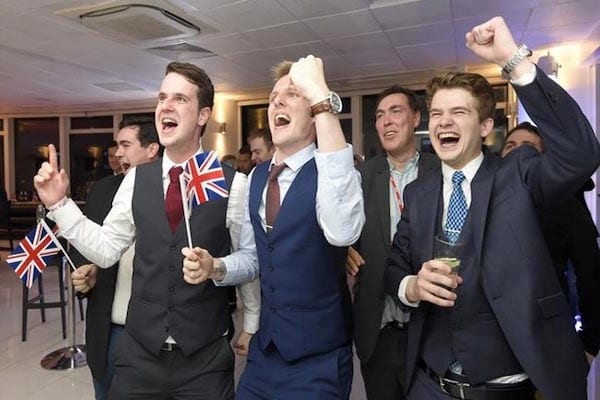

The key victors of the successful Brexit vote seem as surprised by the result as the rest of the world. ‘Leave’ campaigner Boris Johnson was greeted with jeers and a crowd yelling ‘you scumbag’ as he left his house the morning following the vote – possibly not the celebration he was anticipating.
He stayed relatively silent over the weekend, with some commentators suggesting perhaps even he never thought the popular vote would swing his way.
Prime Minister David Cameron and ‘Remain’ campaigner, meanwhile, is now dealing with the consequences of the big gamble he took on the leave vote in order to appease some within his own party. He lost it all, and will now step down from the leadership. He doesn’t want to be the ‘captain’ to steer the ship in its new direction.
What those of us watching news footage from afar may have noticed leading up to the divisive ‘leave’ victory is the lack of female voices involved in the debate altogether. It was Cameron, Johnson, Tory Chancellor George Osborne and UKIP leader Nigel Farage leading both sides of the ‘leave’ and ‘remain’ campaigns. Footage of celebrations from the key ‘leave’ camps over the weekend also appeared to be heavily male-dominated affairs.
The debate’s done, the vote’s in, and there have since been more female voices present in the fallout. German Chancellor Angela Merkel once again takes centre-stage dealing with another EU crisis, while Scottish First Minister Nicola Sturgeon’s also in focus, after declaring that with 62% of Scotland backing the ‘remain’ campaign that there could be a second Scottish vote to leave the UK. The BBC has described Sturgeon as one of the, “few serving leaders in these islands not resigning or under pressure to resign.”
There are so many lessons in all of this regarding leadership and diversity and democracy that it’s hard to know where to start. This was a popular vote, so what happens when such a vote will significantly transform the lives of all those involved, including those who voted against the measures they’ll now have to live through? What happens when the ultimate result of power being given to the people is to bitterly divide rather, than unify them over a popular result?
One thing we might be able to answer in the coming weeks, months and years to come is that when men so heavily dominate such a strong debate, they may unintentionally open doors for women to take power.
Indeed, when parties face significant divides and fractures, opportunities can arise for a new generation or a new type of politician who can bring something new and different to the table.
As Sophie Walker, the leader of the UK’s Women’s Equality Party, wrote in Newsweek over the weekend:
Today must mark the start of a different kind of politics. This referendum has shown us that political movements can trump political parties…
The old political parties are fractured, the electorate divided and while many voters are celebrating having finally been heard, an almost equal number feel more disenfranchised than ever. There will be a rush to throw out the old. But bringing in the new means a lot of hard work and consideration. It means having women at the table. It means having the bravery for positive collaboration to understand and embrace our diversity.
A key tragedy in all of this is the murder of one of the few prominent female voices in the debate and a woman who was so determined and willing to stand up for what she believed, MP Jo Cox. During her maiden speech a year ago she said we “are far more united and have far more in common than that which divides us.”
That doesn’t seem so true right now. But if Walker’s right, it could be the deep fractures that may finally bring diversity and collaboration to the table in the future.