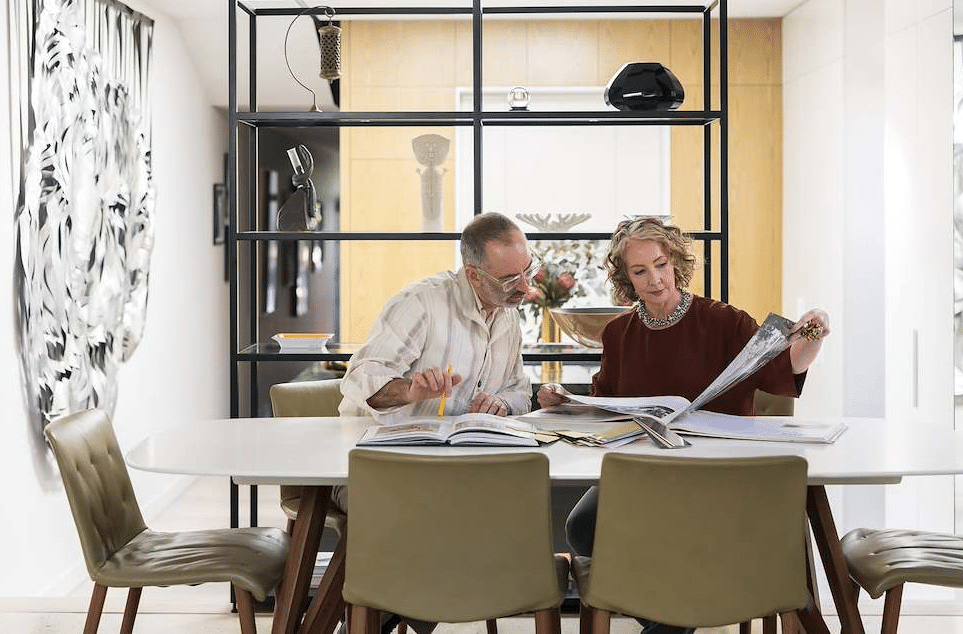
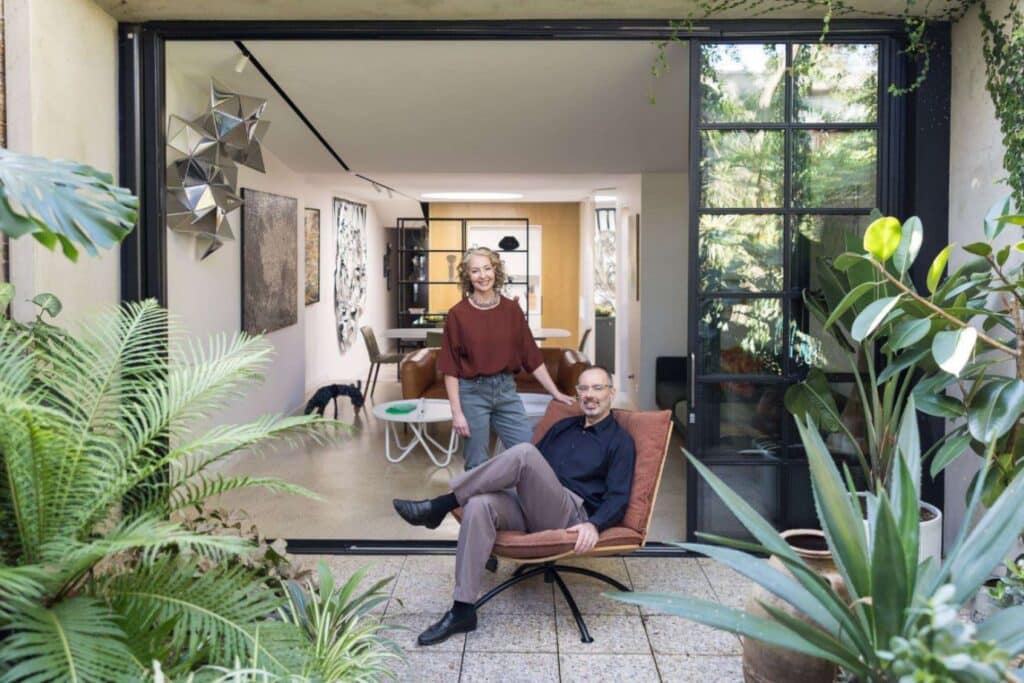
After building a career in finance that took her across international markets and into a partnership at Deloitte, Heidi Forbes made a mid-career shift towards the arts, taking on roles at the Museum of Contemporary Art Australia and Sydney Opera House.
Now, she’s bringing those worlds together with Arthur Alley Studio, a new social enterprise she co-founded with her husband, architect Matthew Allen, to connect Australian artists, designers and makers through limited-edition homewares.
With local manufacturing under pressure and relatively few artists able to sustain themselves through their creative practice alone, the business has a bigger ambition than creating beautiful objects. It aims to generate new income for artists and makers, keep Australian craftsmanship alive and reinvest all profits into the creative community.
Here, Forbes discusses the thinking behind Arthur Alley Studio, why the objects we live with can carry meaning far beyond their function, and what it takes to build a business where commercial success and creative impact go hand in hand.
You started out in finance before moving into the arts, working at the MCA and Sydney Opera House. What prompted that shift, and what did you learn about the kind of work you wanted to do?
I was very fortunate to experience a diverse range of roles across commodities trading, broking and consulting in both Australia and London. These opportunities included working on deals across Europe, Asia and South America and becoming a Partner at Deloitte. When you start your career, in some respects, you are proving you can climb a mountain. As you gain more experience, though, the question becomes about what type of mountain you want to climb. I realised mid-career that I wanted to spend my time in arts and culture. Beyond the personal inspiration I draw from them, I believe arts and culture play a significant role in connecting us to each other, helping us understand difference and creating a cohesive society.
That said, my commercial background provided a solid foundation for Arthur Alley Studio. Governance, strategy, compliance, project management and financial transparency are key to any leadership role, whatever the sector.
Where did the idea for Arthur Alley Studio come from?
Conceptually, Arthur Alley Studio has been organically developing over the last seven or eight years, rather than from a single lightbulb moment. As a Director at the MCA, I had the museum store reporting to me, which gave me unique insight into merchandise commissioning. Matthew Allen, my co-founder and husband, is an architect at Bates Smart with 25 years’ experience. Large-scale architectural projects typically include a public art commission. Both of our careers provided the DNA for Arthur Alley Studio from a commissioning point of view. However, it was through working closely with artists and seeing the decline of local manufacturing in Australia, that we came to understand the need for support.
Around this time, I also travelled to Berlin and visited the Bauhaus Museum. The Bauhaus marked a pivotal moment for collaboration between artists, designers and makers. The idea of bringing that energy to a new Australian enterprise really excited us.
You’ve talked about wanting to create a community that invests in Australian artists and makers. What do you think is missing for creatives right now, and how do you hope Arthur Alley can help?
Most Australians (84 per cent) recognise the positive impact of arts and creativity on their lives and communities. Yet only 9% of artists work full time solely on their creative practice, down from 23% in 2016. There is an expectation that artists will continue to make this courageous choice to create the culture we value despite the personal challenges this brings. Arthur Alley Studio was built to help bridge this gap by creating a new source of income and reinvesting our profits in artists and Australian makers.
4. Why homewares? What appeals to you about bringing artists’ work into people’s everyday lives, rather than keeping it in a gallery?
The homewares or objects we use every day, selected for ourselves and for our loved ones, create meaning in our lives. The platter from a grandmother, your 21st champagne glasses, a childhood cereal bowl – all meaningful stories we create around objects. Objects that have a value to us beyond their function.
Arthur Alley Studio deepens this meaning: the artist brings their intention and creative practice to the design and the maker brings their local technical expertise. Each piece is made in a single limited-edition production run that will not be repeated, which makes it even more significant. This isn’t about taking art out of the gallery. Our artists have established practices supported by commercial galleries and cultural institutions. Arthur Alley Studio is about growing the creative ecosystem, not diluting it.
5. Arthur Alley is a social enterprise, with all profits reinvested to support artists and makers. How have you gone about building a business that puts that commitment at its centre?
The commitment is central to who we are, so we built it into the business from day one. Our company constitution enshrines it and I am a member of the Social Enterprise Council of NSW & ACT. As we grow, we are aligning our operations with the People and Planet First framework, which covers not only how we reinvest our profits but how we operate every day in support of our purpose.
6. What would you love Arthur Alley to look like in five years, and what would success mean for the artists and makers you work with?
In five years’ time, we will have a portfolio of artists, makers and products that celebrate the ingenuity of Australian creativity. We will be shipping internationally and taking private commissions.
Most importantly, Arthur Alley Studio will have reinvested significant funds in the future of artists and Australian makers. For our artists, success means more income, more time to dedicate to their practice and new audiences for their work. For our makers, it means steady, rewarding work that keeps local manufacturing skills alive.