

From a small village in northern New South Wales, Husk Distillers is proving that regional businesses can compete on a national stage. As Head of Brand, Harriet Messenger has helped transform the family-run distillery from a shed on a sugar cane farm into a multi-brand success story built on sustainability, creativity and strong community ties.
Husk Distillery sits on a regional property in the village of Tumbulgum in northern New South Wales. The village is home to just 300 people and perhaps isn’t the most obvious place to build a spirits brand from the ground up.
But for Harriet Messenger, Head of Brand at Husk Distillers, being part of this regional pocket has been a key part of helping her family build one of the country’s most recognisable spirits brands.
Operating from a sugar cane farm where cattle roam nearby, rainwater tanks support production and the community forms part of the local supply chain, Husk Distillers has grown to become one of only a tiny handful of farm-to-bottle distilleries in the world.
“We couldn’t make the type of rum we make if we weren’t on a farm,” Messenger tells Women’s Agenda.
At the core of Husk’s identity is its “farm to bottle” philosophy. It is one of the few distilleries in the world where the crop is grown, fermented, distilled, aged and bottled in the same location. The business also embraces what Messenger describes as a “full circle distilling” approach, where organic waste from production is returned to the farm as compost or cattle feed.
“We’re all about creating spirits that are connected to the land,” Messenger says.
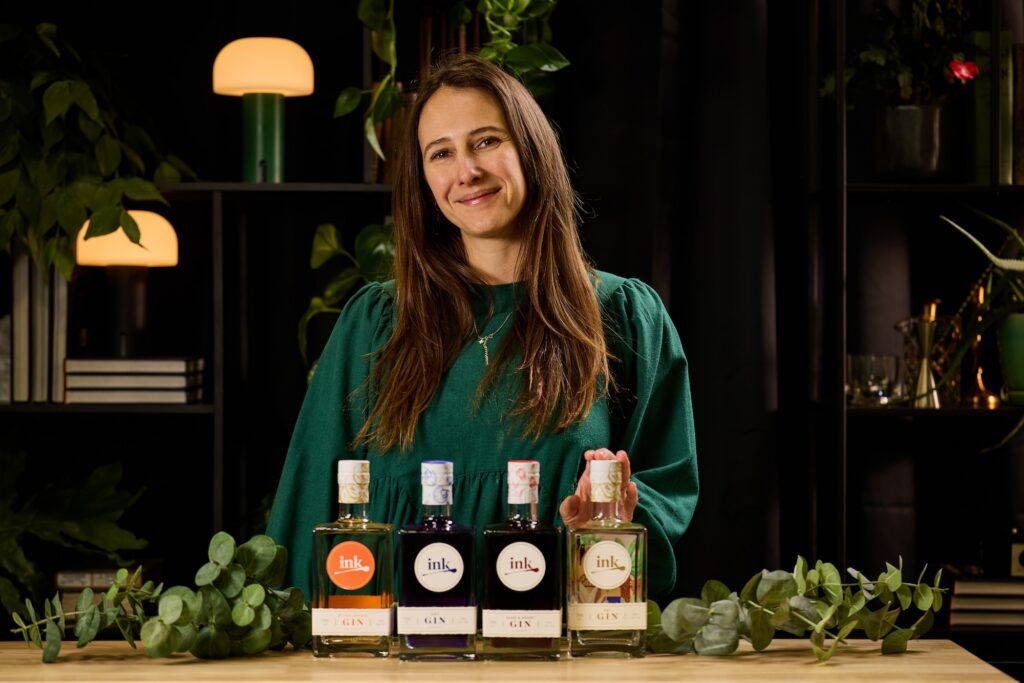
The business was founded by Harriet’s parents in 2012, in a shed at the bottom of the farm paddock. While her father, Paul, experimented with distillation, Harriet was finishing her university degree and building experience at a creative agency in Brisbane, working across clients from energy giants to small hospitality startups, across PR, branding and copywriting.
She had also already started laying the groundwork for the distillery’s brand, documenting the fledgling operation on Instagram and Facebook.
When Ink Gin launched in 2015, a world-first all-natural colour-changing gin made with butterfly pea flower and locally grown lemon myrtle, Harriet stepped into the business a few days a week. The demand was immediate and within months, she was full-time.
One distillery, three brands
Today, Messenger holds the title of Head of Brand, overseeing a portfolio that has grown to three distinct identities: Ink Gin, Husk Rum, and the farm distillery itself as a tourism destination. Each requires a different strategy.
“Marketing a tourism business is quite different to marketing a drinks business,” she notes.
The evolution of her role from a one-person marketing operation to leading a team within a 65-person company is a testament to how rapidly Husk has grown. Messenger says the business has always had a “no bad ideas” mentality and has learnt to be agile and to give things a crack.
“If it works, great. If it doesn’t, we just let it go,” she says. “That has served us well”.
That mindset extends to the business leadership, with the company maintaining a fairly flat hierarchy where staff feel comfortable contributing ideas. As a family-run business, a safe workplace culture has also remained central.
“The drinks industry is a very fun industry,” she says. “But because we’re a family business, we’ve always wanted to make sure we have a really safe, wholesome environment as well.”
Milestones worth celebrating
Like many women in leadership, Messenger admits it can be difficult to stop and acknowledge the milestones while running a fast-moving business. But there are a few that stand out.
One was surpassing one million bottles sold of Ink Gin, which is the world’s first all-natural colour-changing gin, made using butterfly pea flower.
“We had labelled every single one of those bottles by hand,” she says. “That was a pretty cool moment.”
Another was celebrating Ink Gin’s 10th birthday last year, giving the team a rare opportunity to reflect on how far the business had come.
“There are so many people and so much community that contributed to where we are today,” she says.
Husk Rare Blend, the distillery’s modern Australian rum, also took out the best rum in Australia last year.
Running a regional business comes with its unique pressures. Whether it’s contending with staffing issues and smaller talent pool, or heightened freight and transport costs, there are new challenges every day. But Messenger says it’s all the more reason to be intentional, sustainable and community minded.
“We carefully manage everything end-to-end, which is sometimes challenging, but I think it’s great because it forces you to think carefully about how you can be more sustainable and look at where you can take that product or that waste product out of your supply chain,” she says.
“We absolutely love living in a regional area, because you know everybody. Our village is a village of 300 people, but they’re 300 people that we have a connection with. There are lots of challenges, but I think the benefits definitely outweigh them.”
Thanks to our partner CommBank. CommBank supports women in business and the community across all industries and sectors through its Women in Focus team. For more information head to WomeninFocus.com.au.
Drink responsibly. Get the facts at DrinkWise.org.au. This article represents opinions and views of the interviewees’ personal experiences only. It does not have regard to the situation or needs of any reader and must not be relied upon as advice. It is not intended to imply any recommendation or opinion about a financial product or service. Before acting on this information, consider its appropriateness to your circumstances.