

If you’ve been an avid reader of Women’s Agenda for quite some time, as I have, you would’ve picked up on an underlying theme in 2015, which continued into the new year: the focus on women in tech.
And for good reason too, given we know almost every job in the future is likely to involve technology in some capacity. With an estimated 100,000 technology jobs expected to be created over the next six years, encouraging more women to pursue tech-careers is a must.
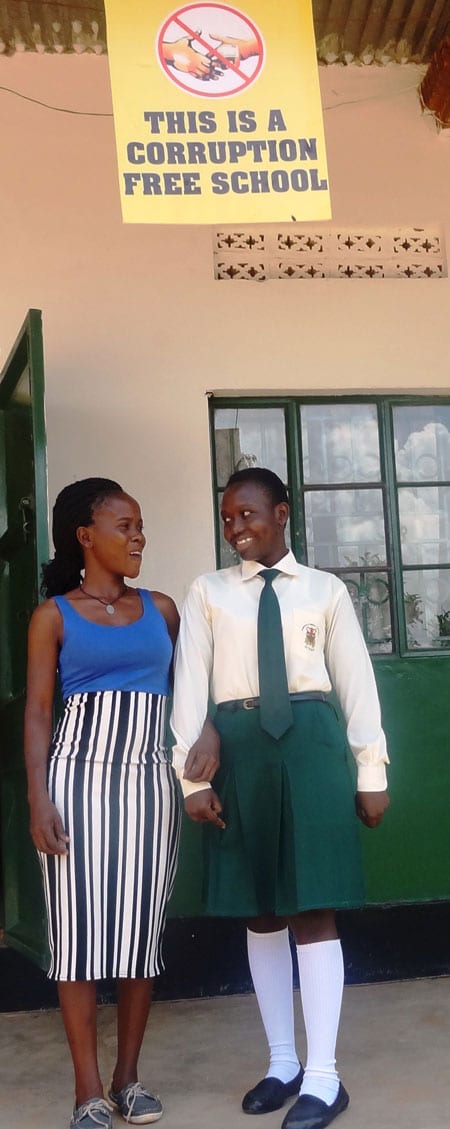
Sadly, we don’t hear many young girls dreaming of carving out a career in tech but Dorothy Nalwadda’s story is living proof that sometimes, we end up in the most unexpected of places. This inspirational woman’s story also highlights how something we take for granted has the power to transform lives: education.
How many times have your kids complained about having to do homework or wake-up for school on a Monday morning? And hey, there’s no finger-pointing from this corner – when I was a kid, I remember trying to keep my eyes open for as long as possible on Saturday nights to delay Sunday’s arrival because I knew the next day was Monday, a school day.
Dorothy’s story is the kind of tale that makes you realise how lucky we are.
As a young girl in rural Uganda, Dorothy wasn’t allowed to go to school, and spent her days working on the family farm. While she understood helping to provide for her family was essential, she realised that without an education, her life was destined to be spent on the farm and eventually, she’d be married and made a young bride.
What she never could have predicted was that at just 6-years-old, Dorothy’s life was set to change forever, due to a cruel twist of fate that saw both of her parents killed.
As a result, Dorothy and her five siblings went to live with their auntie and her five children.
Keep in mind, at this point, Dorothy had never had a book read to her, been taught her ABCs or even how to count from 1 to 10.
Her aunt managed to secure places for Dorothy and three of her siblings through an ICARE program at the local ABC School. From here, she’s never looked back.
“When I started studying, I channelled my passion for education into becoming one of the best students in my school,” says Dorothy.

And there’s no doubt Dorothy’s hard work and commitment has paid off – today, she’s established her own IT company and continues to empower others through education by teaching part-time at the Comprehensive College in Kitetika. For her and her extended family who she also supports, poverty is now a distant memory.
“Our vision is to become one of the top website designers/software developers in Uganda,” says Dorothy.
Programs run by organisations such as ICARE are made possible by Australia’s aid program.
You may have heard about the severe aid cuts that our Government is planning to make in 2015/2016 that are destined to drive Australia’s aid contribution to its lowest ever levels.
In case you’re not up to speed on the current state of play, here are three fast facts.
Fact #1: aid cuts estimated at a further $200m still linger, on top of the billions that have already been cut.
Fact #2: these cuts will have an impact on many people. Programs, such as those run by organisations like ICARE that increase access to quality education, will be cut or reduced denying people the chance of a better future.
Fact #3: by cutting Australian Aid, the government is attacking a proud legacy of unselfish, big-hearted Australians pitching in to help people build better lives.
Sadly, if calls for Prime Minister Malcolm Turnbull to start repairing Australia’s aid budget continue to go unnoticed, we must ponder this question: will stories such as Dorothy’s be unheard of in the future?
Make your voice heard and join the Campaign for Australian Aid this election year.