
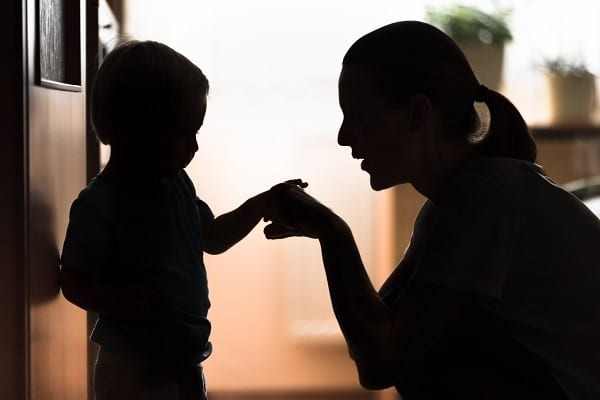
“I can’t go on the big swings, Mum. I’m a girl.”
So said my then-3-year-old, as we wandered towards a playground for some decompression time after daycare.
I tried my best to hide the stumble in my step as, in that split second of weighing up how best to respond, one thought rang loudest.
How on earth did my daughter just say that?
As the then-leader of the Office for Women in Sport and Recreation, this is a child who, at that point in time, had only ever seen women play live sport. A child who played dress ups in my all-women’s team gear. A child who had only ever been told that all of sport, and all of life, was open to her.
If anyone’s child was going to be insulated from limiting gender stereotypes about sport and play, surely it would be mine. Right?
I mean, even our conversation was en route to a playground sitting in the shadow of Ikon Park, home of the first ever game of AFLW.
And yet just 3 months in a new daycare, in a room alongside 5-year-old boys about to head off to primary school, had been enough. Despite all the protective layers I thought I was building, whatever was being said in that daycare yard had dug its nails into her young mind.
Because we need to be honest with ourselves: Why wouldn’t these young, impressionable boys assume that yard was meant for them?
After all, what is the world they are being exposed to?
A world where mainstream media covers men’s sport around 4 times more than women’s sport. Where brands invest upwards of 9 times more in men’s sport than women’s. Where Australia’s two largest men’s football leagues have 126% more rounds than their women’s counterparts. Where the world’s best paid athletes are all men. A world where their fathers are more likely to retain their leisure time, while their mothers shoulder the load of the family’s unpaid care.
A world of imbalance.
A world still shaped by generations of biased decision-making about who is automatically granted first crack at the spotlight. Who we broadcast, pay, invest in, and celebrate. Who has never been questioned, let alone even contemplated, if they belong.
Even as we look to International Women’s Day and a week of the Townsville Fire winning the WNBL Championship, the AFC Women’s Asian Cup continuing across the country, and the Australian Women’s Cricket Team hopefully securing a series win against India, we will hear far more about the Grand Prix, AFL’s Opening Round, and the remainder of the NRL’s Round 1.
After all, nothing says International Women’s Day quite like wall-to-wall coverage of men’s sport.
This matters. And it matters far beyond sport.
Research from Women’s Leadership Institute Australia found sport is covered in Australian media 3 times more than any other topic. That is one very large megaphone sending a very clear message on who we celebrate, who we respect, and who we invest in.
And apparently, it still isn’t women.
This year’s International Women’s Day theme of ‘Balance the Scales’ calls on us to confront imbalance wherever it persists. But unless this megaphone changes its tune, can women and girls truly be free to shape their own future in a country where the people we put on a pedestal to be celebrated, respected and invested in still do not look like them?
So let’s fix that, because the answer is sitting in plain sight: Back women’s sport.
Watch it. Go to it. Talk about it. Celebrate it. Better still, sponsor it. Advertise within it. Invest in it.
There’s a reason UN Women identified reducing the investment gap, promoting equal economic opportunities, and advancing sports media among the 6 principles in its global framework for countries seeking to advance gender equality in and through sport. Elevating women’s sport isn’t some niche cause. It is foundational to any hope for a gender equal Australia.
Today’s “big swings” are tomorrow’s laboratories, startups, cockpits, operating theatres, boardrooms, and parliaments.
All children knowing they all get to have a go is important for far more than just playground harmony.