
When I started my career as a 23-year-old engineering graduate in Paris, my daily walk through the rail workshops involved a gauntlet I’ll never forget: “girly calendars” of naked women staring back at me as I made my way to the office.
As a young woman in her first “real” job, those images forced a difficult internal dialogue. How am I perceived? Is this a workplace where I will ever be respected? Or am I just a guest in a man’s world?
That was more than a decade ago. Thankfully, things have changed – while it has not happened quickly and there is still a gap, I can see that meaningful progress is being made.
Back then, being the only woman in the room was normal. I was often met with comments about my appearance, as though that were the only metric by which my performance could be judged. A male colleague once told me I should take it as a compliment — that if I were doing a bad job, I’d hear about that instead.
Another time, after successfully accompanying a European delegation to a meeting at our headquarters, I was quietly kept in the “babysitter” role even after I’d been promoted to a senior position that should have put me at the head of the table.
When I arrived early at the office, the (male) security staff assumed I was there as a junior worker simply to open up. I had to tell them, “No, I am the manager in charge.” Interestingly, I never received similar comments from the cleaners – who were usually women.
Thankfully, that culture is evaporating. As we mark the International Day of Women and Girls in Science this month, I am reflecting on how far we’ve come and the momentum that’s building. Because despite the challenges, I’ve been supported more than I’ve been held back, and I’ve seen firsthand how workplaces can evolve when they commit to doing better.
Today, I’m a senior director at RATP Dev Australia, part of a global public transport group operating on five continents. I’m still an exception rather than the rule — women make up just 12% of the global public transport workforce, and only 28% of the Australian rail workforce. But the numbers are moving in the right direction: in 2014, that Australian figure was just 17%.
In my company, we’ve made gender parity a strategic priority. It’s embedded in our executive bonuses, our recruitment processes, and our leadership pipeline. We’re on track to meet or exceed our targets for female representation — including here in Australia.
And we’re not alone. Victoria’s Women in Transport Program is one of the initiatives helping shift the balance in a sector long perceived as “for men”. Victoria is also home to the world’s first all-women tunnel boring machine crew on the Suburban Rail Loop — a milestone that would have been unthinkable when I first walked past those calendars.
These aren’t symbolic wins. They’re structural ones.
What changes when you bring more women into transport? Everything. Women bring fresh ideas and different expertise that drive transformational change for commuters.

We see this across five continents at RATP Dev: from Egypt, where women are stepping into metro-driving roles for the first time, to Saudi Arabia, where our Riyadh Metro subsidiary boasts a 36% female workforce. While we are still far from parity, the momentum is undeniable.
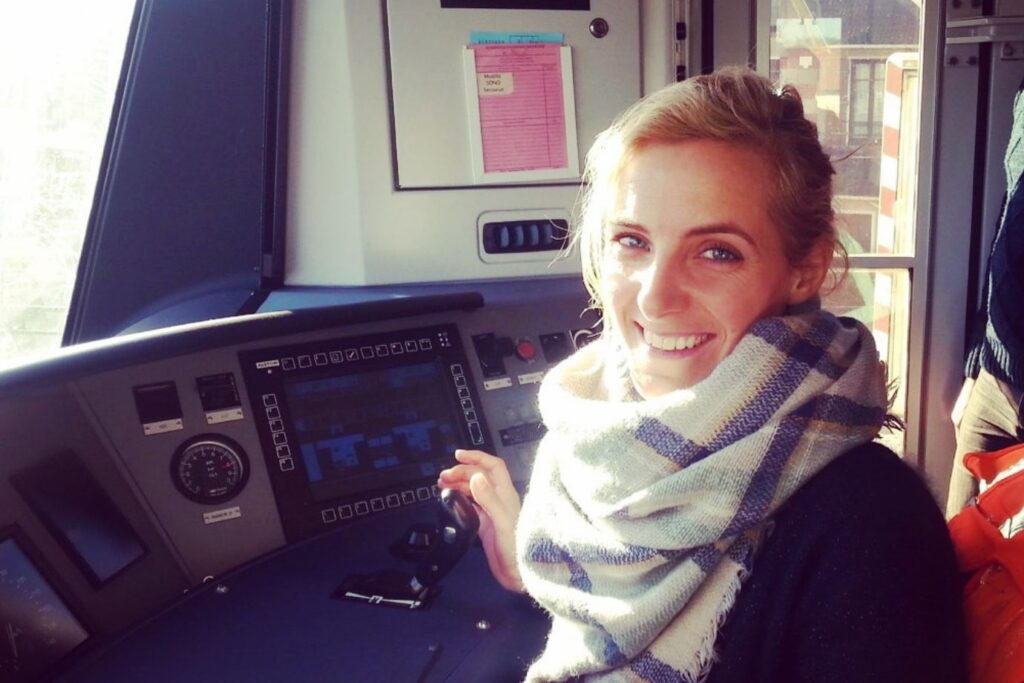
And I’ve seen it personally. I was one of the first women to run some of Paris’s busiest metro lines — Lines 13 and 14 — known for their complexity, crowding and operational challenges. I loved driving the trains myself, sometimes once or twice a week. Later, I led a mixed team of experts to analyse, propose and if necessary lead projects (like a complicated timetable redesign) to improve the performance and customer experience of RER Line A, the busiest regional rail line in Europe.
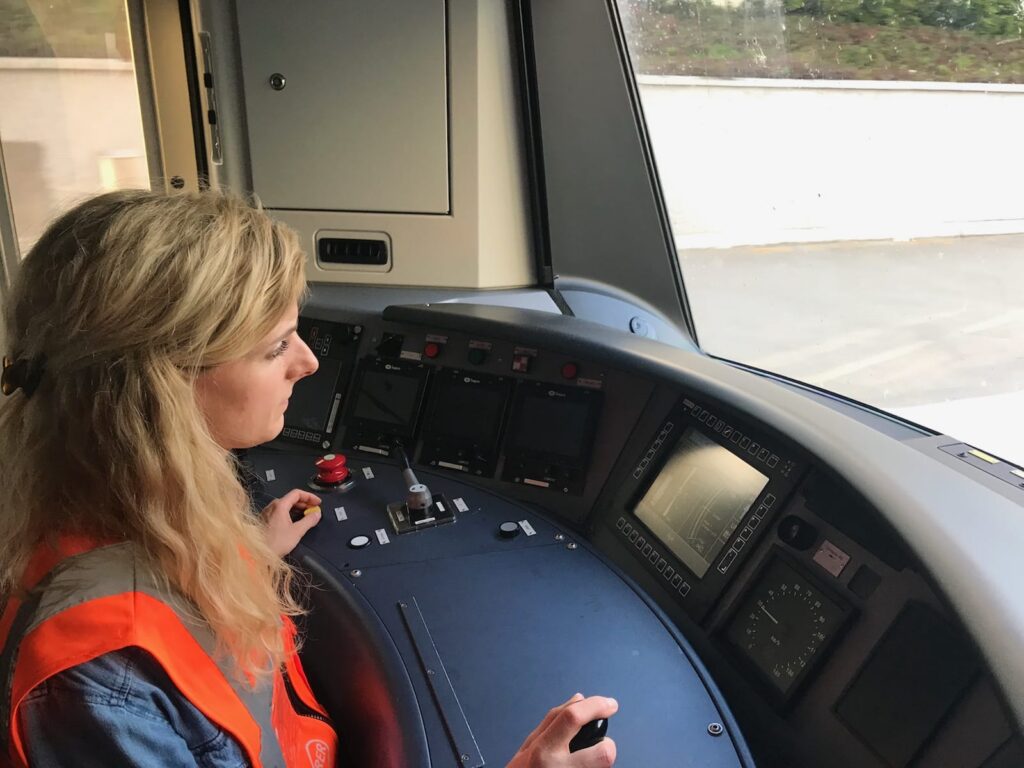
Women bring fresh ideas, different perspectives and new expertise. Diversity is a performance advantage.
A more inclusive industry is also a more sustainable one. Australia faces a major skills shortage in transport. With $155 billion in infrastructure planned between 2022 and 2037, the sector needs 70,000 new workers. We simply cannot meet that demand without attracting, retaining and promoting women.
The Australasian Railway Association put it plainly last year: we need “a considered and concerted effort” to remove barriers and create inclusive workplaces. That means more than recruitment targets. It means education, open communication, and cultures where women aren’t made to feel at fault for being the “wrong” gender.
It also means addressing safety — a key concern for women using public transport. A Monash University study last year found that women in Melbourne frequently adopt precautionary measures to feel safe on trains. Globally, one in five people say they avoid public transport due to security concerns. In France, public transport remains the leading location for sexual assaults. When women run transport systems, we prioritise the safety of our passengers because we understand their lived experiences. Conversely, if we want more women working in transport, we must also make transport safer for women.
Public transport has shaped my life. Growing up in Paris, I didn’t own a car until I moved to Australia — and only then so I could explore with my children and get to the beach. Transport is more than infrastructure; it’s freedom, opportunity, connection. And women deserve to be part of shaping it. There is still work to do. But the momentum is real.
The future of transport — and of every male‑dominated industry — will be stronger, safer and more innovative when women are not the exception, but the norm.