
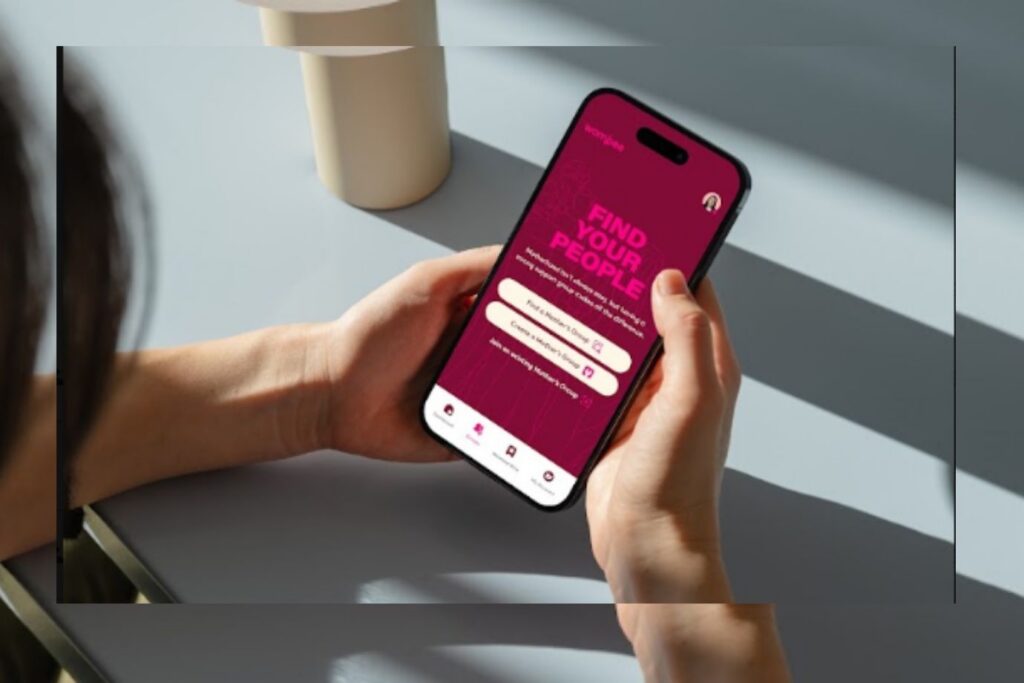
From a lonely pregnancy in a new region, to a near-meltdown after a live TV appearance and 10,000 users in nine months, Lauren Perrett on building the platform she wished existed the first time around.
Moving cities pregnant and trying to find mum friends
I moved to a new region six months pregnant with my first baby. I was also the first in my friend group to have one, so there was no one back home who’d been through it either – no family nearby, no old friends a suburb away, not one person who understood what was actually coming. I was ready to nest, and more than anything, I wanted to find my people before I needed them. So I did what everyone tells you to do: I joined the local mums’ Facebook group.
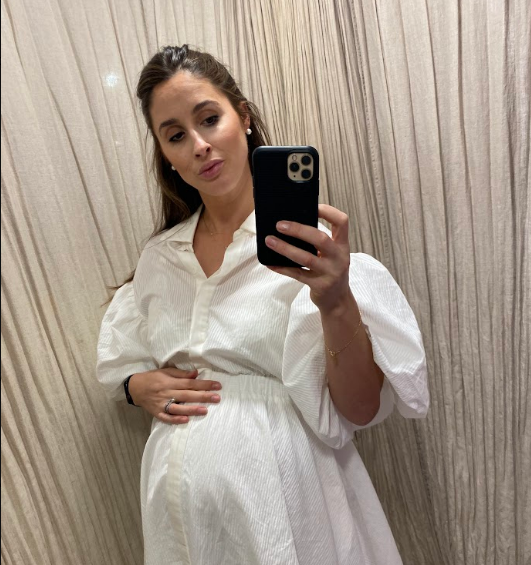
It had tens of thousands of members. Posting a question felt like shouting into a stadium – it disappeared under a hundred others within the hour, answered by strangers I’d never actually meet. I tried a Child & Family Health Clinic-run mothers’ group once my son arrived, and it was fine, but it started two months later than I needed it to, and by then I’d already spent the hardest, strangest stretch of early motherhood mostly on my own. It was some of the loneliest moments of motherhood so far.
That pattern hasn’t stopped since. To this day, I watch women post into Facebook groups of twenty and thirty thousand people, hoping to find just a small few who’ll actually reply – trying to feel some sense of belonging in a season defined by unknowns and sleeplessness, in a room built for a crowd, not a friendship. It’s constant, quiet proof we’re filling real white space: mothers were never short of people around them. They were short of anything built to help them actually connect.
The more mothers I spoke to, the more I realised I’d stumbled onto something structural. This wasn’t my first business, so I could tell the difference between a problem that’s mine and one that’s everyone’s. I’d spent years building BubbaDesk into an eight-location national brand with 51% year-on-year growth and a spot on the AFR Fast Starters list, and I’d learned that lesson the hard way once already: the businesses worth building are the ones solving something real, not something convenient.
So I did what I’d done the first time around. I talked to people. Over 300 mothers, in fact, in kitchens and group chats and voice memos sent at 2am while feeding a baby, all describing some version of the same gap. Pregnant women wanting connection before their baby arrived and finding nothing built for that. Second-time mums who weren’t offered a new group and had nowhere obvious to go. Mothers who moved suburbs, or didn’t click with the group they were allocated, and mums that were onto their second, third baby – and so must be ok without one…
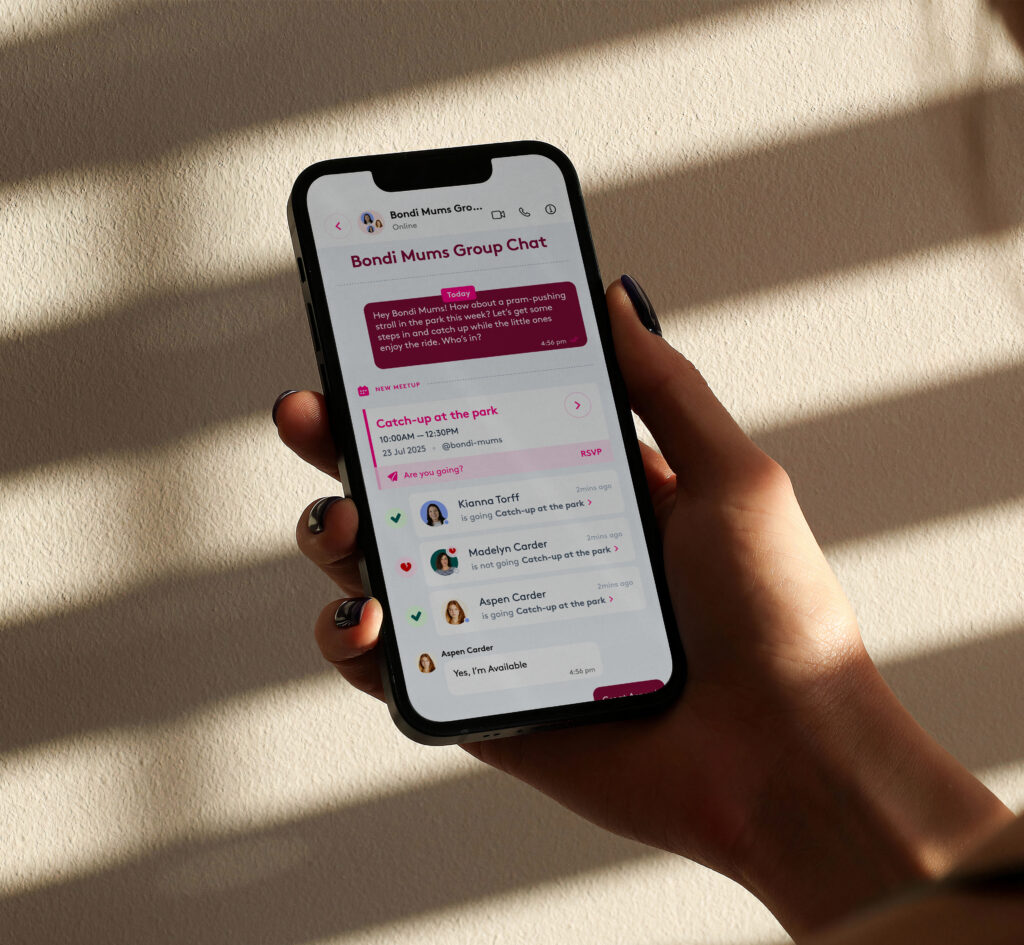
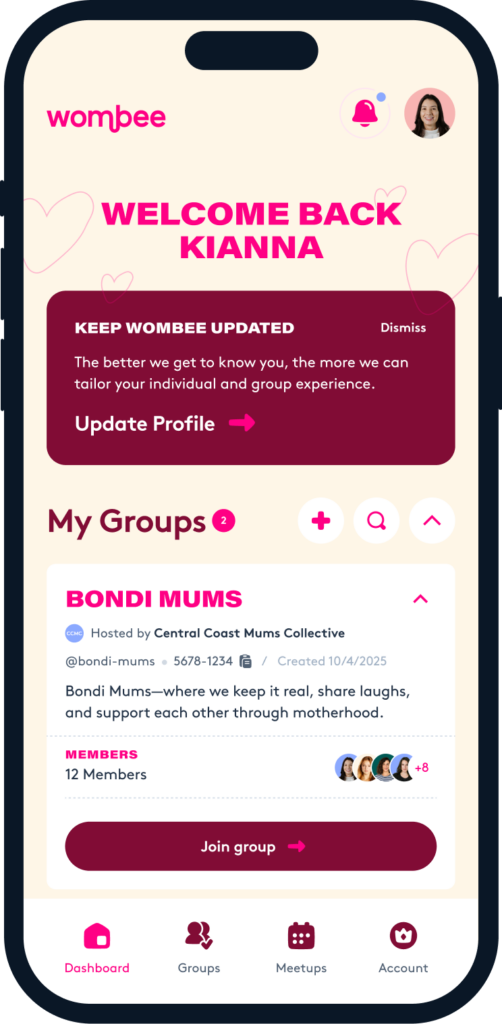
Nothing existed that was actually built for this. WhatsApp wasn’t built for mothers. Facebook wasn’t built for mothers. They were built for messaging, and for broadcasting to a crowd, and mothers had been making do with tools designed for something else entirely. So with a small local team – an engineer and a strategist – we built something that was.
We launched quietly at first. Before the app went live, we papered a few local playgrounds with posters carrying our logo and a QR code to a waiting list, and the only line of copy on them was “the best thing since nipple cream.” It worked exactly the way we hoped – mums photographing them, texting each other, asking around, scanning the code before they even knew what they were signing up for. That’s still the tone I want Wombee to have: real, a bit cheeky, made by someone who’s actually been there.
Then we went live on the Today Show, and I found out what it feels like to nearly break your own product on day one. Downloads came in way faster than I’d anticipated, and for a few hours our small team was doing everything at once – watching servers, answering support messages, refreshing sign-up numbers that didn’t seem real. It was incredible, terrifying, and heartwarming, and it was the best confirmation I could have asked for.
Since then, in under a year, Wombee has grown to more than 10,000 users and 1,200-plus active mothers’ groups across Australia and New Zealand, almost entirely by word of mouth. Staci, from the Parramatta Mums group, messaged me recently to say her group has been catching up fortnightly for months, the numbers growing every time, moving between cafes and parks and, most recently, a sensory class set up specifically for their Wombee group. “It’s wonderful finding people who I wouldn’t have otherwise met,” she wrote, “and to know that we’re all supported on our motherhood journeys.”
My ambition for Wombee isn’t small. I want it to be the place mothers go without a second thought, the way they’d search for a pram or a paediatrician – the default platform for finding connection in motherhood. Wombee is live in Australia and New Zealand now, and the problem we’re solving doesn’t stop at either coastline. Wherever women are having babies and losing their village in the process, I want Wombee to be there rebuilding it.