
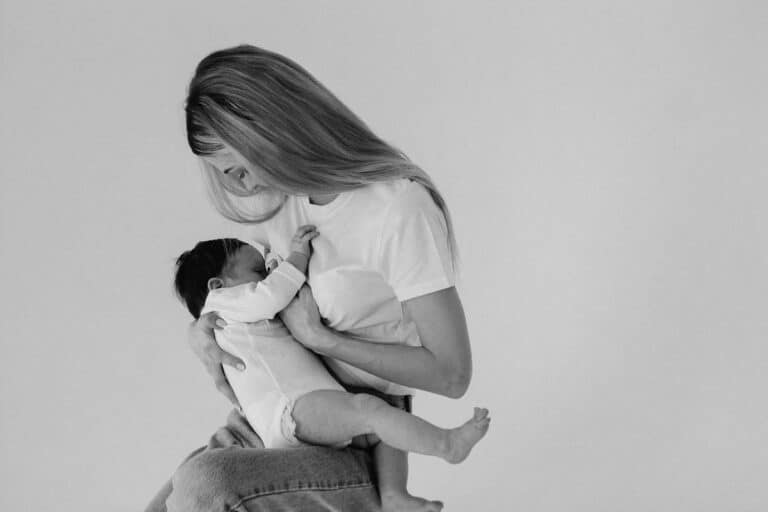
When Senator Marielle Smith stood up this week and shared her own story, the agonising breastfeeding pain, the postnatal anxiety that crept in when the help ran out, I felt utter pride and sadness at what it has taken to get here.
I want to share my role in this inquiry. I am a Perinatal GP and Lactation Consultant, dealing daily with mothers who are breaking under the weight of fragmented and absent care structures. Late one Friday night, past midnight, I sent Senator Marielle Smith an email. By the next morning, I had a personal response from Marielle herself. This alone is highly unusual for a Senator. We had a meeting organised by the end of that week. We sat down together two weeks later.
She already cared deeply about postpartum mental health. What clicked, after we spoke, was the infant feeding piece: that her story was every mother’s story after birth. Marielle understood immediately that despite her struggle, she had had a more positive outcome because she had access to support at the right moment. But most mothers do not have this support available to them.
The Senate has now voted to establish a Select Committee on women’s health, chaired by Senator Marielle Smith, to hold public hearings across Australia on postpartum healthcare, fertility and women’s pain. As a doctor, I am so glad to see the breadth of issues this inquiry will examine. All of them deserve the attention they are receiving.
But infant feeding in the postpartum period has never been adequately acknowledged as an area of importance and, as a result, is now an area of crisis. We have no system in place to recognise this unique time. After birth, there are two patients with complex, interdependent needs requiring specialised knowledge and care. As a result of this deficit, mothers and parents have absorbed the consequences, alone, at home, in the middle of the night, often to their profound detriment.
The Disconnect Nobody Talks About
For many women, postpartum mental health deterioration is not inevitable. It is For many post partum women, mental health deterioration is not inevitable. It is shaped by whether the system meets them at the moment they need it most. Too often, it does not, and the consequences can be profound and preventable.
On any given day in my clinic, I am seeing a mother and her baby because the baby is not gaining weight. She is exhausted. She is scared. She has not slept properly in weeks. She has been told five different things by a midwife, nurse, GP, paediatrician and LC, and she does not know who to trust. She has been placed on exhausting feeding schedules or prescribed medications she does not understand the need for. For some women, this combination of exhaustion, conflicting advice and inadequate support is where mental health deterioration begins.
Yet that is not why she has come to see me. She has come for the baby alone, and she is determined to keep trying to provide breastmilk. Not because anyone is pressuring her. Because it is her choice, made from the deepest part of who she now is.
This is what Marielle understood acutely, and what most people miss. The drive to provide breastmilk is not simply the result of external pressure. In Australia, 96% of children had initiated breastfeeding in the 2010 to 2011 Australian National Infant Feeding Survey (AIHW, 2011). Yet breastfeeding continuation is much lower, and a 2023 Australian study found that the most commonly reported reasons for cessation were breastfeeding challenges and perceived insufficient milk supply (Reynolds et al., 2023). The relationship between breastfeeding cessation and maternal mental health is complex and bidirectional, but evidence suggests that breastfeeding cessation can be associated with an increase in postpartum anxiety and depression symptoms (Ystrom, 2012). Yet infant feeding remains largely absent from how we design and fund postpartum care.
The principle that should guide our response is simple: empowered is best, and informed is essential. That includes supporting every mother’s choice, including her choice to supplement. No more basic dichotomies of breastmilk versus formula that entirely annihilate the complexity of this time and the mother.
The postpartum period is one of the most profound periods of neuroplasticity in adult human life. The maternal brain undergoes significant structural reorganisation during pregnancy and the postpartum period, including changes in grey matter volume and cortical thickness, as the brain adapts to the profound demands of parenthood (Chechko et al., 2022; Nehls et al., 2024).
These changes reflect an extraordinary period of biological and psychological adaptation. The maternal brain becomes highly responsive to infant cues and the demands of caring for a newborn. Infant feeding sits within this complex period of adaptation. For many mothers, the ability to feed their baby in the way they hoped or intended can carry enormous emotional significance.
When that need goes unmet, when breastfeeding is not what the parent wants, is unsupported, or becomes a source of pain and fear rather than connection, it can create a profound disconnect between what the mother wants and what she is actually able to do. That disconnect can contribute to distress, anxiety, grief and, for some women, deterioration in mental health.
The maternal brain is not irrational. It is highly adaptive, specialised and undergoing profound change in response to pregnancy, birth and the demands of caring for a newborn. What is irrational is a society and health system that fails to meet this biological and psychological reality with adequate, skilled and accessible support.
The Scale of What We Are Ignoring
Australia has around 300,000 births every year. Each birth brings a mother and an infant into the postpartum period, with complex and interdependent needs that our health system does not consistently meet in a coordinated way. That means hundreds of thousands of mothers and babies each year are navigating this transition, often with fragmented support after discharge.
The gaps in national data make this harder to see. Australia has important perinatal datasets, but AIHW reports that there is currently no national data on perinatal mental health screening, service use or outcomes, and data about the postnatal period after discharge are currently outside the scope of the National Perinatal Data Collection.
Treat, Yes. But Also Prevent.
As a doctor, it has been ingrained in me to catch disease early. We do not wait for a patient to have a heart attack before we treat their blood pressure, and we should not wait for a woman to be in crisis before we support her.
We have made real progress on postpartum mental health, in screening, in services, in clinical awareness, but perinatal mental health conditions still affect an estimated one in five mothers in Australia.
Because treatment is not the same as prevention.
The power of this inquiry is that it can reduce the number of women who reach crisis in the first place. If we get infant feeding support right, standardised, funded, structured and accessible regardless of postcode or income, we have an opportunity to reduce some of the factors that contribute to postnatal depression and anxiety.
Reduce. Prevent. Improve.
That is what this inquiry’s recommendations can achieve. But only if the committee is clear, from the outset, that infant feeding is not peripheral to the postpartum experience. It is at its heart.
What I Am Asking the Committee to Do
What I Am Asking the Committee to Do
Name the link and follow the prevention logic. The connection between unsupported infant feeding experiences and maternal mental health deserves to be central to the inquiry’s consideration. The committee must ask not just how to treat women in crisis, but what structural interventions, in infant feeding support, postpartum GP care, and access to lactation consultants trained to a national standard, could reduce preventable distress and improve outcomes for mothers and babies.
Address the equity gap. A woman in inner Sydney can access private lactation support. A woman in rural Queensland often cannot. Any recommendation that does not address geographic and financial access is incomplete.
Fund the post partum care and the multi dsicplinary team who is best equipped to manage it – accordingly. Senator Smith was able to continue breastfeeding because she accessed a lactation consultant. That support must not be a privilege. It must be infrastructure, available to all mothers and families who need it.
Collect data to build the evidence base. Australia has important national perinatal datasets, but significant gaps remain in understanding what happens after discharge, particularly in relation to postnatal mental health, service use and outcomes. Without comprehensive and comparable data, we cannot adequately measure what works, identify what fails, or hold the system accountable. That must change.
We Need Your Story
None of this changes without submissions from the public. The committee needs to hear what actually happened, not what the system thinks happened, but what women, families, and the clinicians who care for them have lived.
You do not have to be recently postpartum to submit. I have had women in their eighties approach me with tears in their eyes to tell me about how they were treated after birth. Decades later. The grief does not expire.
If reading this is triggering an emotional reaction, elation, grief, or fear, that response matters. Please submit it.
If you have a birth story of fragmented care, submit it. If you were shamed about your baby’s weight gain, or for formula feeding, or for breastfeeding. If you had medical needs that were unmet or undiagnosed or dismissed. If you were sent home without support and left to figure it out alone. Whenever it happened. However long ago.
And if you are a healthcare worker, a midwife, a GP, a paediatrician, an obstetrician, a child and family health nurse, a lactation consultant, a physio, a speech pathologist, a social worker, submit your experience of trying to care for postpartum women without adequate training, without referral pathways, without system support. Submit the story of paying out of pocket for training in a specialty that should be considered essential, not optional.
Your story is evidence. Submit it.
This Is What We Worked For
To every woman and birthing parent: you are incredible, and I am sorry for the struggle. Let’s get the support embedded that you already deserved, for your children, and for every mother coming up behind you.
To my colleagues: you have been an absolute lifeline for parents. This inquiry is a chance to relieve that burden, to design the system around you that should have been there all along.
Marielle and her team, Emma, Sophia, Carrie, Mario and Kelsey whose responsiveness and work has been extraordinary. Not just in the ambition of what they have built, but in how they have engaged with the evidence at every step. We need to keep Infant feeding at the heart of this Inquiry. We cannot allow the suffering to continue. More than half a million Australians every year deserve better than that. This inquiry is the place to begin.