

Inclusive organisations are 10 times more likely to be innovative and eight times more likely to work together effectively. Yet in Australia’s innovation sector, women and other minority groups remain dramatically underrepresented and underfunded.
In 2026, there’s a continued push to ensure inclusion is embedded in the system from the outset, with innovators, programs and funders increasingly starting to challenge the status quo.
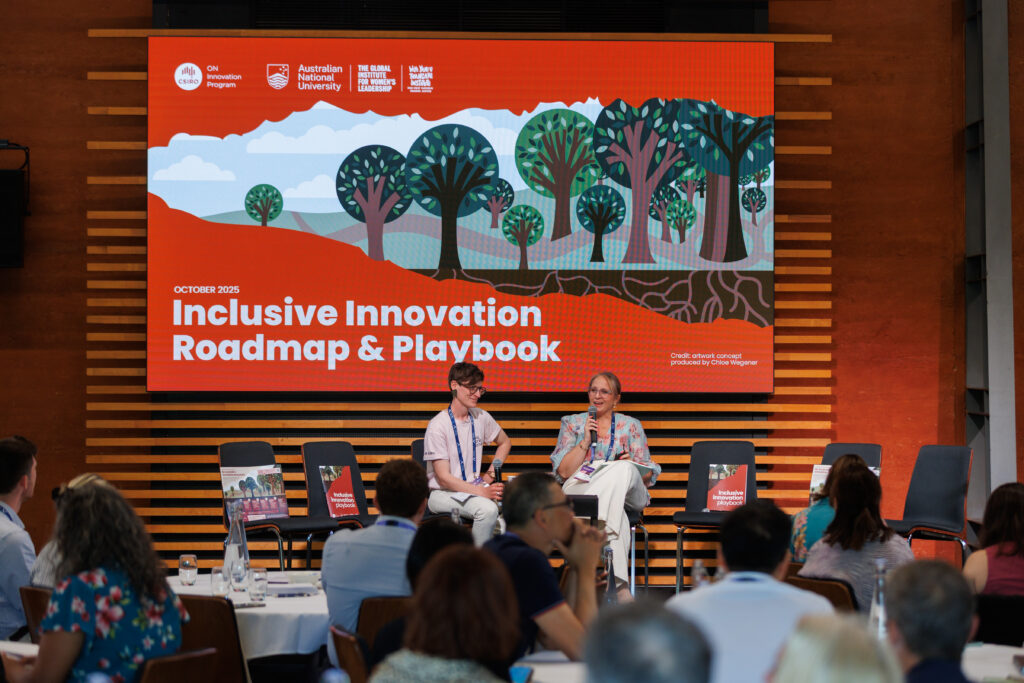
Indeed, CSIRO’s ON Innovation Program partnered with the Global Institute for Women’s Leadership (GIWL) and the Wiyi Yani U Thangani Institute for First Nations Gender Justice (WYUT) recently to undertake an independent evaluation of the program’s diversity, equity and inclusion outcomes, with a mission to co-design a practical response.
The result is the Inclusive Innovation Playbook.
It’s a ground-breaking resource now being shared across Australia’s broader innovation ecosystem, exploring how inclusive practices can create better outcomes for innovators, businesses, and the wider community.
And while progress is being made across the innovation sector, the Playbook reveals how far there is to go, especially when it comes to representation of women founders. For example, in 2024, women-founded startups received just two per cent of Australian startup funding, with all-women teams receiving an average of $1 million compared to $3.2 million for all-men teams.
In Australia’s startup sector, 45 per cent of founding teams are all-men, and only 19 per cent are all-women. Meanwhile, First Nations entrepreneurs routinely encounter what the Playbook describes as a “trust deficit” in business ecosystems, systemic racial stereotyping, and outright loan refusals from banks.
These are the conditions the Playbook is designed to change.
CSIRO ON’s Program Director, Tennille Eyre tells Women’s Agenda their accelerator program for researchers has “a responsibility to look introspectively”, as well as towards the broader innovation pipeline.
“ON has always measured success across a broad range of factors, with a focus on capability and culture rather than startups or capital alone. This work reflects a continued iterative approach, and a more proactive effort to better understand the barriers in the system, identify where we can do more, and share those learnings to help the broader ecosystem do the same. We’re holding ourselves accountable through self-evaluation, examining our own data and program structures to identify where barriers exist,” says Eyre.
Eyre also says the program’s definition of success has broadened. .
“Success will no longer be defined solely by startups or capital raised. We’re looking at a broader set of measures aligned to capability and culture, and continuing to refine them in a more proactive way so we can better understand barriers and share learnings across the ecosystem. That also means paying attention to who is – and isn’t – in the room, particularly people from underrepresented groups, including women, First Nations people and regional researchers,” she says.
Below, we look at three examples of how inclusive innovation is being put into practice.
Redesigning eligibility to unlock First Nations participation
As explored in the Playbook, one innovation sector leader found that no Aboriginal and Torres Strait Islander businesses had ever been funded by their innovation program.
Rather than simply “advertising harder” to First Nations communities, they redesigned the program, restructuring eligibility criteria and processes to fit how Indigenous organisations actually operate. This included allowing incorporated non-profits to apply, and replacing written Expressions of Interest with conversation-based scoping sessions.
Within weeks of the changes, an organisation that had been in negotiations for two years signed its first contract, while 10 per cent of approved projects through the program are now going to Aboriginal and Torres Strait Islander-owned companies.
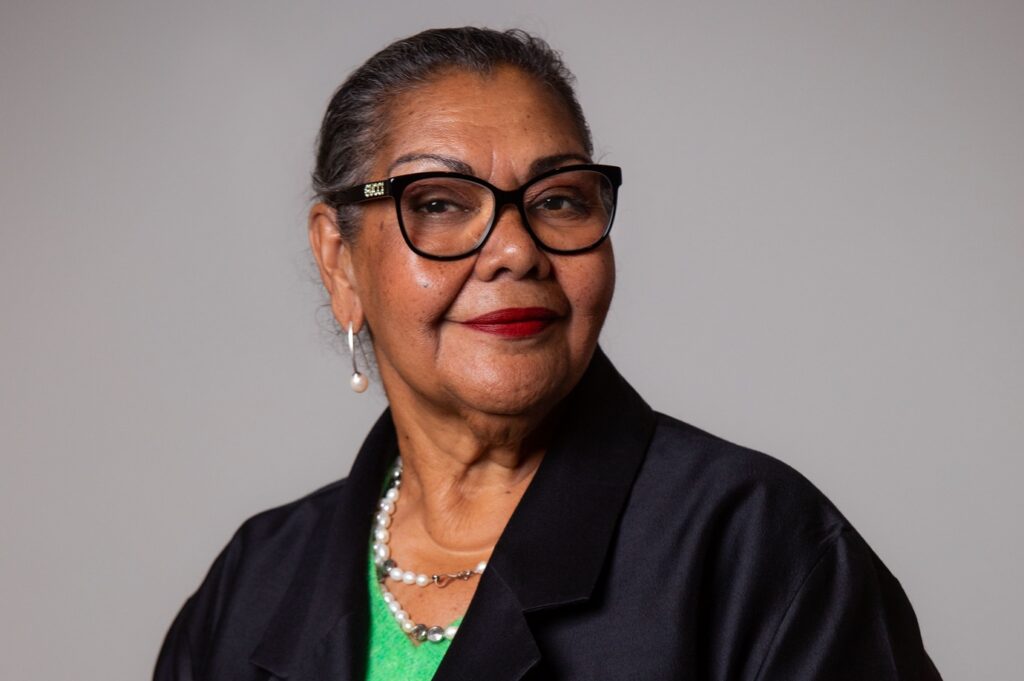
This kind of structural rethinking is what June Oscar, a proud Bunuba woman and Chair of the Wiyi Yani U Thangani Institute for First Nations Gender Justice, means when she argues that institutions must move beyond “consultation and partnerships that keep decision-making at arm’s length.”
For innovation systems looking to work in genuine partnership with Traditional Owners and Indigenous language centres, it’s important to honour the cultural authority that rests within them, Oscar says.
“Respecting protocols is not a checklist but a commitment to relationship, to accountability and to allowing community-defined ways of working to guide every stage of program design and delivery,” says Oscar.
“We need governance that is Indigenous-led at every level to shape policies, guide investment and determine how programs are delivered.”
Interrupting bias in the investment funnel
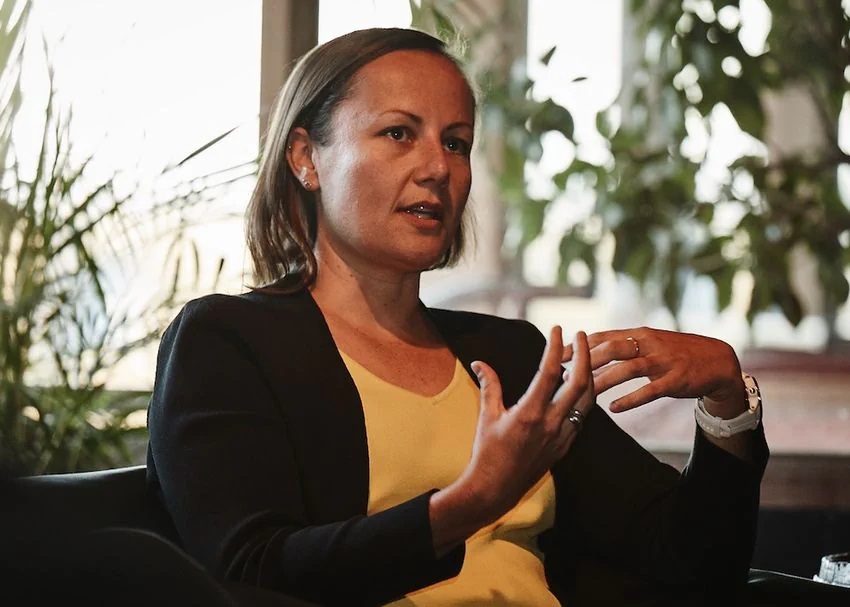
The Playbook also includes a detailed case study from Kirstin Hunter, the CEO of Birchal and former MD of Techstars Tech Central Sydney, who implemented a stage-by-stage approach to eliminating bias from the investment funnel in the 2024 Techstars accelerator program.
Hunter utilised techniques like targeted outreach to underrepresented founders, tracking gender composition and scoring at every step, scheduling sessions between 10am and 2pm to ease pressure on the school run, and moving social events from dinners to lunches.
Hunter says the two biggest lessons were “the importance of the interview opportunity and the need to control for application quality, not just quantity”.
“Addressing both of these points allowed us to go from an application base that was majority male-only teams, to an interview pool that was evenly mixed across male-only and women-led and mixed gender teams,” she explains.
“Our result was that 10 out of 12 companies selected for the 2024 Techstars accelerator had at least one woman founder — a record for equity-backed accelerators in Australia.”
Allowing for flexible assessment criteria
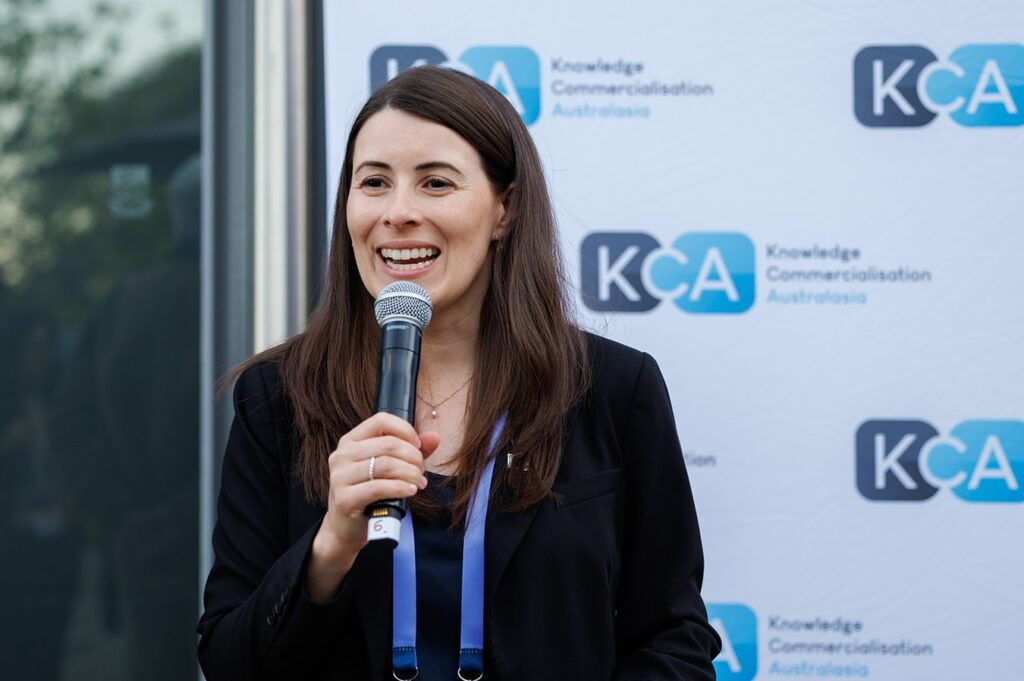
KCA (Knowledge Commercialisation Australasia Ltd) Chair Kate Taylor says inclusive commercialisation is about “backing innovators whose lived experience and proximity strengthen the solution, including those outside the usual profile”.
Often, this means expanding assessment criteria to capture various forms of value creation, not just financial returns.
This is a suggestion made in the Inclusive Innovation Playbook, which recognises the need to provide multiple pathways for founders to demonstrate their potential, whether that is written, verbal, video, or project-based presentations.
Taylor says that the “real shift” will come from applying flexible assessment criteria within innovation systems.
“When assessors have tools that widen their field of view, we create conditions where a broader range of opportunities can be recognised on their merits,” says Taylor.
“Whether this be storytelling to show impact beyond traditional models, case studies that reset benchmarks and/or feedback mechanisms that reveal where ideas are being unintentionally filtered out.”
Ultimately, Taylor says real-world impact “comes down to who’s in the room, the questions they ask, and their willingness to be challenged. Without that, even the most inclusive criteria simply reinforce the same norms.”
For CSIRO’s ON program, the real measure of impact will be when its cohorts reflect the diversity of Australia’s innovation landscape, Innovation Program Advisor at CSIRO, Richelle Wight says.
“[This is] when researchers taking alternative pathways feel just as supported and celebrated as those pursuing traditional spin‑outs,” Wight says.
Wight says the impact will also be seen “when asking uncomfortable questions about who is missing becomes standard practice across the ecosystem”.
Some of the tools included in the Inclusive Innovation Playbook:
- Role-specific guidance for people shaping policy, designing programs, delivering services, or leading teams.
- Case studies showing how other organisations changed eligibility, assessment, timing, and outreach to improve inclusion.
- Checklists and action prompts to help teams spot barriers and move from intention to action.
- Flexible implementation tools that can be adapted across sectors, settings, and scales.
- Metrics and evaluation prompts that encourage programs to broaden what success looks like, beyond capital raised alone.
For programs ready to move from intention to action, the Inclusive Innovation Playbook was launched in late 2025 through a partnership between CSIRO ON, Australian National University’s GIWL and WYUT. Explore the Playbook here.