
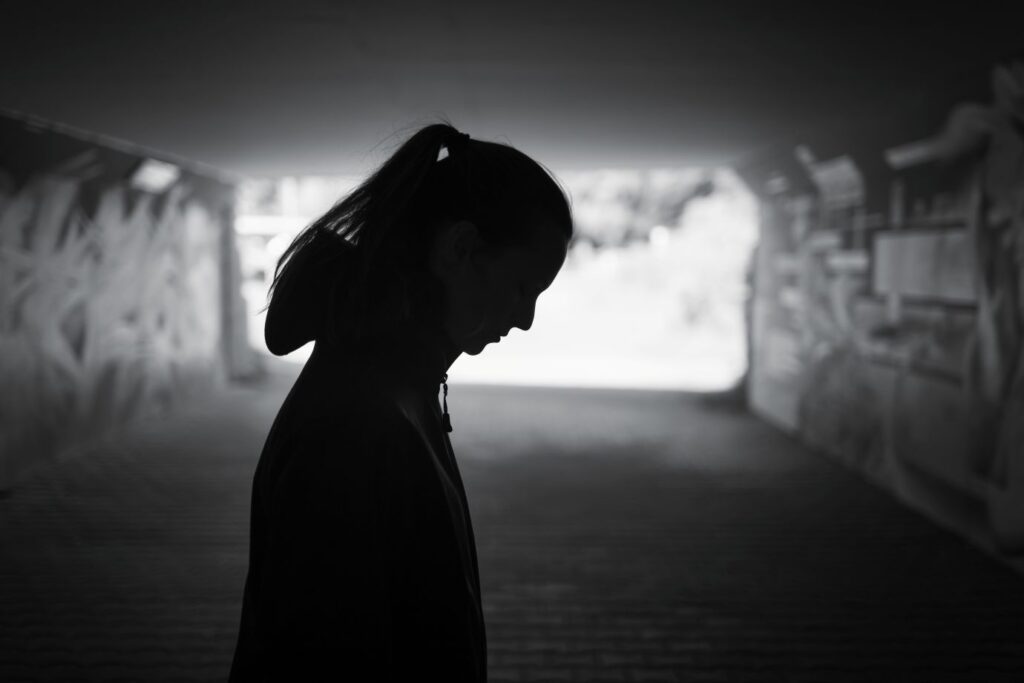
This week marks another Homelessness Week in Australia – a time when media outlets and politicians alike acknowledge the growing crisis of housing insecurity, rising rents, and stretched-thin services. We are reminded that the system is under pressure. That in 2023–24, six out of 10 people assisted by homelessness services had experienced family and domestic violence. That homelessness in this country is not just persistent, it is worsening.
We’re told that we can’t wait for change any longer. That’s why this year’s theme is “Homelessness Action Now.”
But there’s one group you won’t hear about this week, not in the speeches, not in the funding announcements, and not in the media campaigns.
Criminalised and formerly incarcerated women.
Despite being one of the most at-risk groups in the country, formerly incarcerated women are entirely absent from the national conversation on homelessness. In fact, we are not even mentioned in any of the National Homelessness Week materials. It’s a silence that reflects something deeper, who this country sees as worthy of care, and who they continue to disappear.
However, we know the link between incarceration and homelessness is well-documented. The numbers are stark:
- Seven in 10 people leaving prison require assistance securing housing.
- Two-thirds are already at risk of homelessness by the time support begins.
- In 2023–24, 1,800 people exited prison into homelessness, and more than 1,100 remained homeless even after accessing support.
- Of those, 510 were still in temporary accommodation, couch surfing or living in motels.
Aboriginal and Torres Strait Islander women are even more deeply affected.
First Nations people make up just 3.8 per cent of the population but account for 28% of people accessing homelessness services in this country. Persistent homelessness is rising faster among First Nations people – up 46 per cent since 2019–20, compared to 25 per cent across all other populations. Given that the majority of women and girls Sisters Inside supports are Aboriginal, the crisis is not just statistical, it is deeply personal and structural. As Debbie Kilroy, CEO of Sisters Inside, puts it:
“The vast majority of women requiring assistance to rebuild their lives are Aboriginal or Torres Strait Islander women. These women are the most at risk of domestic violence, disconnection, and houselessness. Sisters Inside ensures these women are never abandoned.”
The housing crisis
In Queensland, the housing crisis is escalating. Since 2018, homelessness has increased by 20 per cent. The number of low-income households in rental stress has surged. Greater Brisbane alone now has over 112,000 households experiencing housing stress, an increase of 22,000 since the 2021 Census.
And perhaps most tellingly, the estimated population at risk of homelessness in Queensland has grown by 80 per cent in just a few years, from 396,000 to 715,000 people.
At the same time, half of all homelessness providers in Queensland were forced to close their front doors at some point over the last year because they couldn’t meet the demand.
But Sisters Inside didn’t close our doors. We never have.
For over 30 years, Sisters Inside has been walking alongside women and girls criminalised by systems designed to fail them. We support women and families to find safety and rebuild their lives after prison. Our dedicated staff support women and girls to secure housing (even though there is no dedicated housing for women coming home from prison), access health services, gain employment, access training, reunite with their children, connect to culture, Country and family. And we do this work not because it’s easy or well-resourced, but because nobody else can do it the way we do.
We do this work in the middle of a worsening political climate – where Queensland’s law-and-order regime is accelerating. We are watching the state expand its powers daily. Bail laws are tightening. Police are being given greater authority. Children, especially Aboriginal and Torres Strait Islander children, are being surveilled, targeted, and locked up under “adult crime, adult time” laws.
While more money is being poured into cages, cops, and courts, frontline community-based organisations like Sisters Inside are left to do the life-saving work with no increase in support.
“Our data suggests that last year, Sisters Inside supported more than 4,500 criminalised women and their families, and that we supported almost 80% of the women in Queensland’s prisons,” said Debbie Kilroy. “We are expected to catch the women who fall through the cracks, while being starved of the resources needed to keep them safe.”
So, this Homelessness Week, we are not just highlighting the crisis. We are inviting you to be part of the solution.
#Fivetofreeher
Sisters Inside has just launched our new fundraising campaign: Five to Free Her – a call to communities across this country to stand with us and help build a future beyond prisons.
This campaign isn’t about charity. It’s about building a movement of resistance and care.
It’s about creating a future where women and girls are not criminalised for being poor, for being survivors, for being Black, for being homeless, for being mothers, for being visible.
For just $5 a week – less than the cost of a coffee, you can partner with us and support work that changes lives every single day. Your ongoing support allows us to:
- Secure safe housing for women and their children
- Provide domestic, family and sexual assault counselling
- Reunite families torn apart by the prison system
- Provide court support and legal advocacy
- Walk with women and girls as they heal, recover, and resist
Every single dollar goes directly to criminalised women, girls, and their families. Every donation over $2 is tax-deductible. But more importantly, every act of care helps build a world that does not rely on punishment to solve social problems.
So, this Homelessness Week, as governments make promises and campaigns call for action, ask yourself: who is still being left behind?
And what would it look like to stand with them?
Join us. Five to Free Her.
Together, we can build something better.
Together, we can end the criminalisation of women and girls.
Together, we can create a world without prisons.
Head to: fivetofreeher.com
Become a Women’s Agenda Foundation member and support our work! We are 100% independent and women-owned. Every day, we cover the news from a women’s perspective, advocating for women’s safety, economic security, health and opportunities. Foundation memberships are currently just $5 a month.
Bonus: you’ll receive our weekly editor’s wrap of the key stories to know every Saturday.