
Somewhere in Australia this week, a woman is biting into a purple, green and white biscuit embossed with “equal pay.” There are venue-hire invoices being settled, name tags being printed, panel moderators rehearsing their segues. The International Women’s Day (IWD) machine is running at full throttle with numerous events and I will be at one of them.
I will smile. I will network. I will nod along to the statistics about the gender pay gap and the deterioration of women’s rights and the ways our justice system continues to fail women. These are conversations that matter. They are conversations we must keep having.
But this year, I cannot shake the feeling that I am celebrating inside a perfectly constructed world of progress and possibility while just beyond the oceans, women are living through something the rest of us can barely comprehend.
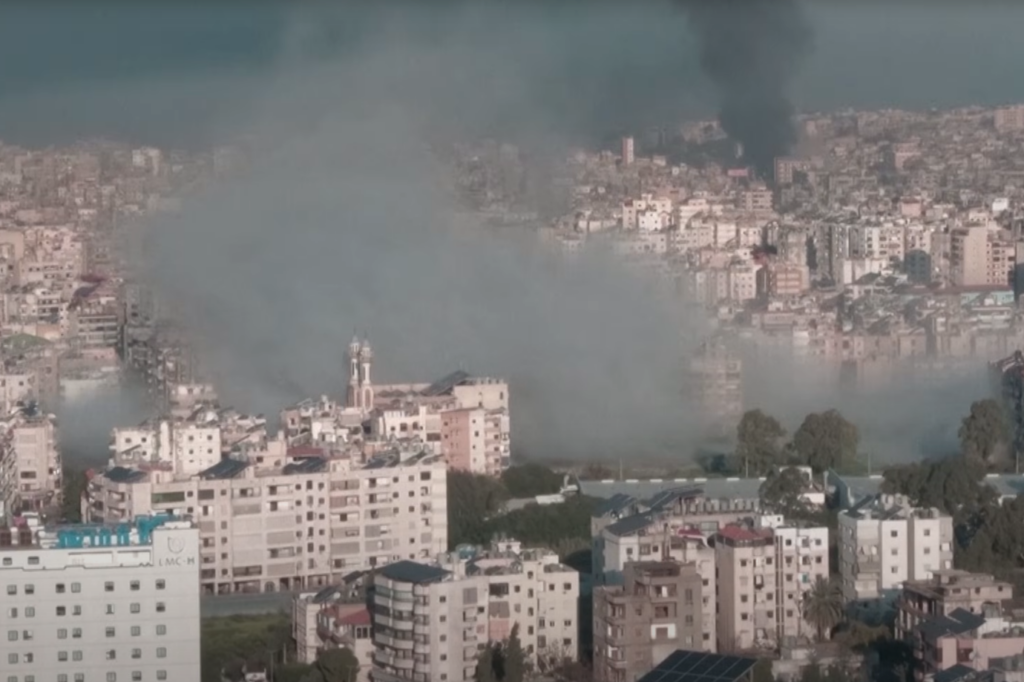
I am Australian. I am Lebanese. I have women in my life in Beirut who may or may not be sleeping tonight. Watching the Middle East unravel from thousands of miles away, this IWD feels bittersweet to the point of meaninglessness. Not because the cause isn’t worthy. But because the distance between what we are celebrating here and what women are enduring there has never felt more vast.
Consider the scale of it. According to the Peace Research Institute Oslo, an estimated 676 million women, nearly 17 per cent of the global female population, lived within 50 kilometres of a deadly armed conflict in 2024. That is the highest figure recorded since the end of the Cold War.
In Lebanon last year, 100 per cent of the female population lived within 50 kilometres of a conflict event where the death toll exceeded 100. Every single woman. By late 2024, more than 50 per cent of Lebanon’s 1.2 million internally displaced people were women and children, including some 12,000 pregnant women without access to basic medical services.
In Gaza, the UN estimates that roughly 63 women were killed every single day since the war began. Women are undergoing caesarean deliveries without anaesthesia. At least 46,000 pregnant women faced crisis-level hunger. In Afghanistan, the Taliban has now issued over 100 edicts stripping women from public life barring them from education, employment, and in a December 2024 decree, even from training as nurses or midwives. Women and girls are reportedly dying from a lack of medical services as a direct result. In Iran, women continue to risk their lives for the right to exist freely, their courage weaponised by the very regimes seeking to destroy them. In Syria, the transition brings uncertainty rather than relief, with women in remote areas facing renewed threats from extremist control.
And then there are the mothers of Nigeria. The mothers whose daughters went to school and never came home. Since Boko Haram abducted 276 girls from Chibok in 2014, more than 1,400 students have been kidnapped from Nigerian schools. I have held my daughter a little closer this week.
This is the context in which we arrive at International Women’s Day 2026.
I do not want to dismiss what happens in rooms like the one I will walk into this week. The panel discussions about systemic change, about the gender pay gap, about women’s health and representation — these conversations are the architecture of progress. They matter. They build the scaffolding that holds societies to account. I have attended these events for years and I believe in them.
But I am asking whether, alongside the biscuits and the keynotes, we might redirect some of our energy, and our money, toward the women who need us most urgently right now. The women who are not debating pay parity but debating whether to flee. The women who are not navigating glass ceilings but navigating rubble. The women who are holding families, communities, and entire societies together with their bare hands while the world holds panel discussions about them.
This year’s UN Women theme for IWD is Rights. Justice. Action. For ALL Women and Girls. If we take that “ALL” seriously and we must, then rights, justice and action must extend to the women for whom the baseline is not equality, but survival. It must include the mother in Beirut who doesn’t know what tomorrow holds. The woman in Tehran who dares to remove her hijab in public. The girl in Kabul who was banned from school at eleven. The pregnant woman in Gaza in a hospital that no longer has anaesthesia.

Privilege is a complicated thing to sit with. I know how lucky I am to live in a country where my daughter can go to school and come home, where I have a vote and a voice and the luxury of attending a lunch rather than surviving one. That privilege is not something to feel guilty about. But it is something to be responsible with.
So, this International Women’s Day, by all means raise a glass and bite into the biscuit. Celebrate how far we have come, because we have come far. But then redirect your gaze and perhaps your donation to the women staring down the full weight of what gender inequality looks like when it combines with war, occupation, authoritarianism, and impunity.
They are not abstractions. They are our sisters. And they need us now more than we need another event.