
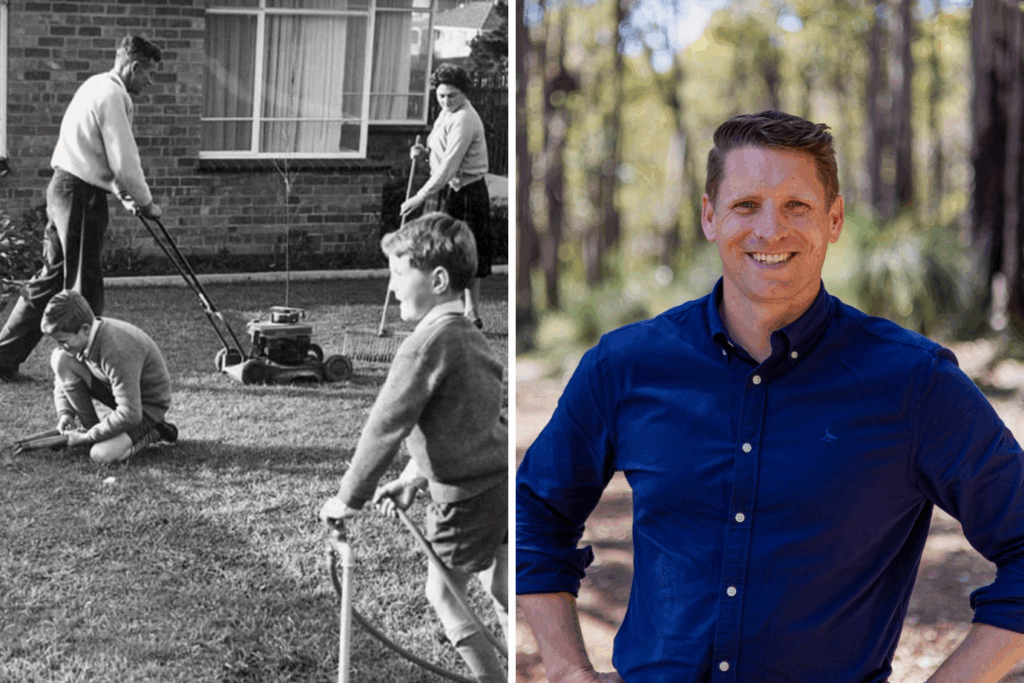
Liberal leader Sussan Ley did not make the cut of the Australian Financial Review’s overt power list published on Friday.
It was a historic decision, according to the authors of the power list. Never before has an Opposition leader failed to make it.
But never before has a woman led the Liberal Party.
And never before has a leader taken the helm when the party is in such a dismal state. Decimated by voters at the last Federal election, the Albanese Government managed to pick up a thumping majority, rendering the Opposition nearly powerless.
Not only that, but prominent Liberal and Coalition leaders seem determined to keep picking at the carcass of what’s left, making Ley’s efforts to see the party rise again nearly impossible.
One such character is rising high above all others, despite claiming to “support” his leader.
That character is Andrew Hastie, the member for Canning in Western Australia.
He has been the source of numerous profiles, interviews and speculation across the media in recent days.
Expect to see more of him.
Hastie is a Liberal frontbencher who arrived in Canberra a decade ago, following a career in the Australian Defence Force.
He’s an Afghanistan veteran. He’s ambitious. He’s fit and well spoken. He’s conservative.
And he’s made himself a clear provocateur within the Opposition: taking to social media to pine for the past when Australia made cars, while calling for cuts to immigration and placing himself firmly in the climate wars.

Hastie really loves cars. Australian-manufactured cars, like the 1979 Ford Falcon.
It’s here that Hastie’s age becomes relevant. He was born in 1982, meaning he’s still in his early 40s and can’t possibly remember much about the glory car manufacturing days of the 1960s and 1970s.
But, posing in front of such a vehicle, he called for a return to the days when Australians made things for other Australians, a time before “soundless, soulless” vehicles took over the streets. He declares in the caption, “It’s time to put Australia first.”
Hastie doesn’t like electric vehicles.
He especially dislikes what the rise of such vehicles might represent: policies aimed at reducing Australia’s reliance on petrol and ultimately reducing emissions.
Indeed, Hastie doesn’t like the party’s net-zero policy, going so far as to threaten to quit the front bench over the issue.
He doesn’t like immigration, declaring the Liberal party could “die” if it doesn’t commit to cutting immigration, and featuring immigration at the heart of numerous other woes facing Australians, notably the housing crisis. “We’re starting to feel like strangers in our own home,” he has said.
Last week, he posted to Facebook comments that “our allegiance is to the Australian people” with a promise that people have a roof over their heads, “like we did after World War Two.” he said young Australians have lost hope of building a home and that it’s too ahrd to start a family, and that “Net Overseas Migration – or the NOM” is the issue.

He posted it alongside a black-and-white photo of an early 1960s family: Dad pushing a lawnmower, Mum raking leaves, their two young boys helping in the garden, in front of a red brick house. The Australian dream? The post has over 1000 comments and 7000 likes.
Hastie is fighting for a previous era. He’s using battle language to address the opponents he says will hold us back from going back to when Australia was great.
His language following the assassination of Charlie Kirk in the United States was telling.
Hastie declared that “many of our intellectual class” are rejecting Western values.
“Now is not the time to take cover, even as bullets are fired at our friends. Our movement needs to grow, and we must speak the truth about the challenges ahead. If we don’t get moving, the West will continue to decline.” He signed off with. Let’s go.”
Who are you fighting, Andrew Hastie? More importantly, who are you fighting for?
Hastie says he supports his leader, Sussan Ley. But nothing in the above suggests he supports Ley’s ambition of building a “modern” Liberal party.