
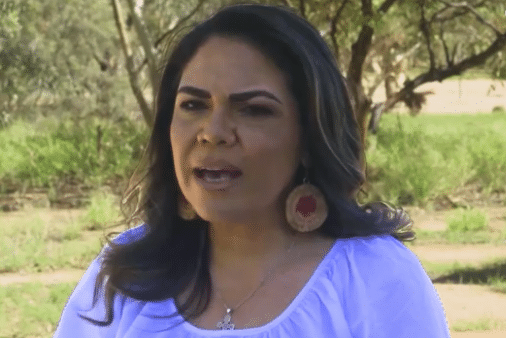
Jacinta Nampijinpa Price has gleefully declared she’s back, after being sensationally demoted from the shadow ministry by then-leader Sussan Ley over her comments that the Labor Party approved higher levels of Indian migrants to boost their vote.
She may be back, but make no mistake, she won’t be apologising for the comments that were widely condemned, even within her own party. In Price’s view, individuals like Alex Hawke who urged her to apologise at the time were merely throwing her “under the bus.”
“I had a very stern conversation with him,” Price assured Karl Stefanovic on his already infamous podcast.
“Don’t try to gaslight me or accuse me of something I’ve done and have not done, and don’t try to force me to apologise for something that doesn’t require an apology.”
As an Indian-Australian, it’s hard to see where the grey area is in Price’s original words.
“I think Labor like to be able to ensure that they’re going to allow those in that would ultimately support their policies, their views, and vote for them as well,” she said.
“This is Labor. Basically, it’s power at any cost. And we see that occur all over the place in terms of the way they conduct themselves,” she told the ABC at the time.
The idea that the ALP could be treating Indian immigrants like “vote stock” rather than active and important contributors to Australia’s way of life would be laughable if it wasn’t so deeply offensive. To imply that a whole community can be reduced to electoral arithmetic immediately casts suspicion on the accused community, which is exactly what many Indian-Australians reported feeling in the days after Price’s comments.
Not to mention the fact that Australia’s migration system is specifically non-discriminatory. It’s skills-based, family-based and humanitarian. To suggest a governing party could be importing people for partisan gain at a time when trust in democracy is already fragile is dangerous and irresponsible.
But in a Coalition with Angus Taylor now at the helm, and harsher immigration policy already being touted by commentators as his key platform, it’s not hard to imagine him elevating Price as a central voice on the issue rather than nudging her to back down.
After all, she is a master in prosecuting the culture wars. The tactic of “othering” immigrants, especially non-white immigrants, has long been a reliable pressure point in oppositional politics. It turns complex policy debates into emotionally charged identity contests.
And that may well be the point.

Because this moment doesn’t feel like a misstep being corrected but more so a recalibration.
Jacinta Price has a right to feel vindicated, at least where her own party is concerned. She’s back, baby. And if this is the direction the Coalition is heading, it won’t be long before she’s running the show.