
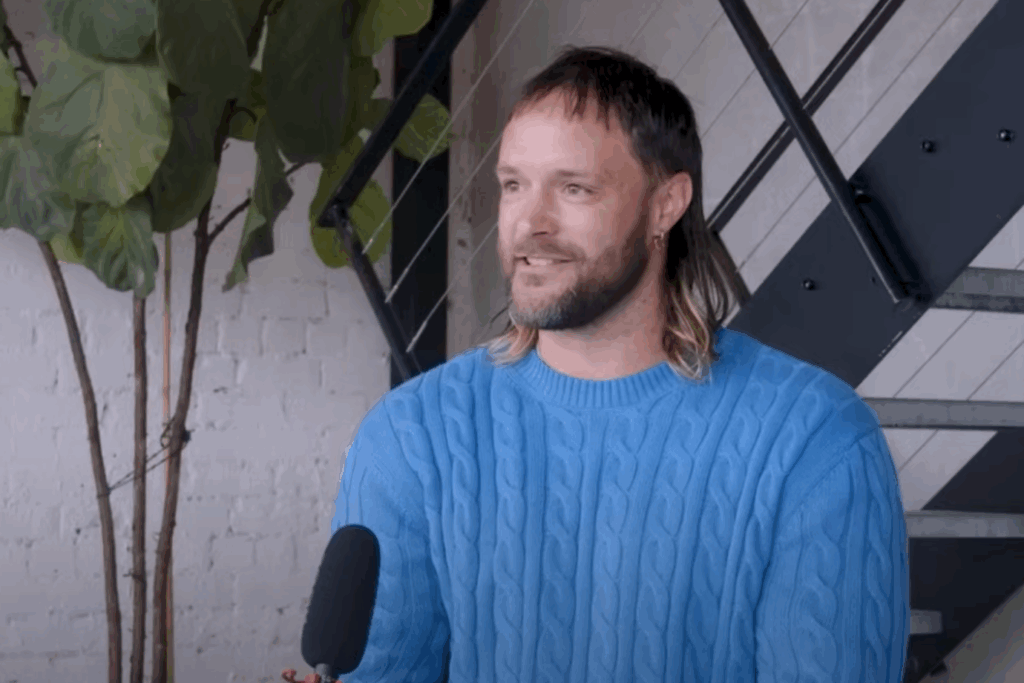
In a landmark moment for Australian sport, former West Coast Eagles defender Mitch Brown has become the first openly bisexual male in the AFL’s 129-year history.
Brown, who played 94 games between 2007 and 2016, revealed his sexuality through an interview with The Daily Aus hoping to inspire change and create safer spaces for others in the game.
Brown’s decision to come out was not made lightly. He described the burden of hiding his identity as a major factor in his early retirement at age 28.
“There’s been so many times in my life that I’ve seen things or heard things and not said anything, in fear of people thinking that I was gay or bisexual,” he shared. He describes the culture of “hyper-masculinity” within the AFL made it nearly impossible for him to be open during his playing years.
His story is not just about personal liberation—it’s a call to action. Brown emphasised that his announcement isn’t about being the “first,” but about making space for the “second,” and the many others who still feel unseen. “I see you and you are not alone,” he said, addressing closeted players and fans alike.
But Brown’s courage also highlights a troubling truth, he only felt safe enough to come out after leaving the AFL. This speaks volumes about the league’s culture, which despite years of diversity and inclusion training, still struggles to foster genuine safety and acceptance.
In 2025 alone, two AFL players, Jack Graham and Izak Rankine, were suspended for using homophobic slurs. Rankine’s case marked the sixth such suspension in just 16 months. While the AFL has taken steps to penalise such behavior, the frequency of these incidents suggests a deeper, systemic issue. In any other workplace, repeated homophobic conduct would likely result in termination, not a few weeks on the sidelines.
The AFL has made public commitments to diversity, equity, and inclusion. Its 2025–2028 Cultural Diversity Action Plan outlines ambitious goals to engage multicultural communities and create inclusive environments. Yet, the lived experiences of players like Brown and the persistence of discriminatory behavior reveal a disconnect between policy and practice.
From a feminist perspective, this moment invites us to examine the broader culture of Australian sport. The AFL has long faced criticism for its treatment of women, both on and off the field. The same structures that marginalise queer players also uphold gender inequality.
Take the AFLW, for example. Despite its rapid growth and passionate fan base, AFLW players are still paid substantially less than their male counterparts. In 2025, the average AFLW salary sits at around $60,000, with plans to increase to $82,000 by 2027. Meanwhile, the average male AFL player earns $387,000, rising to $519,000 by 2027—a gap of over $435,000.
Even top-tier AFLW players like Ebony Marinoff and Alyce Parker, who earn upwards of $200,000 through capped contracts and endorsements, represent a tiny fraction of the league. Most AFLW athletes must work second jobs to survive. Players like Nell Morris-Dalton juggle full-time nursing shifts with evening training, often sacrificing sleep, health, and performance. “It’s mentally draining,” she said. “You just get really burnt out … I was sick a lot, and I was very overworked.”
This isn’t just a pay issue, it’s a structural one. AFLW players are expected to perform at elite levels while managing full-time work, parenting, and financial stress. The result? A league where women are held back from reaching their full potential, not because of lack of talent, but because of lack of support.

Some may argue that at least now we’re talking about these issues—that the AFL is no longer turning a blind eye. That’s true, and it matters. But visibility without transformation is not enough. We must ask: who still feels unsafe? Who still hides? And what are we doing to change that? Because equality isn’t just about celebrating the first it’s about making sure real change means no one has to be the last.
Feature image: Mitch Brown during his interview with The Daily Aus.