
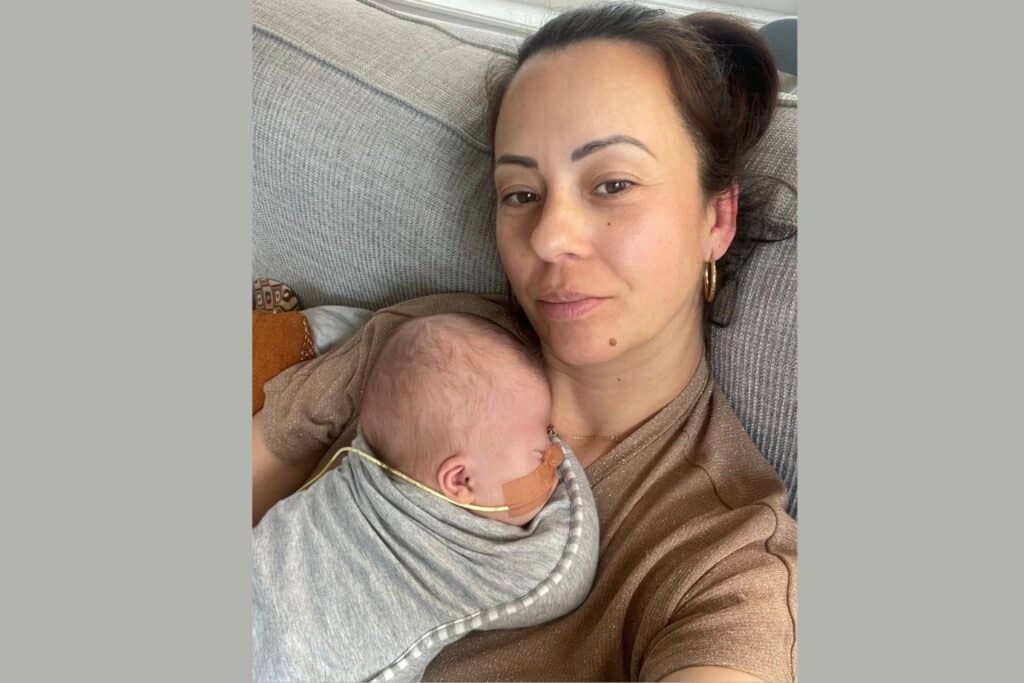
First-hand account: Mother and clinical nutritionist Serena Shembri reflects on her experience navigating the health system as the primary carer of a child requiring ongoing medical care, and her call for greater recognition of maternal health and recovery beyond the immediate postnatal period, ahead of the Senate inquiry into women’s health. Submissions close tomorrow.
From birth, my child saw multiple specialists, attended clinics, and saw surgeons. As their mother and primary carer, my own needs were not factored into that system.
I was also recovering from having a baby. Frequent contact with health services through my child did not give my own recovery a clear place.
With submissions to the Senate inquiry into women’s health closing on 9 October, this is a gap I want us to address: how do we recognise a mother’s health when she is in the room as someone else’s carer?
In Australia, the six-week postnatal check is a familiar milestone. Midwives also provide home visits, and child and family health nurses offer ongoing support. Services vary by location and care model. Women can continue seeing their GP beyond six weeks.
But seeking that care requires a mother to recognise a concern, decide it warrants attention, book an appointment and organise how to attend.
When she is managing her child’s medical appointments, her own appointment becomes another thing to arrange.
We need a clearer plan for following up on her recovery.
Research highlighted by the World Health Organization describes physical and psychological health problems that can persist for months or years after childbirth, including pain, incontinence, anxiety and depression.
A healthy baby and an uncomplicated birth don’t mean a mother has fully recovered. Returning to paid work cannot tell us that either.
Women’s health is often discussed through categories: reproductive years, pregnancy, breastfeeding, menopause. Where does recovery fit when a woman is no longer pregnant, perhaps no longer breastfeeding, but still experiencing the effects of having a baby?
As a clinical nutritionist, I see nutrition as one part of that question.

A 2025 study assessed the diets of 337 Australian women in late pregnancy and one year after birth. It found poor alignment with national nutrition recommendations, including for iron, iodine and folate. These findings describe dietary intake, not diagnosed deficiencies, and cannot represent every Australian mother.
They do give us a reason to ask what women can eat and what support would help.
Advice needs to account for who buys the groceries, prepares meals and looks after the baby while a mother attends her own appointment.
Family support cannot be presumed. Relatives may live far away, be unwell, be working or be unavailable. Some women do not have family relationships they can safely rely on.
An opportunity to be heard.
I would like this inquiry to consider proactive invitations to review mothers’ health beyond six weeks, with further follow-up guided by need through the first year and into the second.
Those reviews should include physical recovery, mental health, nutrition, sleep and daily functioning, with affordable pathways to appropriate care.
When a child requires ongoing specialist treatment, there should also be a clear way to connect their primary carer with support for their own health.
Mothers deserve that care for themselves.
If you feel able to contribute, describe what worked, what was missing and what support you would have wanted. Clear bullet points can help tell that story.
Submissions close on Friday 9 October 2026. Visit the Parliament of Australia inquiry page for submission and privacy information, or contact [email protected].
I want the mother sitting in that waiting room to know her recovery has a place in the system too.
Want more stories like this sent straight to your inbox?Join the free Women’s Agenda Daily newsletterand support independent, women-led journalism.