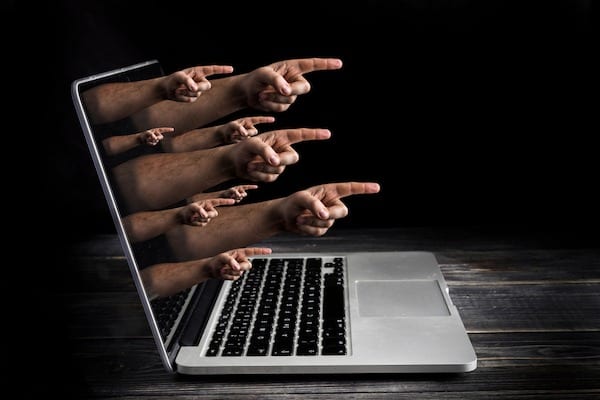
Female journalists, activists and human rights defenders are facing a “tipping point” of abuse according to a new report today, with online abuse often fuelling offline attacks.
Four in ten women surveyed globally say they have experienced offline attacks connected to digital abuse, according to the report today produced by the European Commission and UN Women’s ACT to End Violence against Women programme, in partnership with researchers, universities, and the International Centre for Journalists.
Meanwhile, seven in ten women surveyed say they have experienced online violence in the course of their work.
The report finds that without strong countermeasures to end online violence, we risk seeing more women leave digital spaces, undermining democracy and freedom of expression.
Female journalists face added concerns. In 2020, UNESCO reported that one in five such women associated the offline attacks or abuse they had experienced with online violence. In 2025, according to the same researchers, the share of journalists and media workers making that association is at 42 per cent.
The figures show that digital violence is far from merely virtual; it’s real and has real-world consequences, according to Sarah Hendricks, Director of Policy, Programme and Intergovernmental Division at UN Women.
“Women who speak up for our human rights, report the news or lead social movements are being targeted with abuse designed to shame, silence and push them out of public debate. Increasingly, those attacks do not stop at the screen – they end at women’s front doors. We cannot allow online spaces to become platforms for intimidation that silence women and undermine democracy.”
Researchers also note how the “age of AI-fueled abuse and rising authoritarianism” is contributing to online violence and then violence against women in the “real” world. For journalists especially, the authors warn that a “dangerous and potentially deadly trajectory” has emerged.
Almost one in four human rights defenders, activists and journalists report experiencing AI-assisted online violence, which includes things like deepfake imagery and manipulated content. Thirty per cent of writers and public communicators who focus on human rights issues say they have been affected.
The report has been launched on the final day of the 16 Days of Activism against Gender-Based Violence, with this year’s campaign dedicated to raising awareness of digital violence.
UN Women is calling for stronger laws and policies to recognise technology-facilitated violence against women as a human rights violation. They are also calling for robust regulation and accountability for tech companies, and for more investment in research to monitor trends and understand intersectional impacts, alongside safety protocols and support systems.