
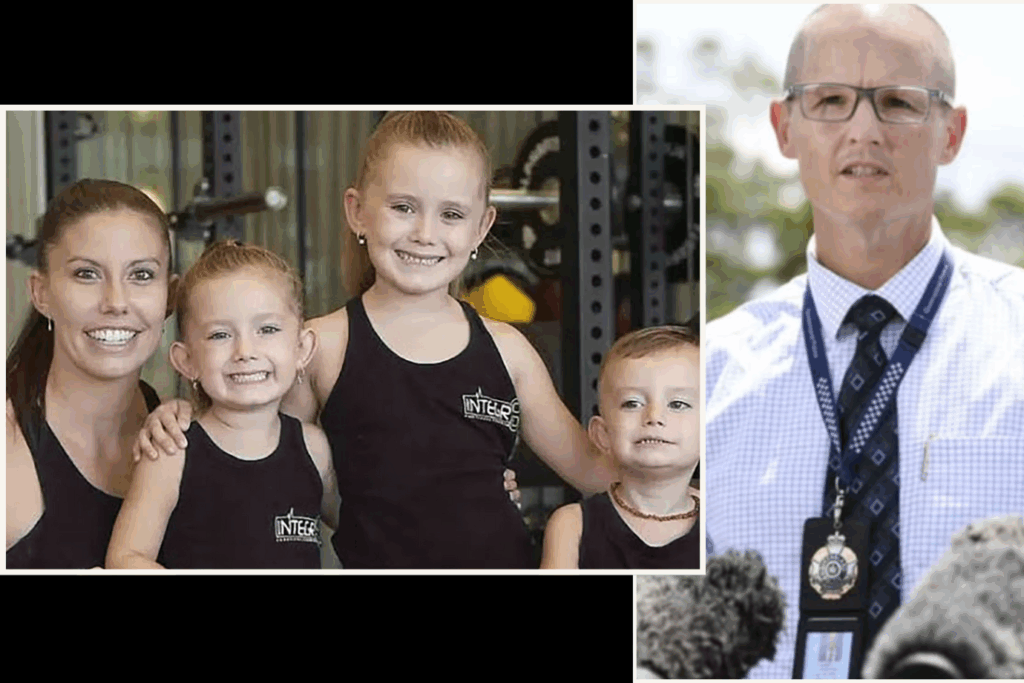
Controversial comments made in 2020 by a detective in the wake of the murder of Hannah Clarke and her three children were part of a “media strategy” that had gone “ wrong”, according to new documents obtained by Guardian Australia.
In February 2020, Clarke and her children Aaliyah (aged six), Laianah (aged four) and Trey (aged three) were murdered by Clarke’s estranged husband Rowan Baxter.
Days after the tragedy, Detective Inspector Mark Thompson stood at a press conference and said the police were keeping an “open mind” about the case, where Baxter was seen pouring petrol on and setting the family car on fire, ultimately killing the four of them and then himself.
Thompson told the community that he understood people were “deciding which side to take” in the investigation, posing the question of whether Clarke could be blamed in her own murder.
“Is this an issue of a woman suffering domestic violence and her and her children perishing at the hands of the husband? Or is this an instance of a husband being driven too far?”
These comments ignited public outrage and were heavily criticised and Thompson was removed from the case by the former police commissioner Katarina Carroll.
Thompson has since been promoted to superintendent, and this year, he and assistant commissioner Brian Swan ran a seminar about the Clarke homicide investigation at the Management of Serious Crime program run by the Australian federal police.
A copy of the seminar’s slides were obtained by Guardian Australia, as part of their Broken Trust investigation, revealing that Swan thought Thompson shouldn’t have been removed from the case because his “intent was right” over the controversial comments.
“We lost an opportunity and could have controlled the narrative and kept control of the messaging.”
The slides said Thompson’s comments were part of a deliberate “media strategy” designed to encourage people who were in support of Baxter to come forward. The slides also said Baxter had recruited allies and employed false narratives, which police were seeking to draw out and disprove.
Following widespread community backlash, the slides said the strategy “went wrong”.
Considering the investigation was a coronial one and not a criminal one, Kate Pausina, a former senior detective, described Thompson’s comments and the “media strategy” as “problematic and dangerous”.

“It makes no sense that there was a need for a covert strategy,” said Pausina, who has significant experience reviewing domestic violence homicides.
“A victim is never responsible for the violence they experience and also for their own death.”
Evidence uncovered in Guardian Australia’s investigation reveals serious police failings in the lead-up to the murders of Clarke and her three children, including that a number of police officers held doubts about Clarke’s allegations of domestic violence, even after she was murdered.
Since Clarke’s murder, 431 women have been killed in Australia, according to the Australian Femicide Watch.
If you or someone you know is in immediate danger, call 000.
If you need help and advice call 1800 Respect on 1800 737 732, Men’s Referral Service on 1300 766 491 or Lifeline on 13 11 14.