
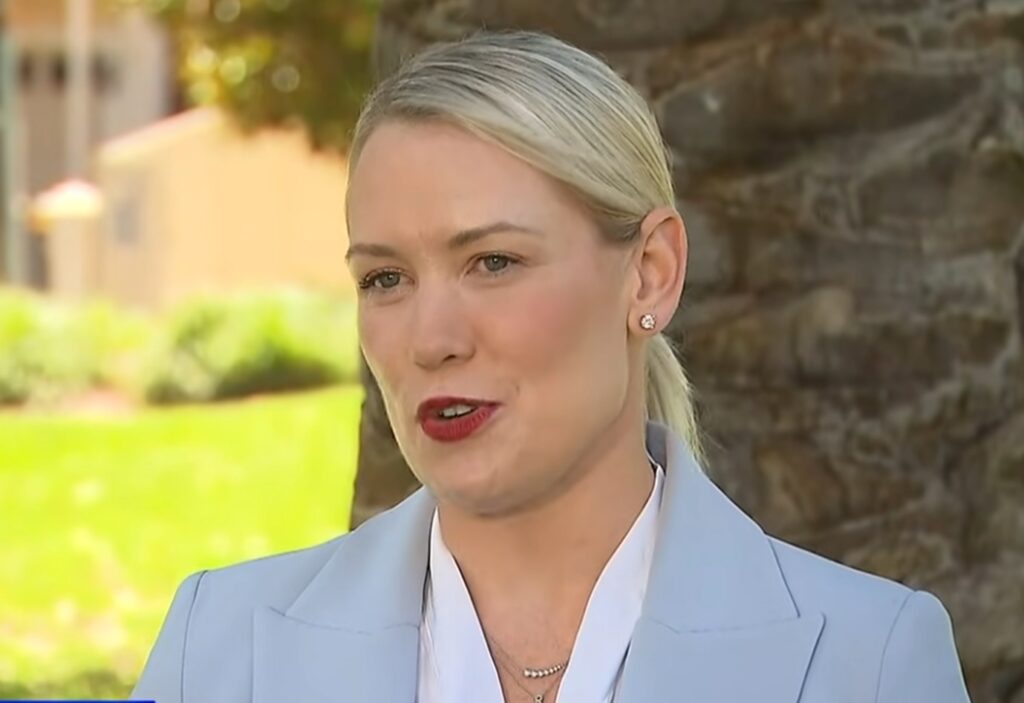
Ashton Hurn and I are only a couple of years apart. We even went to the same high school, Nuriootpa High. But the South Australia she grew up in and the South Australia I had to navigate are not the same place.
Ashton attended one primary school and one high school. She grew up with stability and comfort. She had the confidence that comes from intergenerational wealth. My experience was the opposite. I went to more than eight schools before year 10. My family lived in Gawler because we could not afford the Barossa. Every day I spent more than two hours on the bus just to finish years 10, 11 and 12 at Nuriootpa High.
In the early 2000s I was the only Aboriginal student to complete year 12 at that school. Almost 20 years later my nieces graduated from the same school and only two Aboriginal students finished with them. This is not what progress looks like. It is a reminder that South Australia has never properly confronted why Aboriginal children remain so absent from the places where opportunity begins.
And this is not a failure owned by one side of politics. From 2002 to 2018 Labor governed under Mike Rann and Jay Weatherill. From 2018 to 2022 the Liberal Party governed under Steven Marshall. Across those twenty years both sides oversaw slow and insufficient change. Both upheld systems that were not designed with Aboriginal people and did not deliver for us.
This is the landscape Ashton has stepped into. Yet instead of acknowledging decades of bipartisan failure, her first major policy announcement as Opposition Leader was to declare that a future Liberal Government would repeal the South Australian First Nations Voice to Parliament. That is an easy promise to make when the system has always worked for you. It is much harder when you understand what happens to the people it has never served.
The Voice is not a magic wand. It will not fix everything overnight. It is not designed to.
But it is finally changing how government listens to Aboriginal people.
It brings structure where there was inconsistency. It brings accountability where there was none. It offers a foundation for long-term change rather than short-term announcements.
Real reform takes time. Real reform takes listening. Real reform requires leaders who can imagine a South Australia bigger and braver than the one we inherited.
And the Voice is not symbolic. It is a practical structure that ensures Aboriginal communities can speak directly to government about the policies that shape our lives. It exists because governments have failed to close the gap on their own. It exists because no policy designed for Aboriginal people should be made without Aboriginal people.
Repealing it will not improve outcomes in education, health or justice.
It will not reduce incarceration. It will not make communities safer. It will not give my family the same life expectancy as Ashton’s.

If Ashton took the time to sit with Aboriginal South Australians she would understand why this matters. She would also understand why many of us reject being called Indigenous South Australians, a label that treats us as a data category. We are Aboriginal people. We are First Nations people. We are Kaurna, Ngarrindjeri, Narungga, Kokatha, Ngadjuri, Adnyamathanha, Nukunu and many more sovereign nations whose histories run far deeper than the political cycles that continue to overlook us.
Ashton speaks proudly of being a sixth generation Barossan. She is entitled to that pride. But pride must come with honesty. Her family’s prosperity sits on land where the Traditional Owners, the Ngadjuri people, were forcibly removed, controlled and devastated under government policy. These histories sit together and they shape the present she now seeks to lead.
What disappoints me most is that a leader from my own generation would choose to repeat the same mistakes that kept ours from moving forward. She had the chance to take her party somewhere more honest and more courageous. She had the chance to show that young women in politics can lead differently, with curiosity and accountability. Instead she chose to centre her leadership around silencing the voices governments have ignored for generations.