
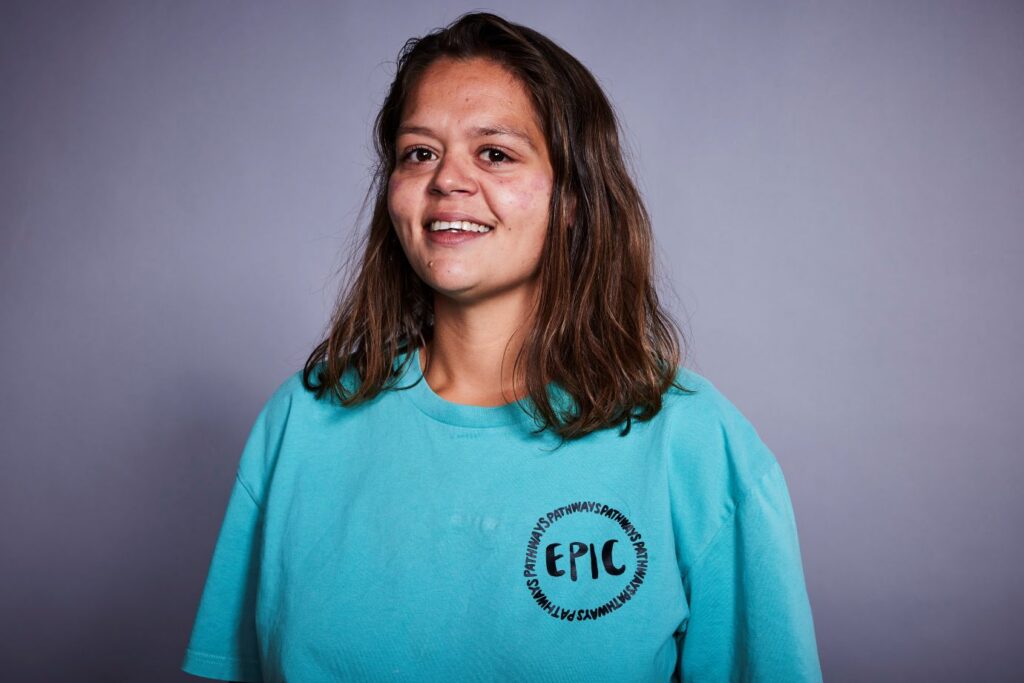
First Nations education leader Rhian Miller has received a prestigious social change fellowship in recognition of her work building culturally-safe mentorship pathways for young Aboriginal and Torres Strait Islander people.
Her organisation, EPIC Pathways, is a First Nations-led not-for-profit that delivers mentoring programs to support Aboriginal and Torres Strait Islander students through high school and into post-school pathways.
EPIC Pathways brings cultural safety, connection and long-term relationships into the centre of its mentoring work.
“What we find with students is meeting people who look like them, who understand where they’ve come from and how it feels to walk between worlds, and who are building successful lives in so many different ways – is incredibly powerful,” Miller tells Women’s Agenda.
Recently, Miller was named a 2026 Westpac Social Change Fellow.
Below, she shares more about her work at EPIC Pathways and what she’s learned since becoming a leader of social change.
Could you share more on the impact EPIC Pathways’ mentoring is having on young First Nations people?
EPIC Pathways supports young people from Year 7 through that critical first year after school, and many of our mentees go on to become mentors, University Ambassadors and movement leaders themselves. Our incredible team shows up week in, week out – walking alongside young people, listening deeply, and helping them define success on their own terms.
Independent data finds students who experience this kind of mentoring are more than twice as likely to finish Year 12, far more likely to go on to university, and better supported into work, training or further study. What we see on the ground is attendance lifts, confidence grows, young people start speaking up and imagining a different future.
What I love most is watching their confidence and leadership grow – sometimes from the shyest, quietest kids. I first met Kalani Ripley as a high school kid; now he’s on EPIC’s Board and on track to become one of the most successful young entrepreneurs in Australia. Or Ann-Maree Long, our Head of Community Engagement, who was the first person in her family to finish high school. She then graduated QUT, went on to support women in STEM with the CSIRO and now mentors other Indigenous young people throughout Australia and overseas.
What we find with students is meeting people who look like them, who understand where they’ve come from and how it feels to walk between worlds, and who are building successful lives in so many different ways – is incredibly powerful. You can’t be what you can’t see, and suddenly, they can see a lot.
We see over and over that real change happens from being surrounded by people who believe in you and are willing to walk alongside you for the long term.

What one key thing you’ve learnt about yourself since becoming CEO of EPIC Pathways?
One of the biggest things I’ve learnt since becoming CEO is that leadership isn’t about having everything figured out. It’s about how you hold responsibility when you’re all figuring it all out together. We all bring our different skills, strengths, lived experiences and perspectives.
Stepping into this role in my 20s, I’ve felt a lot of pressure to be ‘ready’ — confident, decisive, across everything. I think that pressure is something many women feel, particularly young women, and even more so First Nations women and women of colour. What I’ve had to unlearn is the idea that good leadership means doing it all yourself or never showing any uncertainty.
Becoming a foster parent alongside leading EPIC has really deepened that lesson. Caring for young people in your home, like caring for young people in community, teaches you that consistency, patience and presence matter more than perfection. You don’t lead through control. You lead by showing up, listening, and creating safety for people to be their best selves over time. That perspective has shaped how I lead our team and how we design our work.
I’m learning to trust that the strongest leadership is relational. It’s about giving and receiving: being guided by Elders and community, backing my team, and letting others back me. I’m also learning the importance of sustainability. This work is deeply meaningful, but it can be all-consuming, especially when building something new. Boundaries, reflection and shared leadership aren’t optional if we want to build something that lasts.
In Western culture we’ve inherited this very alpha male picture of what leadership is supposed to look like: the lone wolf, confident and unyielding, calling all the shots. That’s not me, and it’s not who I want to become. But leadership as service and connection to my community and something bigger than myself – that’s something I’m proud and excited to keep growing into.
What does being awarded the 2026 Westpac Social Change Fellowship mean to you?
Being awarded the 2026 Westpac Social Change Fellowship is really exciting and a little surreal. I came into this work as a young Aboriginal woman who benefited from mentoring myself, long before I saw myself as a leader. So this Fellowship feels like an affirmation of the kind of regenerative leadership EPIC Pathways believes in and is seeking to build more of in the world.
What means the most to me is that the Westpac Scholars Trust, through the Westpac Social Change Fellowship, is backing a model that centres people, relationships and culture. This work is slow, relational, and often invisible. It’s not about quick fixes but showing up week after week, earning trust, and creating environments where young people feel safe enough to imagine different futures. That kind of work doesn’t always fit neatly into traditional leadership narratives, so having it recognised at this level is really significant.
This Fellowship opportunity will give me a bit of space to step back from day-to-day delivery and invest in my own growth as a leader. I’ll be On-Country in Arnhem Land with the Dhimurru Rangers and Yirrkala School, as well as completing an MIT Design Systems Thinking course, and an Executive Program for Nonprofit Leaders at Stanford Business School. My goal with everything I’m doing is to be equipped to better support a growing team, hold responsibility well, and help build something that lasts.
Really for me this Fellowship reflects belief in our Elders, our team, our mentors, and especially the young people who trust us with their stories. So I hold onto that responsibility with a lot of care and gratitude.
Any exciting goals for EPIC Pathways this year that you’d like to share?
This is going to be a huge year for EPIC Pathways: we’re set to support more than 1,000 Aboriginal and Torres Strait Islander students across 30+ high schools in three states and territories. So my goal is to grow in ways that stay true to our values and purpose – to be EPIC champions of young people.
A big priority is deepening our partnerships with universities and schools so students get the best possible experience and have consistency of support over time. We’re building on our work with the University of Queensland and stepping into new partnerships with Charles Darwin University and the University of Sydney.
We’re also expanding our regional and remote outreach, particularly across the Northern Territory. I’m in Maningrida this week to work with students and our growing team there, and it’s just the most rewarding thing. I’m really proud that EPIC is prioritising regional and remote students from the very beginning.
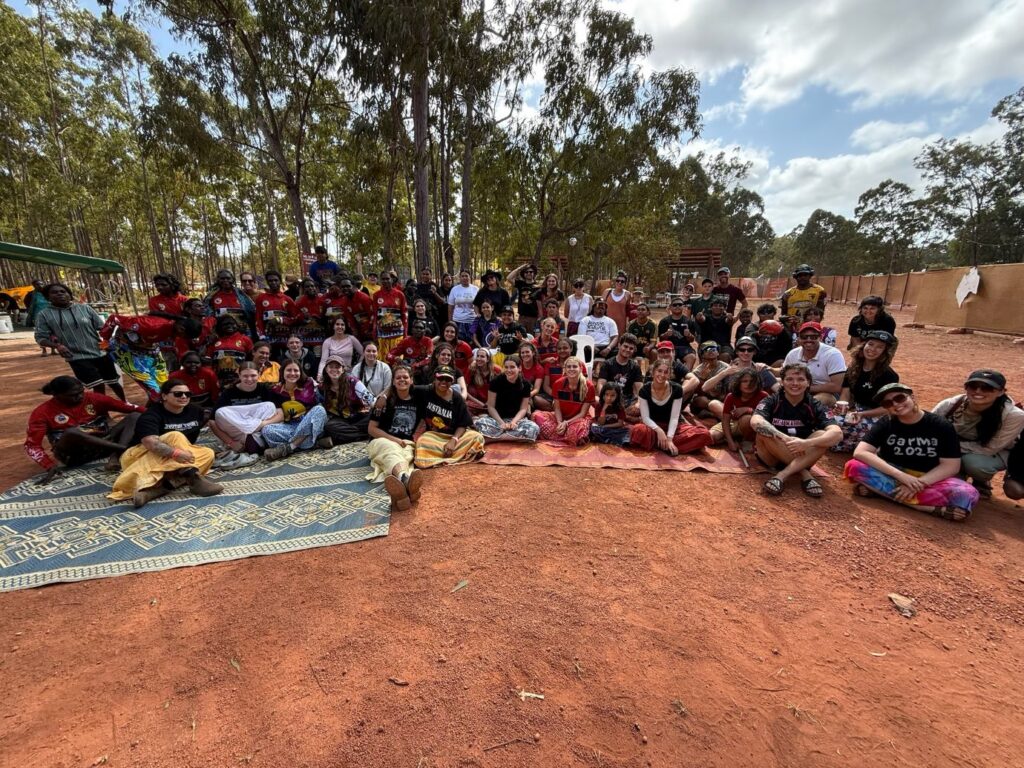
Another focus this year is getting up and running with Fire Carriers, the youth-led leadership and advocacy initiative we launched at last year’s Garma Festival. Fire Carriers came directly from young people telling us they were tired of their voices being left out or watered down when it comes to the issues that affect them. We’re so excited to back these amazing young leaders over the long term to carry culture, conversations and change into the spaces where decisions are made.
Alongside all of this, we’re investing in our team and systems so the organisation itself is sustainable. We’re not interested in vanity metrics or growth-for-growth’s sake. The goal is to do the work well, with care, and to build something that lasts.