
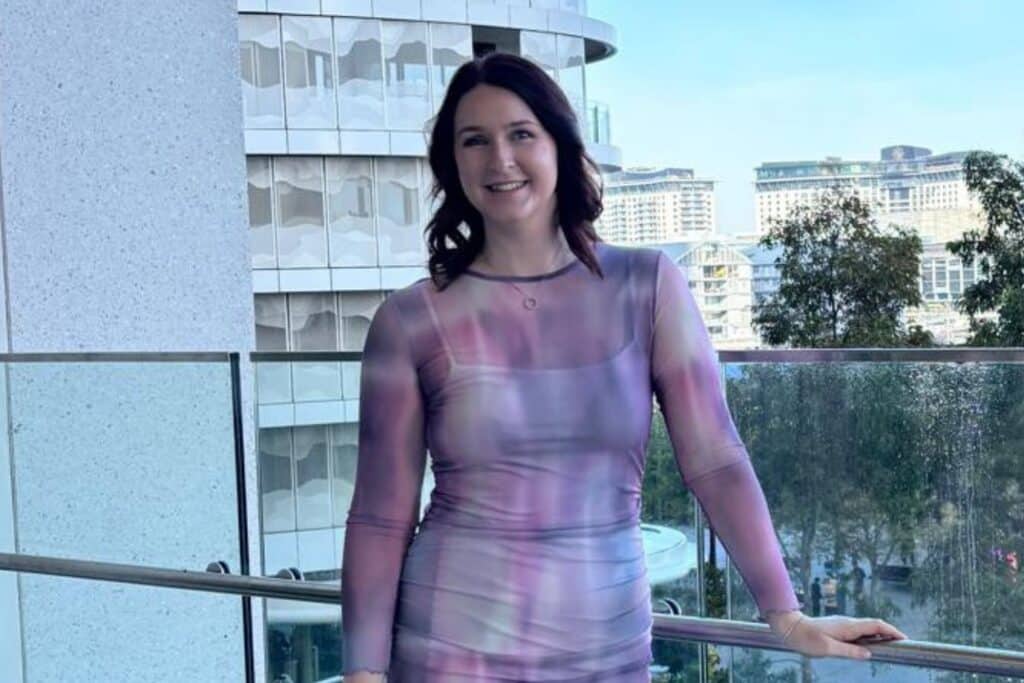
Mollie Smith pushed through stomach pain she knew wasn’t normal, largely due to fear and anxiety. She’s sharing what waiting cost her, because the research says she’s far from alone.
For months, I woke up in pain. Not the kind you can shrug off after a coffee and get on with your day. The kind that sits in your stomach like a stone and doesn’t leave. And for months, I told myself the same thing every single time: I’ll be fine.
I didn’t book a doctor’s appointment or tell my family or even my partner how bad it had actually gotten. I pushed through work, through plans with the people I love, and I quietly hoped that if I ignored it long enough, it would just go away on its own.
It didn’t.
By the time I finally sought help, I was told I had a chronic gallbladder so full of stones that they made up half the size of the organ itself. I had two parasites living in my bowels – one of them resisted all the antibiotics. I had a hernia on my intestine. It had gone on so long that external treatment was no longer an option. I needed multiple surgeries and a colonoscopy, all crammed into a single weekend, because the doctors said my symptoms were now too severe to even wait a few more days.
I’m not sharing my embarrassing account for sympathy, but because I know I’m not the only one in this position. I recognise this pattern everywhere in women my age: millennials juggling careers, relationships, social lives, and a running mental checklist that always seems to have “go see the GP about that thing” sitting quietly at the bottom, never urgent enough to move up.

It turns out that’s not a personal failing – it’s a pattern revealed in a recent survey aptly titled ‘While We Wait’ by private health provider HBF, which found that 54 per cent of millennials (and 55 per cent of Gen Z to boot) had delayed or avoided medical treatment for a genuine health concern in the past two years. Cost was the biggest barrier, and I understand that completely. But right behind it was something more private and harder to admit to: a third of us pointed to fear, anxiety and embarrassment as a main reason we didn’t go.
The research had me worked out down to a tee. Over a third of millennials in the survey said mental load or feeling too overwhelmed kept them away. Others cited fear of what a diagnosis might reveal, or anxiety about waiting on test results. I felt all of it. It wasn’t that I didn’t know something was wrong – of course I knew. What I didn’t have was the emotional bandwidth to find out exactly how wrong, on top of everything else I was carrying.
What I want other women to understand is that this isn’t about being lazy with your own health or putting it down to period pain or “being dramatic.” It’s about fear, and pressure, and the quiet belief (especially among women) that everyone else’s problems are more urgent than your own. But that belief cost me a lot more than an uncomfortable appointment. It cost me months of pain I didn’t need to endure, and it turned something manageable into an emergency.

Seeing a doctor early doesn’t mean something terrible is definitely wrong. Most of the time, it just means getting clarity or a name for what you’re feeling, and a plan for dealing with it, while it’s still small enough to deal with easily. I wish I had let myself have that certainty instead of a weekend in hospital, weeks of recovery and a few scars to show for it.
So, if you’ve been telling yourself “I’ll be fine” for longer than you’d like to admit: please, don’t wait for your body to make the decision for you. Make the appointment. I promise the fear of finding out is almost always smaller than what waiting can cost you.