
Australia needs thousands of new STEM workers every year. In cybersecurity alone, the annual shortfall runs into the thousands. We’ve heard it so often that the urgency has worn off. Each time, the same solution is trotted out with a tired sigh: we need more women in STEM.
Yet here we are again, having the exact same conversation. We talk about pipelines and encouragement and aspiration, then act surprised when nothing changes. If we’re serious about this, it’s time to stop diagnosing and start building.
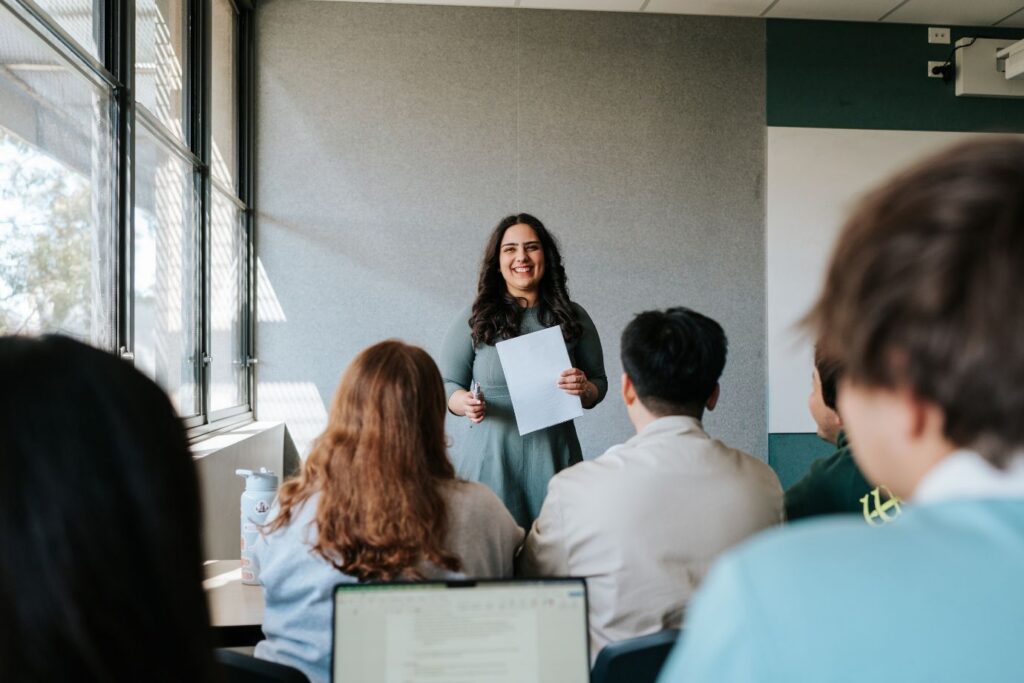
I see this every day. As a maths and physics teacher in Melbourne, and someone who’s navigated male-dominated fields from law to physics, I work with young people who absolutely belong in STEM. The problem isn’t ability or ambition. The problem is that we keep asking women to enter systems that were never designed with them in mind.
The gap isn’t in talent. It’s in the bridges we fail to build.
The “leaky pipeline” isn’t the real problem.
The popular “leaky pipeline” metaphor suggests women simply fall out at various stages. But that framing puts responsibility on individuals rather than the system. The pipeline isn’t leaking; it’s narrow, rigid, and built on exclusionary assumptions about who belongs.
First, there’s a confidence gap that starts early. Stereotypes about who is “naturally good” at maths and science take hold well before university. I’ve taught capable girls who second-guess correct answers, apologise before speaking, or quietly opt out, not because they lack skill, but because they’ve learnt not to trust it.
Second, there’s a visibility gap. In communities like Melbourne’s west, students rarely see STEM professionals who look like them, share their background, or come from their postcode. When success looks like a distant technology CEO or an academic with a perfect CV, it’s hard to imagine yourself there.
Third, there’s a pathway gap. The traditional route into STEM (top marks, elite universities, uninterrupted careers) ignores how many people actually live. It overlooks career changers, first-generation students, those who thrive on hands-on learning, and those managing work, care, or financial pressure.
Asking more women to walk into a system designed without them isn’t a strategy. If we want real change, we need to redesign the entry points.
Three bridges we must build.
- A bridge of belonging in schools
Belonging doesn’t happen by accident; it’s built deliberately. In my classroom, engagement changes completely when maths and physics connect to real problems students actually care about: designing safer intersections, analysing climate data, modelling real-world systems. When learning appears relevant, confidence follows.
Girls and students of varied backgrounds don’t disengage because the content is too hard. They disengage when it feels abstract, isolating, or disconnected from impact. Project-based learning should be the norm, not the exception, from primary school onwards. Teachers need professional development to recognise unconscious bias and actively create inclusive classrooms.
Classrooms are the first construction sites. If belonging isn’t built there, it won’t appear later.

- A bridge of visible, relatable role models
Representation matters, but not in tokenistic ways. Through Women of Brimbank and the Air Force Cadets, I’ve watched what happens when young women meet leaders who grew up where they did, attended local schools, and didn’t follow a perfect trajectory.
When you see someone who looks like you, sounds like you, and still succeeds, the idea of “people like me don’t do this” starts to fall apart. We need systematic mentorship connecting students with local women in STEM, not just headline figures. Industry and universities must showcase the career-changer, the TAFE graduate, the community leader, not just the PhD with a flawless résumé.
- A bridge of flexible, accessible pathways
My own career has crossed education, law, and advocacy. That non-linear journey isn’t a weakness; it’s a strength. STEM desperately needs people who understand communication, ethics, education, and community, not simply technical expertise.
Flexible pathways work. Models that genuinely integrate vocational and university education show what’s possible when institutional snobbery is removed and multiple routes to success are taken seriously. Where TAFE-to-degree pathways exist, female participation consistently exceeds that of traditional, linear pipelines because they recognise different starting points, learning styles, and life circumstances.
I know this firsthand. Without accessible, supported pathways like those offered at Victoria University, I simply would not be where I am today. VU’s strong Block Model, specifically in areas such as cybersecurity and STEM, demonstrates how vocational education and higher education can work together to open doors rather than close them.
Fee-free TAFE and accessible bridging programmes reduce financial obstacles and widen the talent pool, building confidence and momentum instead of gatekeeping. Industry must meet this shift by prioritising skills and potential over pedigree, designing hiring practices that recognise diverse experience.
It’s time to build.
To educators: your classroom is the first construction site. Build belonging deliberately.
To industry leaders: your hiring practices and internships are the on-ramps. Widen them.
To policymakers: fund the bridge (mentorship, teacher training, flexible pathways), not simply the end destination. The talent exists. It’s in Melbourne’s west, in regional towns, inside diverse communities across the country. Let’s stop lamenting the absence of women in STEM and start building bridges that let them walk confidently into the future and lead it.