
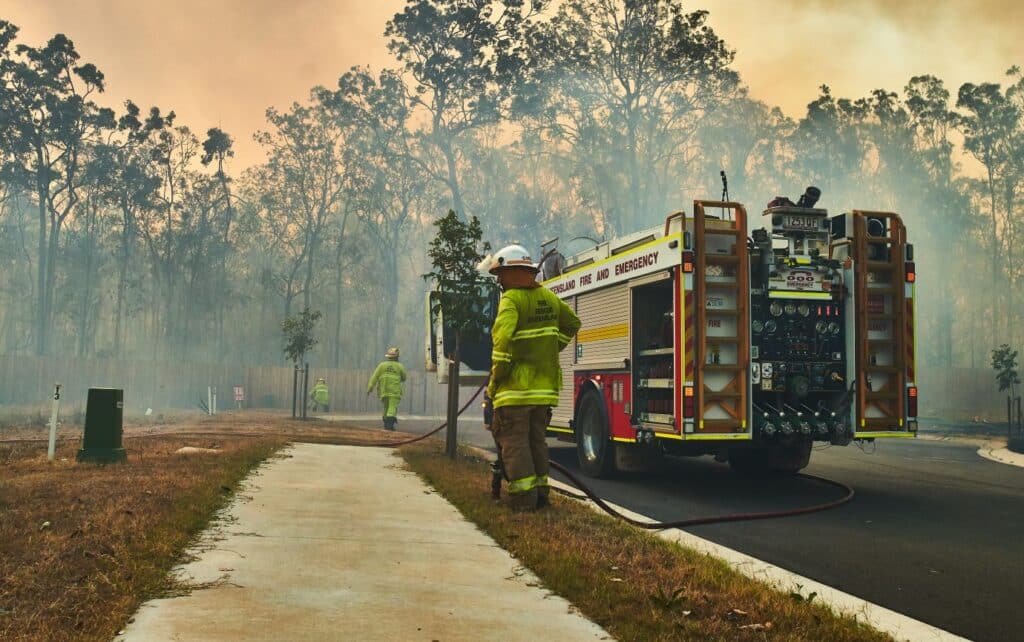
The Australian government has released its long-awaited National Climate Risk Assessment, warning millions of Australians will soon be exposed to “compounding, cascading and concurrent” risks as climate change gets worse.
The report, released on Monday by Minister for Climate Change Chris Bowen, is the most comprehensive risk assessment on climate change ever produced in Australia.
It warns there will be an increase in extreme heat-related mortality in the coming decades, indicating heat-related deaths in Sydney could increase by almost 450 per cent if global warming surpasses 3ºC.
It also says future changes in Australia’s climate will not be gradual or smooth. Instead, reaching climate and ecological tipping points will cause abrupt changes to our way of life and there will be significant personal, social, health and economic consequences.
The report has been released ahead of the federal government’s commitment to an emissions target for 2035, expected this week.
Speaking to the media on Monday, Bowen said he thought many Australians would find the report “confronting”.
“I would say to people, let’s be clear-eyed about the challenges, let’s be realistic about the threats, but let’s be optimistic for the future,” Bowen said.
“One thing that is very clear from this climate assessment is that our whole country has a lot at stake.
By 2090, coastal erosion events may occur around 10 times more often than now and by 2050, more than 1.5 million people could be exposed to coastal hazards. This figure increases to 3 million people by 2090.
The report has been developed by the Australian Climate Service and shows modelling of the impact of climate change and related hazards like heatwaves, droughts and floods on the Australian community. It looks at three different global warming scenarios including above 1.5ºC, above 2ºC and above 3ºC.
Extreme heat, floods, bushfires, poorer air quality and a rise in communicable diseases will all escalate health risks amid worsening climate change, the report notes.
Meanwhile, extreme events will lead to property damage, increased insurance costs and the loss of homes, especially in coastal areas. By 2050, Australia could experience $611 billion in lost property value and $770 billion by 2090. Meanwhile, the economic cost of disaster recovery can be expected to rise to $40 billion a year by 2050.

CEO of the Climate Council Amanda McKenzie said the numbers in the report are “terrifying”.
“It’s the kind of bed-time reading that should keep Ministers up at night. But doing too little is an active choice, and we can choose a better future by cutting climate pollution harder and faster now,” McKenzie said.
“The Albanese Government can reduce climate risk by cutting climate pollution at its source: coal, oil and gas. The first step is legislating the strongest possible 2035 climate target and stopping new polluting projects.”
The Climate Change Authority has predicted the globe will see 2.9ºC of warming this century.
Minister Bowen said the report makes clear that even “if emissions fell immediately tomorrow, there would still be impacts of climate change on our country”.
“The report makes that clear. So, yes, the world needs to keep working on emissions reduction,” Bowen said.
Bowen’s words come as the federal government moved last week to give final approvals to the extension of Australia’s biggest gas project, Woodside’s North West Shelf. Environment Minister Murray Watt gave Woodside permission to extend the project operations until 2070.
Greens leader Senator Larissa Waters said the revelations in today’s national risk assessment report were “chilling”.
“The climate crisis is a risk to our safety, to nature, and to our economy and productivity. This report must be a wake up call for Labor ahead of their 2035 climate target decision,” Waters said.
What are the impacts on women?
The National Climate Risk Assessment makes specific mention of the health impacts related to worsening climate change that will impact women. It cites 2021 research that showed women to be particularly vulnerable to climate change, including from risks to reproductive and maternal health from vectorborne diseases linked to climate change.
It notes women are also frequently excluded from decision-making processes and may not have the agency to relocate away from climate hazards. The report notes climate–driven health risks can be reduced by addressing existing vulnerabilities, including for women and other minority groups.
Meanwhile, the report also mentions how increasing climate extremes may prevent Aboriginal and Torres Strait Islander women from fulfilling crucial roles in their community, including when it comes to wellbeing, cohesion and cultural preservation. Climate harm will also place a higher burden on women who shoulder most of the unpaid care work that supports the health of their communities.
The risk of family violence also increases during times of worsening climate-fuelled disasters, placing Aboriginal and Torres Strait Islander women in harm’s way.
Meanwhile, Parents for Climate Action has warned that the national climate risk assessment is a warning for parents, families and children.
“This devastating report confirms what’s at stake: our kids’ safety from cascading climate harms. It shows how risks across health, food, housing, security and community are all interconnected – and how inaction will cause them to compound and overwhelm us,” Nic Seton, CEO of Parents for Climate, said.
“Parents do everything they can to protect their children, but governments must do the same: cut coal and gas pollution and commit to a science-aligned 2035 target. This report is confronting, but it’s not our destiny.”
Amy Blain, a parent of two children living in Canberra, said the report is a call to action for the government to step up its climate action efforts.
“As parents to two young children that still live with the trauma of the terrifying bushfires in Bermagui in 2020, we want our Government to take strong, science-backed action. We’re doing everything we can to protect our kids, we need the Government to do the same,” she said.
Meanwhile, parent and psychologist from Sydney, Louise Shephard, said she is really worried about the future.
“As a parent to two beautiful teens, I’m really concerned that Australia’s 2035 climate target will not match what the science says is safe for our kids,” Shepherd said on Monday.
“I really worry about their future. I grew up on a river on the south coast, and I’ve seen flooding first hand as a child, and I’ve seen in recent years the anxiety of bushfires and floods on your doorstep for family members. It’s extremely stressful.”
Climate Councillor and public health physician Dr Kate Charlesworth said the most disadvantaged communities will be hit first.
“This new national report warns of dire health impacts in a hotter Australia including increased heat-related deaths, illnesses such as dengue fever spread by mosquitoes, hospitals being overwhelmed by disasters, and road and rail disruption during extreme weather events, which could double the transport cost of medicines by 2090,” Dr Charlesworth said.
“The most disadvantaged communities are being hit first and hardest but these risks will impact all of us.”