
So, it took leaking trade secrets.
Not the photographs. Not the civil settlement. Not Virginia Giuffre’s testimony. Not the Department of Justice files. Not the mounting, damning evidence released in recent weeks that a second woman may be accusing Andrew Mountbatten-Windsor (formally known as Prince) of sexual acts with a trafficked minor. No. What finally prompted authorities to swoop in, search his properties and hold Andrew in police custody for eleven hours was the revelation, buried in the recently released Epstein files, that he allegedly passed classified documents to Jeffrey Epstein during his tenure as the UK’s trade envoy, a role he held from 2001 to 2011.
Andrew was arrested overnight, on his 66th birthday, with searches carried out in Berkshire and Norfolk, locations corresponding to Wood Farm, his current residence, and Royal Lodge, his former one. He was held for eleven hours without formal charges. And before King Charles headed off to London Fashion Week, because the show must go on, he issued a statement declaring that “the law must take its course” and that authorities have the Royal Family’s “full and wholehearted support and co-operation.”
Wholehearted. Let that word sit with you for a moment.
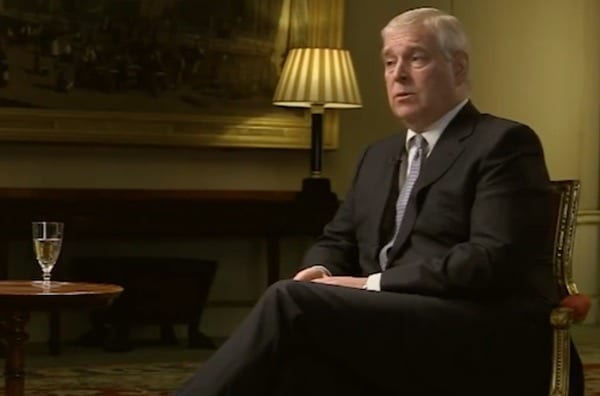
Because here is what wholehearted support did not look like: it did not look like anything in 2019, when Andrew sat across from a BBC journalist and told the world he had no memory of Virginia Giuffre, a woman he was photographed with his arm around, a woman he went on to pay approximately £12 million to settle a civil lawsuit.
It did not look like accountability when the Department of Justice was practically begging for his cooperation in their investigation into Epstein’s trafficking network. And it certainly did not look like urgency when those photographs emerged, or when further victims came forward when the files were released, revealing the full, nauseating scope of what Epstein’s network did to young women and girls.
What wholehearted support looked like, for years, was Christmas church walks, carefully managed photo opportunities, a quiet rehabilitation effort; all drip-fed to a public that was apparently expected to forget.
The victims of Andrew and Epstein do not need thoughts and prayers. They do not need the Royal Family’s carefully worded expressions of concern. They need their voices heard. They need to be believed. They needed the law to take its course when Andrew stopped sweating; his own memorable description of why he couldn’t possibly have been with Giuffre on the night in question, and strutted out of that disastrous interview seemingly untouchable.
It is worth being clear about what’s at stake here. Leaking trade secrets is, under UK law, one of the harshest criminal offences on the books, carrying a potential life sentence. It is serious and should be investigated. But let’s not pretend that the urgency we are witnessing reflects any genuine moral reckoning.
A man allegedly at the centre of a sex trafficking network, one that exploited vulnerable young women and girls for the gratification of the wealthy and connected, has walked largely free for years, insulated by money, status, and the quiet protection of an institution that has spent centuries perfecting the art of looking the other way – “never explain, never complain”.
Now that trade secrets are involved, suddenly everyone is moving very quickly.
The arrest of a senior member of the Royal Family is, without question, unprecedented. What it means for the monarchy, already navigating its post-Queen Elizabeth identity crisis, is genuinely uncharted territory. But if this moment produces only consequences for Andrew the trade envoy, while Andrew the alleged associate of a prolific sex trafficker continues to escape scrutiny, then justice has not been served. It has simply been redirected.
Virginia Giuffre’s family, speaking on behalf of her issued a statement saying their “broken hearts have been lifted” and that “for survivors everywhere, Virginia did this for you.”
The women trafficked, abused, and silenced by Epstein’s network, including those who have named Andrew, deserve justice that does not begin and end with whatever crime is most politically inconvenient for the establishment to ignore. They are not a subplot. They are the story. And until the full weight of the law is directed at what was allegedly done to them, no statement about “wholehearted co-operation” means a thing.
But rest assured that the same British press that spent years softening Andrew’s image and looking away from his accusers will, within days, find a way to redirect the national conversation. The column inches are already warming up. Somewhere, an editor is typing Meghan Markle’s name.