

Bo Searle was already a busy mum of two and full time senior digital strategist at Merck Healthcare when life threw her “a curveball”.
Just days before Christmas last year, a health emergency changed the trajectory of her family and sent her working life into a spin.
“I have two beautiful children, a 12-year-old son, who just started high school this year, and an 8-year-old daughter, who has always been super independent and super sassy,” Bo said.
“Last year my daughter seemed a bit tired, but I just thought, ‘it’s the end of the year, we’re all tired’.
“Another mum said to me, ‘have you tried having her sugar levels checked’, so we went to the GP.”
What happened next left Bo and her family dealing with a crisis they did not see coming.
“Next thing you know, we’re in the ambulance, straight from the GP,” Bo said. “How did we miss this? She was fine; she did a dance competition just days before, with no problem.”
Bo’s daughter was dealing with severe complications of hyperglycaemia, known as diabetic ketoacidosis (DKA).
“My kids are super healthy, but here we are in ICU,” Bo said.
“And we were told she has Type 1 diabetes. Honestly, those two or three days were a bit of a blur.”
Bo said, like all working parents, she had “1000 tabs open at all times”.
“As a mum, you’re not allowed to fall apart, you have to say, ‘it’s ok, we’ve got this’,” she said.
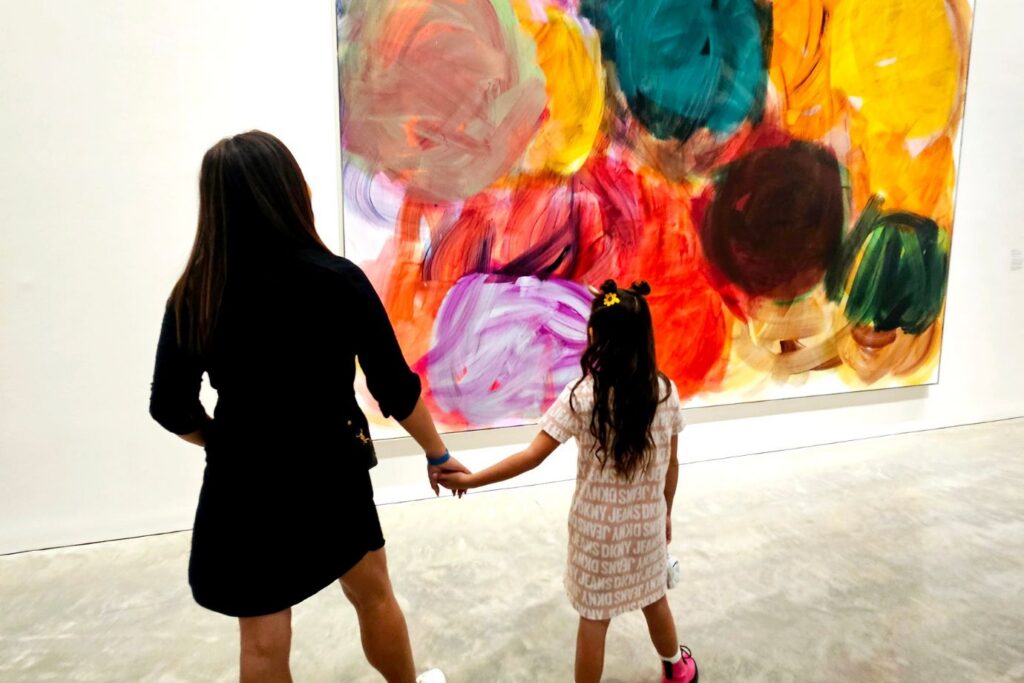
“I felt like a duck you know – on the surface, so calm, but underneath, paddling like mad. You want to do that for your children, just reassure them, that it’s all ok.”
She added her daughter’s diagnosis changed everything for her family.
“We all learnt about carb counts, and she has devices now – she has a watch, and a phone, and a pump,” Bo said.
“Prior to the pump, she was injecting herself four times a day and she just hit the wall with that, she was getting upset and of course that upsets me as well.
“We have had to watch her grow up so much faster, she talks like an adult now.”
Bo was forced to stop and think about what the diagnosis would mean not just for her family, but her work life as well.
“I love what I do, and I feel that working sets a good example for my kids,” she said. “I enjoy working in the digital space, it’s quite exciting, and it suits my extroverted personality.
“I enjoy helping our business to work better and to work smarter.
“When I was at the hospital prior to Christmas, I thought, ‘what do I say to work? What does this mean?’ I knew there was a tsunami coming.
“As I was drafting the email to HR, I was wondering, ‘what are they going to think? Are they going to think I’m less than what I was?’ And immediately, HR were like ‘oh my gosh, do what you need to do. We’re here for you’.
“And I felt I could breathe out.”
Having recently undertaken the Carer-Inclusive Workplace Initiative, Merck Healthcare was well prepared to support the new caring needs of Bo. Carers Australia delivers the Carer-Inclusive Workplace Initiative, a program funded by the Australian Government Department of Health, Disability and Ageing.
Another full-time job
Bo says that becoming a carer is like having “another full-time job”.
“Your workload doubles,” she said. “My daughter has sensors that go off at nighttime, if her levels are too high or too low, so I’m up at night, checking.
“You have double the workload, but you want to do a good job. I get home from work and I’m emailing the school, I’m doing research, looking into what kind of school lunches we can pack for her.”
She’s not sure how she would have managed, without the support of her workplace.
“As a carer, I’m grateful to have been in a work role for so long, and to work in healthcare as well, I feel like we understand people are going through things – whether that’s IVF, or cancer treatment, it doesn’t matter,” Bo said.
“Merck have been amazing. Any time I need a day off to meet with an endocrinologist, or whatever, I can have the day off. I can work from home.
“Merck have been there for me, and that makes me want to be there for them. It creates trust and loyalty.
“The last thing I want to do is feel like a failure for my daughter and for work.
“It’s so important for business to offer conditions like this for carers. This event in our family, it doesn’t mean I can no longer do what I do at work.”
Bo had some advice for other people, who were juggling a caring role with employment.
“My advice would be to have an open and honest discussion with your work,” she said. “Tell them you need support.
“And don’t be too hard on yourself. As parents, as workers, we want perfection, but it’s ok to have days that are not 100 per cent. And those days don’t represent the other days, when things are great. Some days, I nail it, other days are pretty average.”
Bo said six months into dealing with her daughter’s “new normal”, they were “still in the trenches”.
“For us, for our family, this is the biggest health scare we have ever faced, it rattled all of us,” she said.
“I feel so grateful and very lucky that Merck could understand what I needed.
“When a company has a great carer policy, they will retain good people. Life throws you curveballs,” she said.
The Carer-Inclusive Workplace Initiative supports organisations to create a more inclusive workplace for carers. Join us in creating a more supportive, inclusive workplace for Australian carers.
- The free self-assessment tool lets you discover how inclusive your organisation currently is
- You will also gain access to a learning hub with modules, practical advice, resources and more.
- Once your organisation becomes carer-inclusive, you will receive a toolkit to promote your commitment to employees, customers and others.
- Becoming an organisation that values diversity and inclusion will enhance your reputation as an employer of choice.
To start your self-assessment or for more information, visit carerinclusive.com.au