
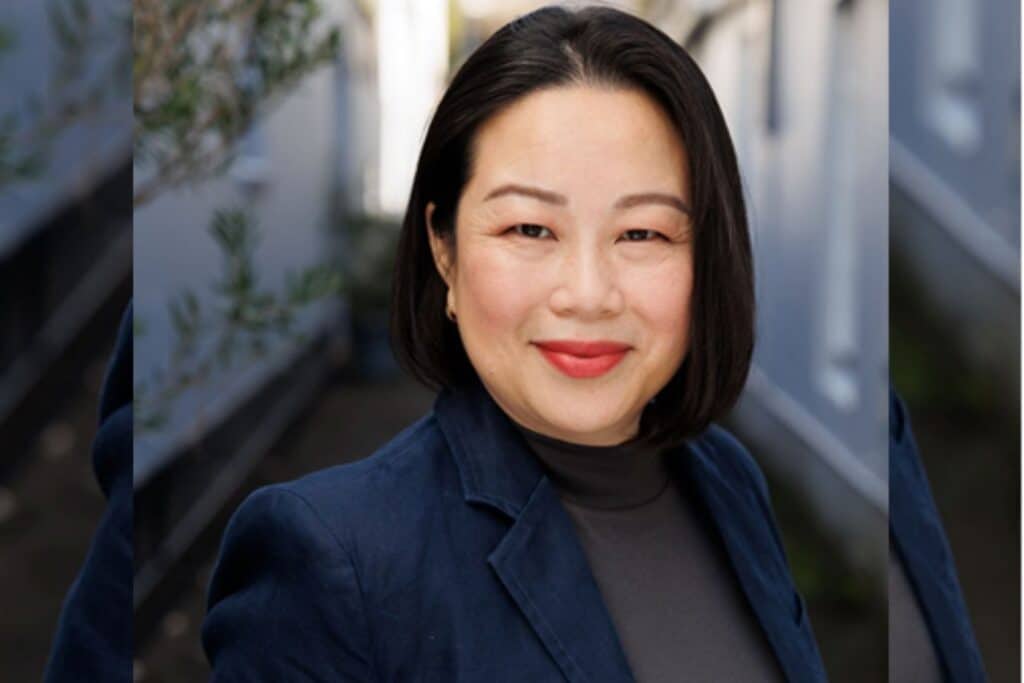
My first lesson in trust came from a Scottish man who spoke Thai. Michael Clayton was my boss when I worked on a trading floor in financial services. He had a Thai wife, spoke the language and worked closely with high net worth clients.
What stayed with me was not simply his vocabulary. It was the effort behind it. Michael paid attention to cultural cues. He listened before assuming and remembered what mattered to people, never expecting everyone else to adapt to him. In fact, he moved towards them.
Years later, after leaving the trading floor, building an education business and eventually becoming a communication strategist to executive leaders and medical professionals, I found a name for what Michael demonstrated.
I call it Trust FluencyTM: the ability to communicate across difference, create genuine confidence and turn relationships into shared success.
The myth of the self-made woman
Women are often told we can “have it all” if we are confident, organised and resilient enough. I have raised four children, changed industries and built businesses. That trajectory could be told as a story of personal determination.
It would also be incomplete.
The success that I ‘conquered’ was in fact built with mentors, colleagues, teams and, most importantly, a husband who drove our children to lessons, rehearsals and appointments while I pursued opportunities.
Acknowledging that support does not diminish my work. It makes the story more honest. No woman is self-made because behind most visible achievements is an invisible network of trust.
Trust requires movement from both sides
For Asian Australian women, building that network can involve additional labour. On the trading floor, I learnt that authority sounded fast, certain and direct. Listening could be mistaken for hesitation. Modesty could make competence less visible.
So as a result, we learn to translate ourselves: assertive, but not difficult; ambitious, but still grateful; visible, but not too much.
Therefore, Trust FluencyTM should not mean becoming better at tolerating those conditions. It asks everyone to do some of the translating.
In my work, I teach three simple practices.

- First, replace assumption with curiosity. Ask how someone prefers to communicate rather than deciding what their silence, accent or manner means.
- Second, make reliability visible. Trust grows when words and actions repeatedly match, especially when circumstances become difficult.
- Third, share the risk. Genuine partnership begins when one person is not expected to carry all the adapting, explaining or proving.
Long before I achieved anything, I trusted those who carried me
I left Vietnam by boat as a two-year-old refugee. I survived a journey of war where survival was never guaranteed, then spent several years separated from my parents and raised by my grandparents before our little family reunited in Australia.
Long before I became independent, I was carried by a village.
That village was built on sacrifice, shared responsibility and people trusting one another enough to act in uncertain circumstances.
That is Trust FluencyTM in practice.
It is more than communicating well. It is the ability to build relationships where people can rely on one another, move across difference and create something together that no one could build alone. Women can have expansive careers, businesses and families. But “having it all” should not be measured by how much one woman can carry alone.
It should be measured by the village she builds – and the trust in relationships that carry them.