
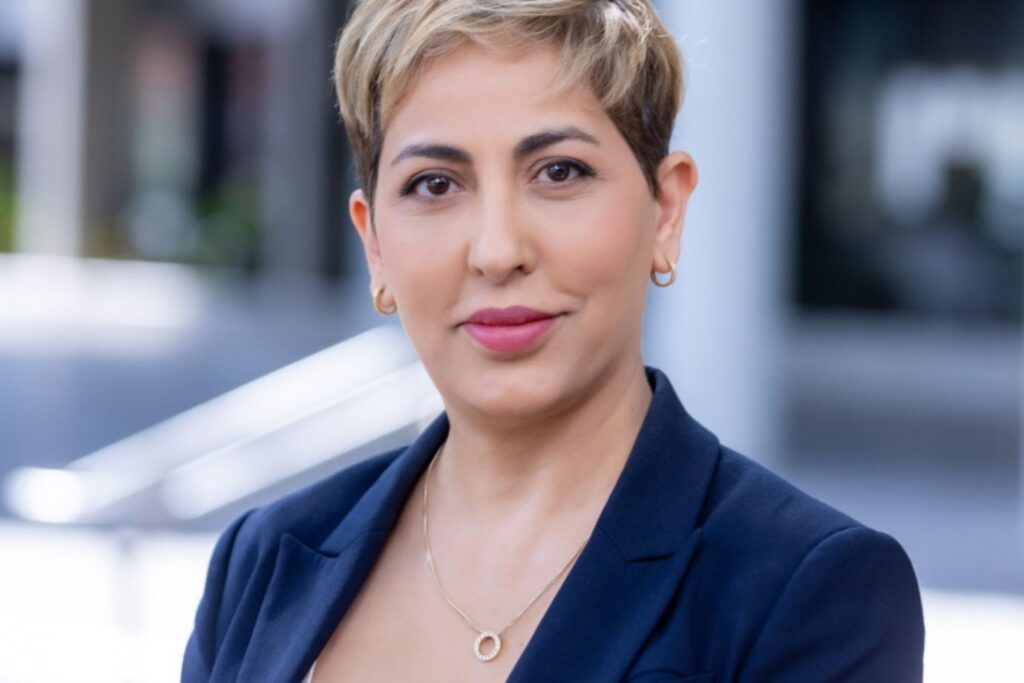
I was a child when I first learned what it meant to be a girl under the Islamic Republic. I learned that my hair was dangerous and my voice suspicious.
I grew up under laws that told me my worth was half that of a man; that men could marry multiple wives while girls were pushed into child marriages; that even my testimony in court counted for only a fraction of a man’s. These were not abstract ideas. They shaped every breath of my childhood.
As a teenager, I escaped Iran by climbing mountains on foot – exhausted, terrified, but determined. I never imagined that more than 40 years after the Islamic Republic took power, the Iranian people would be fighting with their bare hands for the simple right to breathe freely.
A new uprising, fuelled by decades of pain
Since mid-December 2025, Iran has been engulfed in the largest uprising since the 1979 upheaval that brough the Islamic Republic to power. What began in Tehran’s Grand Bazaar as protests over economic collapse – after the currency plunged and inflation soared beyond 40–50 per cent – has become a nationwide demand for the end of tyranny. Protests have spread across all 31 provinces and more than 180 cities, uniting workers, students, shopkeepers, retirees, and youth.
The cost‑of‑living crisis may have sparked the first flame, but the fire burning across Iran is generations old – rooted in gender apartheid, corruption, repression, and relentless fear.
Protesters now chant openly against the entire clerical establishment, many holding the pre‑1979 Lion and Sun flag as a reclaimed emblem of dignity and unity.
This is no longer political unrest. It is an existential demand for a life worthy of being lived.
Women and men fighting side by side
What moves me most is that, once again, the women of Iran are powerfully present in this fight – standing shoulder to shoulder with men, united in a shared struggle for freedom.
Across cities and villages, women and men tear down the symbols that have long defined their oppression, standing together before armed security forces – unarmed, unwavering, and unafraid.
This is not a defiance of faith; it is a defiance of a regime that has weaponised religion to terrorise its own people for decades.
Mothers shield children with their bodies.
Young men and women livestream crackdowns even as gunfire erupts around them. They link arms in the streets, refusing to let one another face the danger alone.
Their collective courage echoes the spirit of Mahsa Jina Amini and the Woman, Life, Freedom uprising – only now, it is broader, deeper, and more resolute than ever.
For more than four decades, Iranian women have endured the heaviest burdens of gendered violence and discrimination. Today, they rise hand in hand with their brothers, carrying the torch of Iran’s liberation together – united in their refusal to live another moment in chains.
Facing guns with empty hands
The regime has responded with brutal familiarity. Since the uprising began, thousands – mostly young people – have been killed, injured, or arrested. Under state‑imposed media blackouts and complete internet shutdowns, horrifying accounts continue to filter through: bodies deliberately left in piles, displayed like mountains to terrorise the public; wounded protesters too afraid to seek medical care because even hospitals – places meant for healing – have become hunting grounds for security forces.
Families are denied the right to bury their own children unless they pay nearly $3,000 to reclaim bodies held hostage, even in death. Those unable to pay face an even crueller fate: their loved ones are falsely buried as members of the regime’s Basij (a paramilitary force established in 1979 by Ayatollah Ruhollah Khomeini) to fuel state propaganda, or hidden away in mass graves with no dignity, no truth, and no trace.
And yet, day after day, Iranians raise their voices.
Despite the blackouts.
Despite the bullets.
Despite the very real possibility that they may never return home.
They come empty‑handed.
They come because they have nothing left to lose.
And they come – and will continue to come – even if this uprising is violently crushed, because after decades of enforced silence, something irreversible has shifted within the Iranian people.
Why I believe in the people of Iran
Iranians are refusing to bow their heads any longer. They no longer acknowledge this regime as a legitimate government, for no government that murders its own people deserves such recognition.
And despite the regime’s propaganda, this uprising is not engineered by political factions or foreign powers. It is powered by hunger, by exhaustion, by humiliation, and by the timeless human demand for dignity.
To the brave men and women of Iran standing against guns, tanks, and batons with nothing but courage:
You are not alone.
Your courage is seen.
Your voices are heard.
And your fight is just.
When I escaped Iran as a teenager, I thought freedom was the air I inhaled the moment I crossed the border. But true freedom is what you are fighting for now – a freedom that belongs not just to those who escape, but to Iran itself.
A call to the international community
To the governments, institutions, civil society leaders, and citizens of the world:
This is the moment to stand with the Iranian people.
Silence is complicity.
Neutrality is a choice with consequences.
The brutality inflicted on Iranians is not an isolated national crisis. It is part of a wider machinery of oppression that has long undermined regional stability and reverberated across the globe. A regime that murders its own unarmed citizens will not be moved by soft language or diplomatic caution.
What Iranians need now is moral clarity – and the courage of the international community to match the bravery they show every day.
What is required now is coordinated international leadership and a commitment to act – not at some distant or convenient moment, but now, to support the Iranian people in their march toward a government worthy of their strength, their dignity, and their unwavering courage.
And finally, I hold an unshakeable belief that the people of Iran will one day draw breath without fear – not scattered far from home, but standing free in the land that has always been theirs. Until that day, I will continue to raise my voice for those who cannot.