
The legal definition of a “woman” has been defined by biological sex under the UK’s anti-discrimination and equalities law. Overnight, five judges at the UK Supreme Court unanimously ruled that the legal definition of a woman is based on biological sex.
The Equality Act provides protection against discrimination on the basis of characteristics such as “sex” and “gender reassignment”.
Deputy president of the court, Lord Patrick Hodge, said the judges had to decipher how the words “woman” and “sex” are defined in the legislation, explaining: “The unanimous decision of this court is that the terms ‘woman’ and ‘sex’ in the Equality Act 2010 refer to biological women and biological sex.”
“We counsel against reading this judgment as a triumph of one or more groups in our society at the expense of another. It is not.”
The ruling is a huge blow to the trans community, and could potentially have major implications for how sex-based rights apply in Scotland, England and Wales.
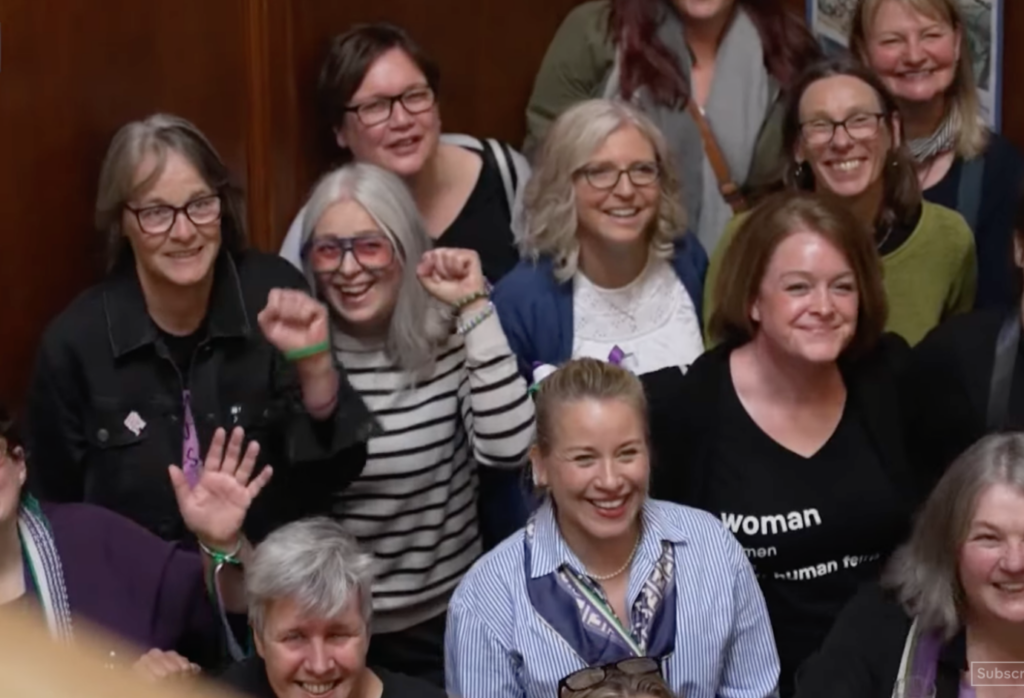
Meanwhile, gender-critical campaign group For Women Scotland is celebrating the ruling. Speaking outside the Supreme Court following the ruling, the group’s co-founder Susan Smith said: “Today the judges have said what we always believed to be the case, that women are protected by their biological sex.”
“Sex is real and women can now feel safe that services and spaces designated for women are for women and we are enormously grateful to the Supreme Court for this ruling.”
In 2018, the group commenced a legal dispute complaining that ministers had included transgender people as part of a new quota passed in a Scottish Parliament bill, which was designed to ensure gender balance on public sector boards.
The group, which is financially backed by transphobic author J.K Rowling, brought a case against the Scottish government arguing that sex-based protections should only apply to people that are born female.
Over the past few years, the issue has been debated on and off in Scottish courts. In 2022, Scottish Parliament ministers ruled that the definition of sex was “not limited to biological or birth sex”, and passed reforms that would have made it easier for someone to change their legal sex.
However, the decision was blocked by the UK government, and has since been dropped by the Scottish Parliament.
Blow to trans rights
On Wednesday, Lord Patrick Hodge of the UK Supreme Court described trans people as a “vulnerable and often harassed minority,” noting that they would continue to have protections against discrimination, but that it would be under the protected characteristic of “gender reassignment” as opposed to sex.
He said that the legislation gives transgender people “protection, not only against discrimination through the protected characteristic of gender reassignment, but also against direct discrimination, indirect discrimination and harassment in substance in their acquired gender”.
He also noted that women had long championed for equal rights with men, adding: “It is not the task of this court to make policy on how the interests of these groups should be protected,” but “to ascertain the meaning of the legislation which parliament has enacted.”
The judges ruled that interpreting sex as “certificated” rather than “biological” would “cut across the definitions of man and “woman and thus the protected characteristic of sex in an incoherent way”.
They added that a “certified” definition of sex would diminish protections for lesbians, referring to the example of lesbian-only spaces and associations since it would imply that a trans-woman who is attracted to women would be categorised as a lesbian.
The latest ruling also found the biological interpretation of sex was essential for single-sex spaces to “function coherently” — citing contexts including changing rooms, hostels, medical services and single-sex higher education institutions.
The judges said that “similar confusion and impracticability” had emerged in relation to single-sex associations and charities, the armed forces, women’s sport, and public sector equality.
“The practical problems that arise under a certificated sex approach are clear indicators that this interpretation is not correct,” the judges added.
A UK government spokesperson said the ruling would bring “clarity and confidence for women and service providers such as hospitals, refuges, and sports clubs”.
“Single-sex spaces are protected in law and will always be protected by this government,” the spokesperson added.
First Minister John Swinney said the Scottish government accepted the judgment, after it claimed in court that transgender people with a gender recognition certificate (GRC) are eligible to the same sex-based protections as biological women.
On his socials, he said: “The ruling gives clarity between two relevant pieces of legislation passed at Westminster. We will now engage on the implications of the ruling.”
“Protecting the rights of all will underpin our actions.”
Reactions
Prominent trans-rights campaigner, Scottish Green MSP Maggie Chapman released a statement saying, “This is a deeply concerning ruling for human rights and a huge blow to some of the most marginalised people in our society.”
“It could remove important protections and will leave many trans people and their loved ones deeply anxious and worried about how their lives will be affected and about what will come next.”
“Trans people have been cynically targeted and demonised by politicians and large parts of the media for far too long. This has contributed to attacks on longstanding rights and attempts to erase their existence altogether. Whatever happens next, we will continue to stand with trans people and resist the nasty and aggressive culture war that is being waged against them and challenge any attempts to remove their rights.”
Scottish Trans manager Vic Valentine released a joint statement alongside Equality Network, saying the organisation was “shocked” by the court ruling, and arguing that it “reverses 20 years of understanding on how the law recognises trans men and women with gender recognition certificates”.
They added: “This judgment seems to suggest that there will be times where trans people can be excluded from both men’s and women’s spaces and services.”
“It is hard to understand where we would then be expected to go – or how this decision is compatible with a society that is fair and equal for everybody.”
British transgender activist Munroe Bergdorf took to her socials, saying: “Today’s Supreme Court ruling feels really heavy, uncertain and quite frankly, f***ing dark.”
“A lot of us are feeling overwhelmed, anxious and struggling to remain hopeful under what feels like an endless barrage of systemic hatred.”
Simon Blake, CEO of LGBTI campaign group Stonewall said the group “shares the deep concern at the widespread implications for today’s ruling from the Supreme Court.”
“It will be incredibly worrying for the trans community and all of us who support them. It’s important to be reminded the Court strongly and clearly re-affirmed the Equality Act protects all trans people against discrimination, based on Gender Reassignment, and will continue to do so.”
Meanwhile, J.K Rowling posted on her socials: “It took three extraordinary, tenacious Scottish women with an army behind them to get this case heard by the Supreme Court and, in winning, they’ve protected the rights of women and girls across the UK.”
Become a Women’s Agenda Foundation member and support our work! We are 100% independent and women-owned. Every day, we cover the news from a women’s perspective, advocating for women’s safety, economic security, health and opportunities. Foundation memberships are currently just $5 a month. Bonus: you’ll receive our weekly editor’s wrap of the key stories to know every Saturday. Become a member here.