
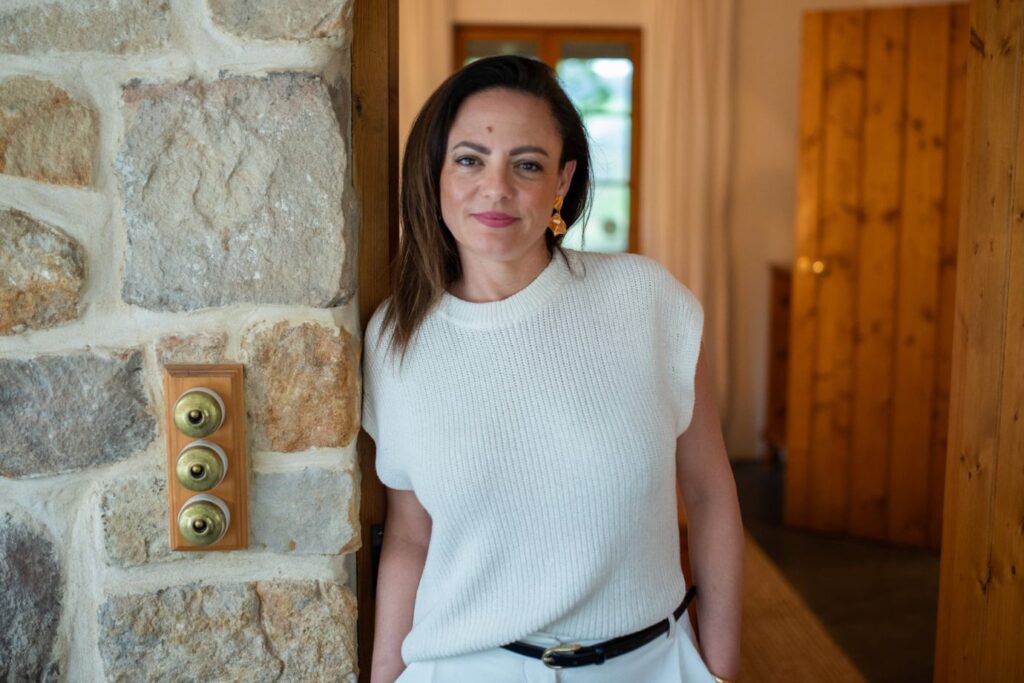
When my Mum died at aged 52, when I was just 28, I was devastated — not only by her absence but by the unconscious shadow it cast over my own life.
Looking back from the vantage point of reaching 48 years of age, I’ve found myself unconsciously racing toward that same invisible finish line. I have worked, parented, loved, and built businesses as if the clock were ticking faster for me than for anyone else. But recently, I realised that this fear — of running out of time — has also been my greatest teacher.
The shadow of 52
Losing my Mum so young left me with a deep, unspoken belief that my own time was limited too. For years, I worked at an almost comical pace — running a full-time job, raising children, founding businesses and, completing my PHD, all with this quiet panic that I was running out of time.
No amount of meditation or surrender ever fully removed that fear, and for the most part, it was unspoken and unrealised; It lived quietly under my skin — the thought that my life might end at the same age hers did, suddenly and without warning.
But over time, I’ve come to see that this fear, however irrational, can also be reframed. Instead of letting it drive anxiety, I’ve chosen to let it guide awareness. If I were to live with an invisible countdown, then I wanted to make sure every day counted, and I can see reflectively, that I have done that. I’ve been present with my girls, I’ve seized every opportunity, and I’ve travelled as much as possible with them, to ensure they have memories and wonders that will last forever.
Reframing the fear
This self-imposed deadline has now become a more conscious opportunity. A reason to pause, reflect, and prepare my daughters not just for the practical parts of life — but for the emotional and spiritual ones too.
As with most learnings, it was prompted by something my eldest said in passing; “mum how do you know all the stuff you’re supposed to do as an adult? Like insurance, and car registration?”
It created an invitation to ask: What if I don’t have as long as I hope? What do I want my two girls to know if I’m not here tomorrow?
It’s not a morbid thought anymore — it’s a conscious one. A daily reminder to live deliberately, say what matters, and prepare them not just for the logistics of life, but for the emotional landscape of being human. I want to leave nothing unsaid.

The Hills retreat
So I packed my car this Spring and drove into the Adelaide Hills — to a tiny stone cottage with no Wi-Fi, no TV, no radio, and no distractions. My only intention: to write a manual for life for my daughters over the next few days of solitude.
On the drive to the cottage, I broke down in tears. The silence pressed in, and I realised how much emotional weight I’d been carrying. For years, I had been holding everything together — for my children, for work, for my partners, and for my clients — without ever stopping long enough to breathe.
As I began to write, the grief that had lived quietly in me since my Mum’s death finally had space to move. I realised that preparing for death wasn’t about mournful obsession — it was about love. It was about ensuring my girls would feel guided, supported, and deeply known and equipped for life’s challenges, even if I wasn’t here.

The manual for life
I began with the practical things. How to pay bills, find insurance, manage money. Where to find important documents. Who to call when something goes wrong — legally, medically, emotionally.
But soon, the list became less about logistics and more about legacy.
I wanted them to know the lessons I had learned the hard way. How disappointment isn’t failure. How mindset shapes everything — your choices, your peace, your ability to create a life of meaning.
I wanted to tell them that I loved them unconditionally, even in my imperfect moments. That when I struggled under the weight of responsibility, it was never because I loved them less — but because I wanted so much for them.
I wanted them to understand why I made the decisions I did: where we lived, how I parented, why I worked the way I did, the patterns I had set out to break – and which ones were successful. I wanted them to know that everything — from the schools I chose to the holidays we took — was with them in mind and with an intention to create the life I had always hoped to provide.
I wanted them to know about gratitude, and that the subconscious mind quietly steers our lives. Most of all, I wanted them to understand that forgiveness — for others and for themselves — would be one of their greatest strengths.
On love and their fathers
I wanted my girls to know that each of their fathers had shaped me — and them — in meaningful ways. That love, even when it ends, can still be sacred. That separation isn’t failure, but growth. That I loved their Dads for who they were, for what they taught me, and for allowing me to be the mother of two extraordinary girls.
I wanted my daughters to understand that relationships evolve, and endings don’t erase the beauty of what was shared. That we are all, always, works in progress. I wanted them to know why I left, and to reframe what could be seen as failing as growth and development. I wanted to shake the idea that you could only succeed by living like everyone else. In essence In wanted to impart on them a sense of self-acceptance regardless of the choices they make.
Facing mortality with gratitude
I procrastinated a little that week — made tea, watched the fire, took long baths, stared out at the mist, and cuddled my dog. But beneath the stillness, something began to shift. I stopped feeling afraid of time and started feeling grateful for it.
When I lost my Mum, I lost not just her presence but her stories, her wisdom, her thoughts. There were questions I’ll never be able to ask her. That’s why I’m writing mine down now — so my girls will always have my words, even if they can’t have my voice.
This process has been a kind of healing I didn’t know I needed. I realised that the “deadline” of 52 isn’t a finish line — it’s an invitation to live fully.
Preparing for peace
I’ve updated my will, sorted my insurances, and written letters for my daughters. Not because I expect to leave soon — but because being prepared gives me peace.
It allows me to live lighter, freer, and more consciously. To stop racing, and instead, to savour.
Because that’s the gift my Mum’s death ultimately gave me — the awareness that life is finite, and that love, when expressed, endures far beyond it. I hope my daughters will one day look back and know that their mum didn’t live in fear — she lived with purpose. And that this “manual for life” was never really about dying, but about living with intention, love, and presence in a way I hope will inspire and nurture them well into their lives, and beyond mine.