
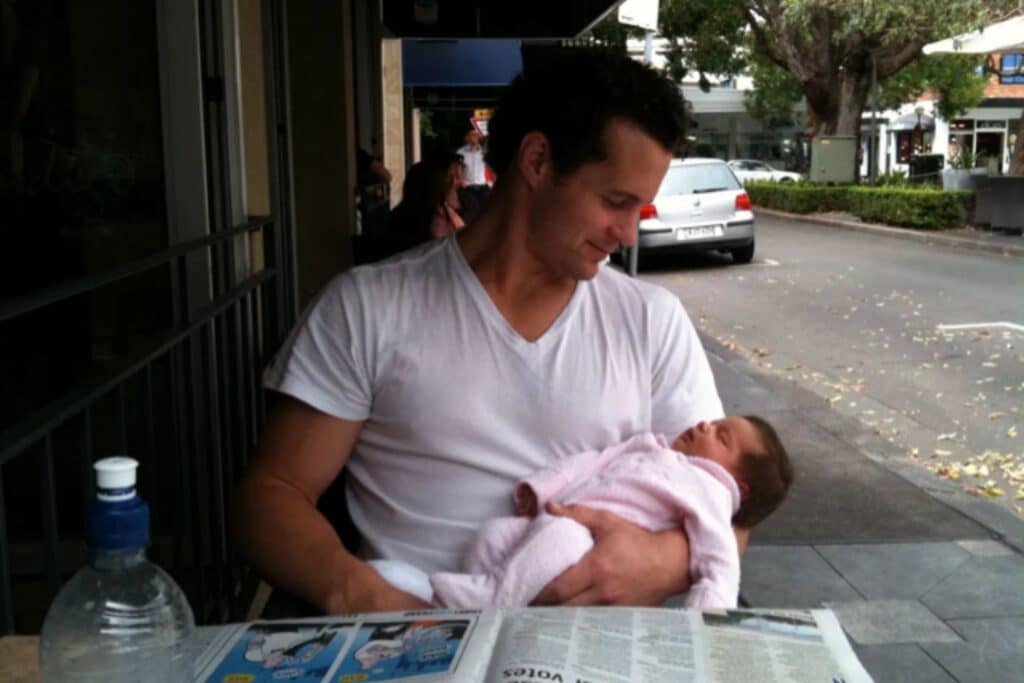
Back in November 2012 I was just over 37 weeks pregnant.
I had finished work and my hospital bag was almost packed. I was excited, nervous and terrified about the adventure ahead: the terror related to the birth while the excitement and nerves related to meeting our newborn, contemplating our firstborn becoming a big sister and wondering how we’d adjust to being a family of four.
And, then, the way infants very often do, our second bundle of baby arrived early. Two and a half weeks ahead of “schedule”.
Our toddler was two and a half. I was recovering from birth. My husband was a very junior doctor at a busy NSW public hospital. He was entitled to two weeks of unpaid leave on the birth of our child.
Literally. When our daughter arrived early, he was told the two weeks could only be taken from my due date. Not from the day she was born.
This meant I waited two and a half weeks – with a newborn, a toddler and everything post-birth entails – before he could take his weeks at home. My mum and my sister each flew in for a few days to help us out.
I want to be careful here because I know how lucky we were. The birth was blessedly straightforward, our girls were both well, Nick had a job and we had family who could help.
But I also want to be honest: those first weeks were brutal in a way that is entirely predictable if you leave a postpartum mum to navigate a toddler and a newborn alone.
That brutality was not inevitable. It was a policy choice. A decision someone, somewhere, had made about what fathers and co-parents were worth.
Truthfully, even two weeks of leave – paid or unpaid – taken when we actually needed it would have made a difference. And when I let myself contemplate what four weeks might have meant, let alone six months of paid leave at a real wage, my heart goes sore and soars at the same time.
Sore, for the version of us who didn’t have it. Soaring, for the families who do and for those who one day will.
I’ve told this story in fragments over the years. I’m telling it in full now because we are, finally, at a moment where it could be different. The way we treat fathers and co-parents isn’t a footnote to parental leave policy. It is the policy.
When we build a system that assumes care is a mum’s job and leave for dads is an optional, unpaid extra to be scheduled around a due date, we are making a choice. We’re choosing to let too many mums and families absorb the shock alone.

The evidence is not ambiguous. When fathers and co-parents are supported to take meaningful leave when a baby arrives, mums recover better, parents share the load more evenly for years afterwards with long term benefits and babies do better. Non-transferable leave for both parents isn’t radical. It’s what the evidence has been telling us for a long time.
My family got through it. Not everyone does. And “getting through it” was never the bar we should be aiming for.
That is (partly) why I do this work. Not because of what happened to us in November 2012, but because of every family living some version of it right now, in the first raw weeks, waiting for help a policy could have given them.
We can build the system that better catches mums, dads and babies and we must. We’re not going to stop saying so until it happens.
In fact, on Monday, we’re headed to Canberra to make the case for exactly that. The Parenthood and Movember are teaming up and we’re bringing a bunch of dads, babies and families to Parliament House to ask politicians for better policies that genuinely support dads.
If you agree, add your name to our petition calling for 12 months of paid parental leave, at a replacement wage rate, that can be shared.