
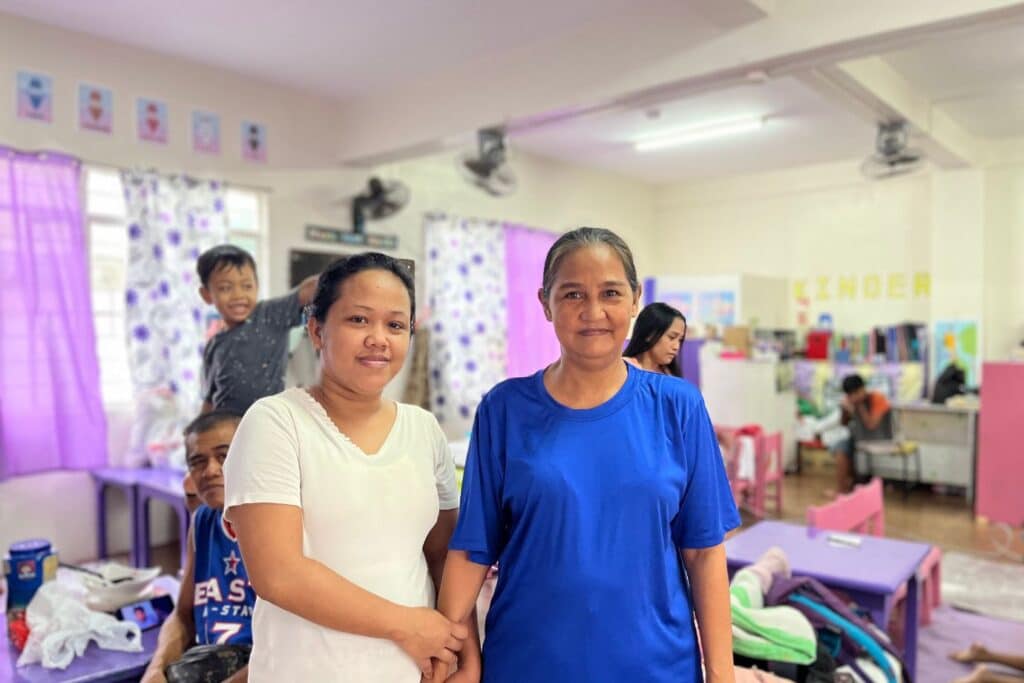
Maribel Bernardo stood in her doorway, watching the river creep up the street. The rain had been falling for days, but now, the floodwaters had reached her knees. She knew it was time to leave. “There was no warning from the government,” said Maribel, 49, a mother of six. “We just looked outside and realized we didn’t have any more time.”
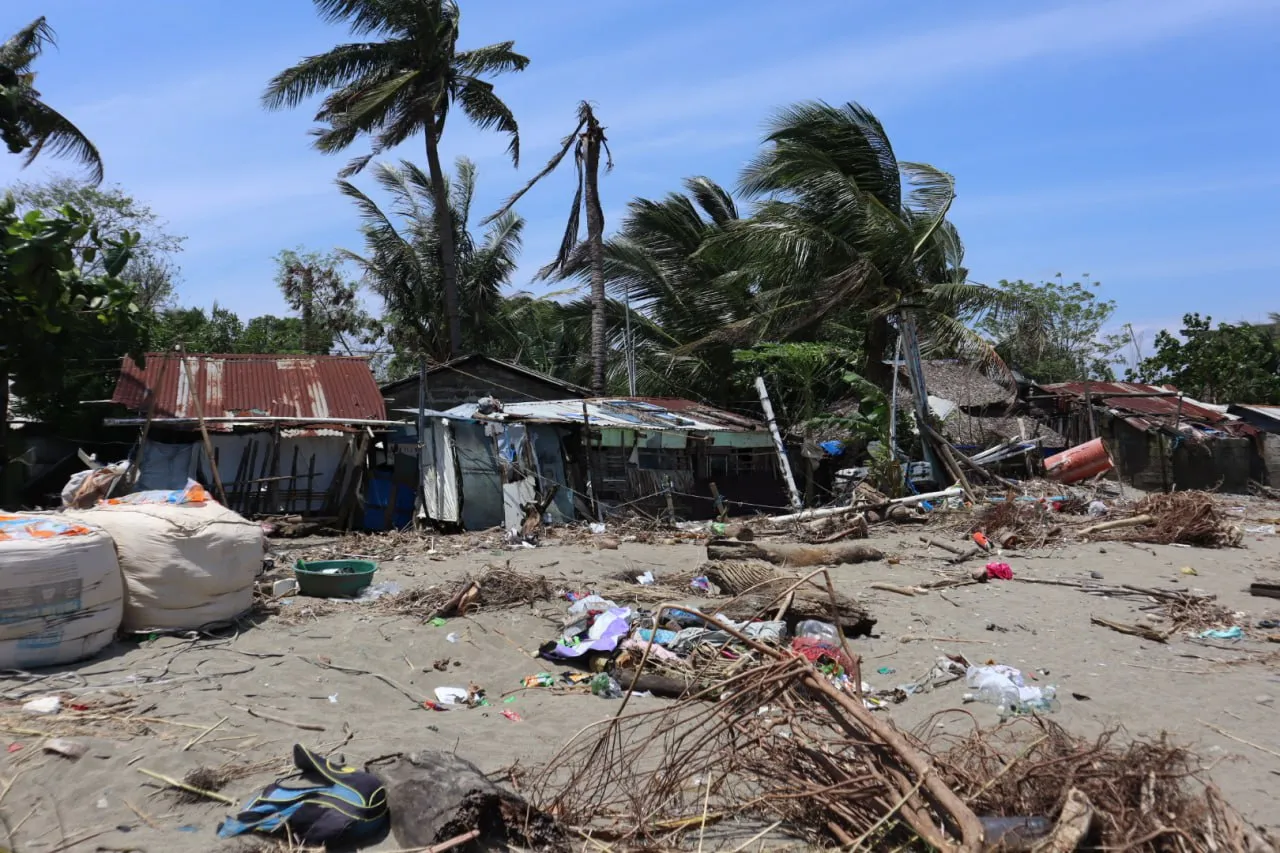
Maribel and her children left on foot, barefoot and soaked, carrying what little they could. Like many other men in the community, her husband stayed behind to try and protect their home.
After being turned away from one shelter, Maribel’s family found space at an elementary school in Rodriguez, Rizal, where hundreds of other displaced families had gathered. Every classroom was full to bursting. Her family ended up in a room with six others, laying out thin mats on the floor of their cramped new living space.
Among those sharing the room was Claudine Miranda, 30, Maribel’s neighbor and close friend. She also fled with her three children as the water rose around their home. Her husband, a construction worker, had been looking for work since a previous typhoon shut down building sites.
This new surge of flooding came after Severe Tropical Storm Wipha struck the Philippines, intensifying already heavy monsoon rains. Across the country, floodwaters rose knee- to waist-high, schools and government offices shut down, and thousands of families like Maribel’s and Claudine’s were forced to flee.
Difficult conditions
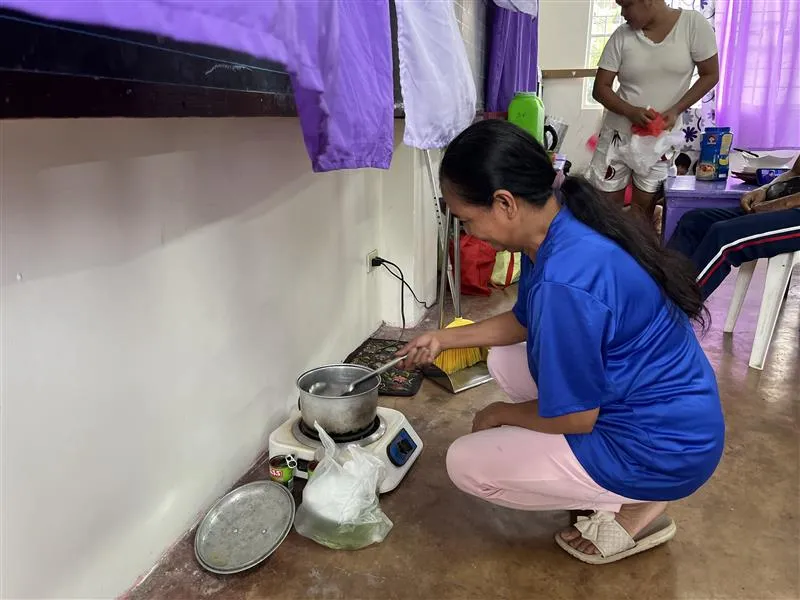
Conditions at the evacuation center have become increasingly difficult. With so many families in one room, there is little space to move, much less find privacy or rest. The lack of security is a constant worry.
“There are men we don’t know walking around the hallways,” Maribel said. “Our daughters are afraid, and honestly, so are we.”
This fear is a common reality in emergencies. In crises, women and girls face greater risks to their safety. Overcrowded shelters often lack privacy, working locks, or separate, well-lit toilets — all of which heighten the risk of harassment and violence against women and girls. Addressing these protection needs is not optional; it is a critical part of any effective humanitarian response.
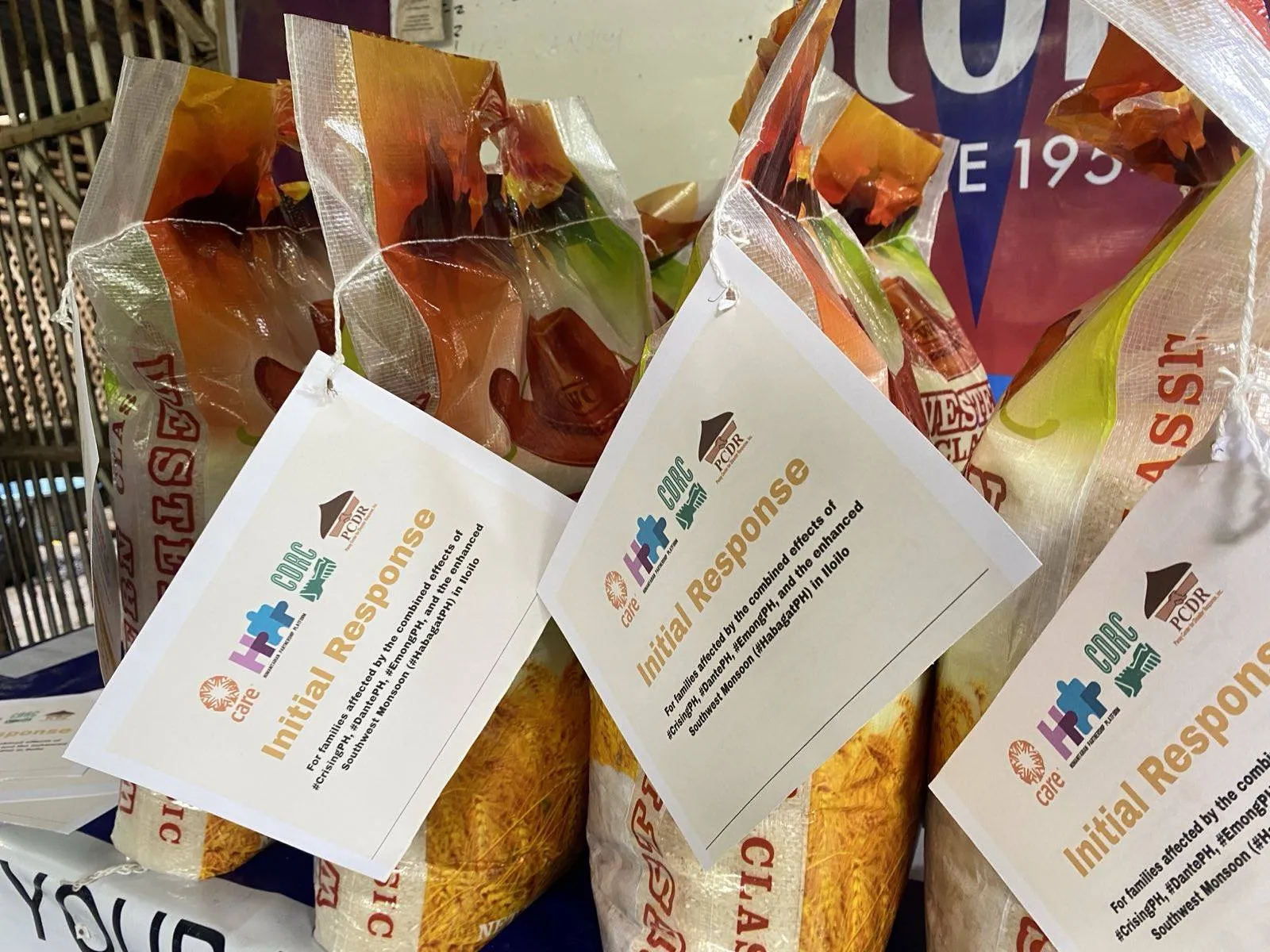
Support has also been inconsistent. Initial relief included porridge and a small pack with two kilos of rice, a few cans of sardines, and instant noodles. Since that first day, however, assistance has been unreliable.
“Rice is what we need most,” said Claudine. “Even when we have nothing else, we can make rice last.”
Strong desire to rebuild
But relying on uncooked rations is not enough. The lack of cooking space and fresh food creates an immediate need for warm, complete meals to prevent malnutrition, especially for children and the elderly. To fill this gap and provide for her family, Maribel started selling boiled bananas, fishballs, and coffee around the evacuation center.
Their husbands, both without income, try to repair their damaged houses with salvaged materials. Still, returning home feels like a risk neither family can afford, not with the river just steps away and the rainy season far from over.

“If we had a small push, even a little support to restart our work, a small grant or some tools, we wouldn’t be sitting here waiting for assistance,” said Claudine, highlighting the desire to rebuild.
Maribel nodded in agreement. “We’re not asking for much,” she said. “We just want to go home, to feed our children, and know they’re safe.”
CARE has been working with local community leaders and partners to deliver food, safe water, hygiene supplies, and menstrual hygiene items to displaced families after flooding brought by Severe Tropical Storm Wipha and the southwest monsoon.
But for families like these, the disaster did not end when the rain stopped. True recovery remains out of reach, and as the days in the evacuation center stretch on, so does their uncertainty.