
I grew up in country Victoria, where footy is a force for community cohesion. My great uncle Jimmy Matthews played for St Kilda, my father was a skillful footballer in country New South Wales and my mother grew up in the Wimmera, where football connects small towns. Sport shaped family stories, including folklore of my great grandmother Violet tapping an umpire with her umbrella in a moment of passionate spectatorship.
Women love the game as fiercely as men. I remember women serving pies in the canteen and taping swollen ankles on frosty winter mornings. Yet despite making up half of the AFL supporter base, women remain background figures, with little presence at executive or decision-making levels.
That contradiction stayed with me. It is why, as a Melbourne author, I explored the mistreatment of women in Australian football culture for my PhD project Siren, comprising a novel and exegesis. I wanted to understand how a game so central to social cohesion could also produce systems where women’s experiences were minimised or absorbed as collateral.
I also discovered how difficult it is for footballers who witness the mistreatment of women from inside the system. I spoke with a former AFL player who said contracts and loyalty expectations made speaking out feel impossible. He recalled rituals such as ‘hump night’, where women and alcohol were supplied for a midweek social event while wives and girlfriends were banned.
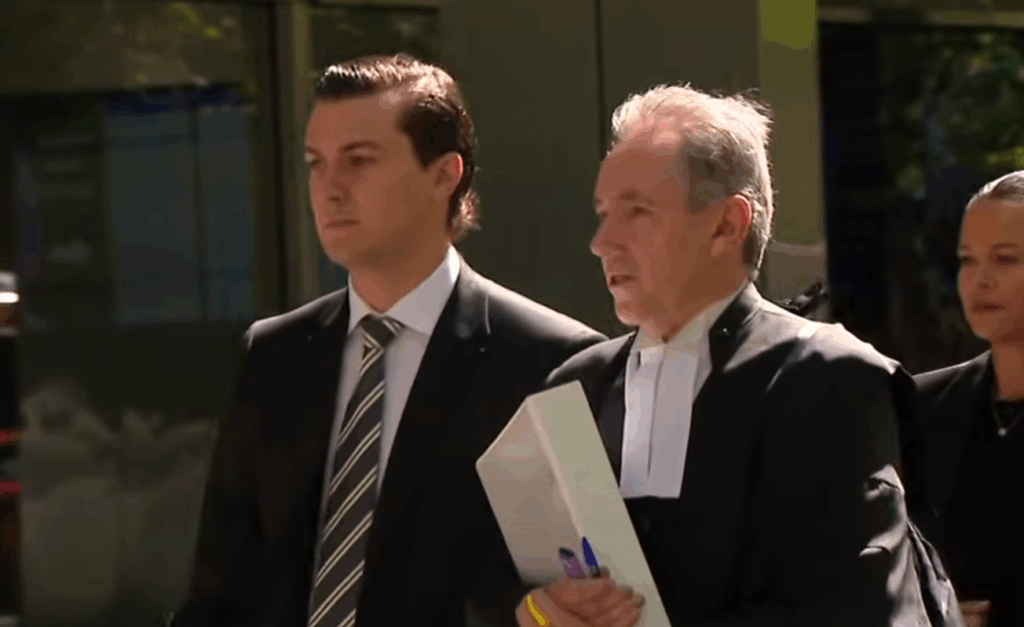
When Tom Silvagni lodged an appeal against his rape convictions last week, the reaction felt familiar. Not because the appeal was unexpected but because the conviction had already been treated as unusual. While Silvagni is not a footballer, he is deeply embedded in the AFL world through family prominence and a career in player management and recruitment.
Silvagni was found guilty by a Victorian jury in late 2025 of two counts of rape and sentenced to six years’ imprisonment. The jury accepted the complainant’s account and rejected attempts to discredit her. That outcome should not be remarkable. Yet it was framed as rare. Suppression orders kept the case out of public view for months, a privilege seldom afforded to complainants.
Nearly a decade ago, responding to the degradation of journalist Caroline Wilson by AFL celebrities on commercial radio, who said she should be ‘held under water’, I argued that the mistreatment of women in Australian Rules football was not isolated but structural. That episode mattered less for its shock than for how misogyny is normalised when women challenged male authority.
Most sexual assaults never reach a courtroom. Survivors often withdraw long before trial, worn down by cross-examination, public exposure and disbelief. Criminologist Liz Kelly describes this as ‘institutional attrition’, where cases are lost at every stage of the justice system.
My research examined how sexual violence linked to Australian football is minimised in media and cultural narratives shaped by masculine sporting ideals. Across investigations and court proceedings involving elite football figures, the recurring pattern is not a lack of allegations but a lack of conviction.
That pattern helps explain why Silvagni’s case stands out. Convictions connected to elite Australian football are rare. Charges are laid, then withdrawn. Cases collapse before verdict. Outcomes overwhelmingly favour the footballer. When a conviction does occur, it is treated as an anomaly rather than evidence the system can work.
Australian football has weathered repeated scandals that briefly provoke outrage before fading. Behaviour is condemned, apologies are issued and the structures that enable it remain intact.
In May 2024, former AFL player Barry Cable was charged with historical child sexual abuse allegedly committed in the 1960s. It took more than 60 years for criminal charges to be laid. Cable pleaded not guilty and is on bail. Meanwhile, multiple allegations in more recent decades have not resulted in convictions.

The 2013 Milne and Montagna sexual assault investigation remains one of the clearest illustrations. Former Victoria police detective Scott Gladman, who investigated allegations involving the St Kilda players, later became a whistleblower. He described threats from footballers and police and feared for his family’s safety, eventually relocating to Panama.
Football prides itself on fairness and community. But when institutions close ranks, when complainants are scrutinised more harshly than defendants and when legal processes are used to intimidate rather than resolve, the darker corners of the culture are exposed.
The courts will decide Silvagni’s outcome. But the larger question remains unresolved. How long will Australian football produce a system where sexual assault allegations surface, accountability falters and women are left carrying the cost?
A game that binds people should be strong enough to confront the systems that fail women. Justice should not feel remarkable. Conviction should not feel like news. Until that changes, the system, not the individual case, remains the story.