
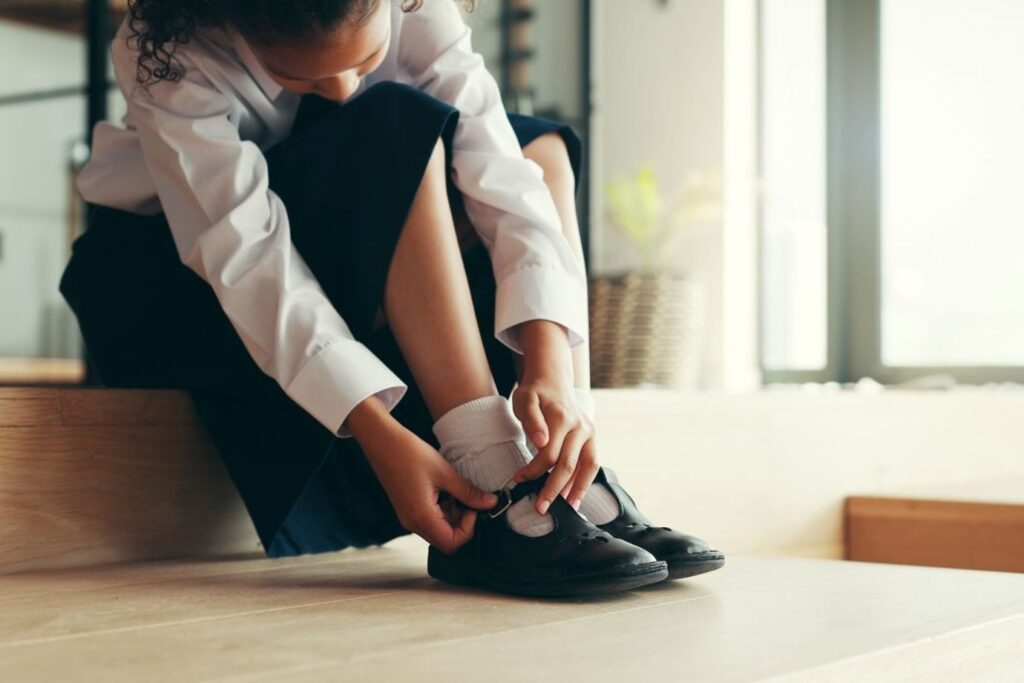
The final term of the school year is almost upon us and so is the switch to summer uniforms. As I fold yet another pair of shorts, I can’t help but think of how fortunate my kids are that they go to a school that embraces diversity and supports students to wear uniforms that they feel comfortable in.
As children form their identities and express different versions of themselves, clothes, jewellery and hair are vital in helping them work out who they are, particularly during vulnerable and impressionable ages and stages where they are constantly filtering themselves for approval.
At a school tour I attended, a young tour guide shared (unprompted) that all students can wear pants and shorts which has become one of the selling points and a reason why students now attend the school.
This same school also allows boys to have long hair and wear plain jewellery which seems logical yet this is still restricted in many schools. These valued forms of self-expression are so important to children, and part of their identity.
Many states, like Victoria, have a Student Dress Code policy that requires government schools to support inclusion and comply with human rights and anti-discrimination legislation with new requirements removing school logos effective from term 1 in 2026. This ensures inclusivity for those that can’t afford the (often expensive) uniforms, for example.
However, private and religious schools are not bound by this same code. A quick straw poll amongst various young people I know and a scan of some school policies indicates that rigid gender stereotypes are still being embedded in the uniforms students are expected to wear with private single sex schools the main offenders.
Hair length restricted to collar length has nothing to do with preventing an unwanted outbreak of mullets while bans of earrings and chains are inconsistent with girl school requirements. I know many young boys who have longer hair or like expressing themselves through jewellery or nail polish, and I shudder to think what these restrictions tell our boys, particularly our young ones, about how they need to present themselves physically for approval from the outside world.
Whilst single sex girls schools have been more progressive, the introduction of shorts and pants is still relatively recent and the length of the remaining required skirts and dresses is still often scrutinised and dictated.
So what’s the big deal?
Well, being forced to wear skirts or dresses impacts significant outcomes for our kids as they are young and as they grow.
For example, young women are four times less likely to ride to school in comparison to young men the same age.
Meanwhile, the occasional media scandal involving inappropriate group messaging tends to come from those exclusive boy schools with greater restrictions on things, such as uniforms. A coincidence? I think not.
I recently attended a youth forum where I took the opportunity to ask young people in attendance about their views on school uniforms. Surprise surprise, they had thoughts with the most common theme questioning why restrictive uniforms regardless of gender are even still a thing.

So as the last term for the year commences, I encourage schools to think about how their uniform policies may be perpetuating gendered stereotypes…or how they are ideally advancing gender equality.
Changes to outdated uniforms have come about from feedback and demands to change so if you see something that could use a little updating, please speak out. Gender equality starts in our homes but school settings influence important behaviours too. They set standards for the future… one that should never judge a person by the length of their skirt or hair.