
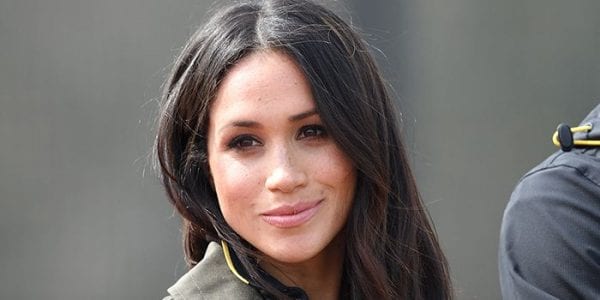
At the recent Fortune Most Powerful Women Summit held in Washington D.C, Meghan Markle delivered a compelling speech. Alongside influential figures such as Kamala Harris and Selena Gomez, Markle discussed her entrepreneurial journey with her lifestyle brand ‘As Ever’, her investments in women-led organisations, and her complex relationship with social media. But it was her heartfelt reflection on financial independence that struck a unique chord.
When asked what financial independence meant to her, she answered: “Financial independence is what gives you the freedom of choice, and I think in this day and age we all need to have our own autonomy. Financial literacy is something that I spend a lot of time on, specifically for young girls and their empowerment. There doesn’t need to be anything taboo about talking about our financial independence.”
As a culturally diverse woman, I grew up in an environment where financial independence for women was not the norm. Once married, it was expected that men provide for the family, while women took on roles as homemaker. My mother and aunties worked in our family business, but financial literacy was never discussed openly. Their work may have provided them with a sense of independence, but it wasn’t framed that way. It wasn’t until my late forties, when I faced a career crossroads and was temporarily unemployed, that I truly understood the emotional and mental impact of losing financial independence. Despite having the means to purchase what I needed, the absence of earning my own income affected me in ways I hadn’t anticipated.
Studies show that women are less likely to talk about money, negotiate pay raises, or advocate for their worth. In Australia, women retire with 25–35 percent less superannuation than men, largely due to the motherhood penalty—time taken off work to care for children. This penalty persists for years, with women earning significantly less even five to ten years after childbirth. The gender pay gap, part-time employment, and caregiving responsibilities all contribute to this disparity. According to the Workplace Gender Equality Agency, the median super balance for women aged 60–64 is $158,806 compared to $211,996 for men.
Yet, there is hope. As Markle suggests, investing in women-led organisations is not just about business, it’s about empowering women to build their own legacies.
Women’s entrepreneurship has become a deeply personal symbol of empowerment for me. It’s not just about business—it’s about reclaiming choice and autonomy. I’m inspired by women like Melanie Perkins, co-founder of Canva, and Cyan Ta’eed, Egyptian-born co-founder of Envato, who built global tech platforms from Australia. Entrepreneurs like Fiona Harrison, founder of Chocolate On Purpose, and Madhuri Soni, creator of Soni Health, show how culturally diverse women are redefining success.
Their stories remind me of my own journey and my daughter’s growing financial literacy. Working casually in a retail job, she already demonstrates more financial literacy than I did at her age and even do now in my late 40s. She understands how to manage her earnings, invest in different bank accounts to maximise interest, and values the independence her income provides. That is a legacy. Supporting women entrepreneurs means investing in legacy, resilience, and the freedom to choose our own paths.
We often associate financial independence with escaping abusive relationships, but it is so much more than that. It is about every woman having the knowledge and means to make choices for herself. In some cultures, this is still a difficult conversation. My mother used to tell my sister and me, “You both have to go to university and get degrees so you can work and never have to rely on anyone.” Looking back, I realise that was her way of saying: be financially independent, because life is unpredictable and you need to have the freedom of choice.
As women, we must talk about money, advocate for our worth, and educate the next generation. Because when we do, we empower ourselves and each other to live with autonomy, dignity, and choice.